
YouTube Copyright Claim or Strike? Protect Your Income, Sponsor and Channel First
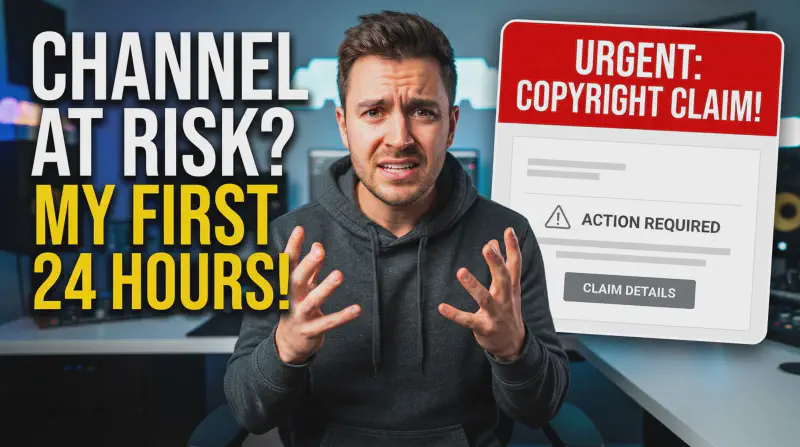
A creator-first plan for YouTube copyright claims, takedowns and strikes. Protect your income, sponsor commitments, evidence and channel before responding.

A YouTube copyright notice can threaten your income, sponsor and reputation. Do this first.
You did the work. You filmed, edited, researched, negotiated the sponsor, built the audience and put your name on the video. A YouTube copyright notice can now affect your revenue, a brand deliverable and the channel your business depends on. Do not let a rushed click turn a video problem into a channel problem.
First, identify the notice. A Content ID claim may affect the money or availability of one video. A copyright strike follows a removal process and may affect the channel itself. The response is different.
What is at stake for you?
A copyright notice is rarely just a platform notification. It may affect four assets you have spent years building.
| Asset | What may go wrong | What you need to check now |
|---|---|---|
| Income | Video revenue may be held, redirected or lost. A valuable catalogue video may keep earning under another party’s claim. | Current revenue, expected views, affiliate sales, membership conversion and replacement cost. |
| Sponsor relationship | A video may be blocked, delayed or unsuitable for the agreed campaign. A brand may need a replacement asset or explanation. | Deliverables, publication date, make-good clause, approval rights and who must be notified. |
| Reputation | Followers, brands and collaborators may see an unexplained disappearance, delay or public dispute. | Whether a quiet re-edit, factual update or direct commercial communication is needed. |
| Channel | A removal and strike can create channel-standing risk. | Existing strikes, upcoming launches, archive value and the risk of escalation. |
Paid creator work is commercial work. Australian influencer campaigns also require careful treatment of advertising disclosures and product claims, alongside copyright clearance. A brand may have paid for a deliverable, but that does not mean it owns every asset or has cleared the music, footage, talent and reuse rights.
First, work out what YouTube has actually done
| YouTube status | What it means to you | Your immediate decision |
|---|---|---|
| Content ID claim | A rights holder or manager says part of the video matches its reference material. The video may be monetised, tracked or blocked. | Is the claim right? Do you have an exact licence, ownership record or clear error? |
| Copyright removal request | A formal legal request seeks removal. | Preserve the evidence and check whether the claimant, licence or alleged work can be identified. |
| Copyright strike | YouTube has removed content and applied a channel consequence. | Protect the channel. Centralise communications. Do not casually counter-notify. |
| Rejected dispute or appeal option | The claimant has maintained a Content ID claim. | Decide whether revenue or sponsor value justifies escalation risk. |
A Content ID claim does not ordinarily create a strike. YouTube treats a copyright removal request as a different legal process. YouTube: What is a claim?

A clear production and rights record protects the work, the campaign and the next decision.
Your creator-business checklist
1. Save the proof before you change the video
Keep the original upload, raw footage, editing timeline, export history, source assets and metadata. Do not delete the video, overwrite the project file or ask an editor to fix it before you can identify what triggered the claim.
Collect licences, invoices, subscription records, provider terms that applied when you acquired the asset, permissions, contributor agreements, commissioning terms, brand-supplied asset emails, editor agreements, music clearances and any distributor or rights-manager correspondence.
2. Diary the deadline and the sponsor date
Record YouTube’s deadline and time zone. Separately, read the sponsor agreement. Check the promised publication date, whether the sponsor requires prompt notice, whether there is a make-good obligation, whether the video can be replaced, and who carries production costs.
Do not promise the sponsor that the video will be restored. Tell them only what you know, what steps are being taken, and when you will provide a further update. Keep the message factual and non-accusatory.
3. Count the money, not just the indignation
A claim can feel outrageous because you made the video. But the decision is not only about principle.
YouTube says eligible revenue can be held during a timely dispute or appeal. If no dispute is lodged, held revenue is generally released to the claimant after five days. YouTube: Monetisation during copyright claim disputes
Ask:
- Is this a $20 archive video, or a sponsor launch with weeks of paid traffic and affiliate conversion?
- Is the alleged asset a short, replaceable music cue, or central footage that cannot be reshot?
- Will an edit satisfy the sponsor and preserve the relationship?
- Is the revenue continuing to grow because the video ranks or is being promoted?
- Is this one claim, or a system issue across the back catalogue?
4. Do not confuse attribution with permission
“You are credited in the description” is not the same as “we have a licence”. Nor does buying a song, using a short clip, labelling a video “educational” or saying “fair use intended” automatically answer the copyright question.
You need ownership, written permission, a licence that covers the actual use, a clear contractual right, or a legally supportable exception. See Does giving credit avoid YouTube copyright infringement? and Can I use music I bought in a YouTube video? .
5. Treat appeals as a commercial risk decision
A claimant generally has 30 days to respond to an initial Content ID dispute. After an eligible appeal, it generally has seven days. YouTube warns that an appeal can lead the claimant to seek video removal. YouTube: Dispute a Content ID claim YouTube: Appeal a Content ID claim
If the video was removed or you received a strike
This is no longer only a revenue decision. YouTube says a strike can expire after 90 days if Copyright School is completed and the channel has fewer than three active strikes. Three active copyright strikes within 90 days may result in channel termination. YouTube: Understand copyright strikes
Deleting the video does not itself remove the strike. A counter-notification is not a routine platform complaint. It is a formal legal request after removal, may be shared with the claimant, and needs a sound factual basis. YouTube: Submit a copyright counter notification
Make the next notice easier
A creator rights register is a commercial safeguard. For each meaningful upload, keep the video URL, source-file location, asset list, licences, contributor and brand agreements, sponsor dates, rights-manager contact, Content ID whitelist status, claims history and the authorised responder.
It protects the hard work behind the content and lets you answer a notice with evidence rather than memory.
Need a clear response plan?
Bell & Senior Lawyers assists creators, influencer managers, agencies and production businesses with YouTube claims, takedowns, strikes, licences, brand-content rights, sponsor-risk communications and creator-rights systems. We do not guarantee a release, restoration, revenue recovery or strike removal. We help you make the next commercial and legal decision with a clear view of the evidence and risk.
Request a YouTube claim assessment or read A Creator’s Guide to YouTube Copyright Claims, Takedowns, Strikes, Appeals and Counter-Notifications .
See also
- Is a YouTube Content ID claim the same as a copyright strike?
- What happens to my revenue after a YouTube copyright claim?
- Should I appeal a rejected YouTube copyright dispute?
- What is a YouTube copyright counter-notification?
- Does deleting a YouTube video remove a copyright strike?
This page provides general legal information only. It is not personal legal advice. Platform processes, copyright outcomes and response options depend on the evidence, claimant, jurisdiction, contract terms and the facts of each matter. Obtain tailored advice before lodging a dispute, appeal or counter-notification that may affect your channel, income, sponsor relationship or business.
Need Legal Advice?
Contact us today to discuss your matter. We'll respond within 24 hours.
Enquiry Sent
Thank you for reaching out. A member of our legal team will contact you shortly.