
Legal Matters: Wills, Property Insurance, Land Tax and Probate

Property contracts, wills and probate can create expensive problems when people rely on assumptions rather than checking the documents. In Episode 34 of Legal Matters, seven callers put practical Queensland questions to Andrew Bell, ranging from insurance before settlement and dying without a will to land tax, self-managed superannuation, spent convictions and jointly owned assets.
The planned discussion about self-defence was postponed because the phone lines remained busy. Andrew and Colin will return to that topic in the next episode, following the citizen’s arrest discussion in Episode 33 .
Key Topics
- Why buyers should arrange insurance promptly and sellers should keep cover until settlement
- What Queensland intestacy rules do when a person dies without a will
- Will instructions by video and the formal two-witness execution requirements
- Home exemptions, taxable value and the individual land tax threshold
- The correct sequence for winding up a self-managed super fund
- When a criminal conviction may become spent rather than erased
- Why banks may require probate and why there is no universal dollar threshold
- Joint tenancy, survivorship and a Titles Queensland Record of Death
- The different functions of an enduring power of attorney and a will
- Why a 1994 will may remain effective but still needs review
Listener FAQ Highlighted in This Episode
- Can a seller cancel building insurance once the sale becomes unconditional?
- Who inherits when a married parent dies without a will?
- Can will instructions and signing be completed by video?
- Why would a long-term homeowner receive land tax correspondence?
- What must happen before an SMSF bank account can be closed?
- Does a conviction disappear after five or ten years?
- When will a bank insist on probate?
- Does a jointly owned home pass through the deceased estate?
- Does an old will expire?
- How does an enduring power of attorney differ from a will?
Key Takeaways
- Under commonly used Queensland sale contracts, risk may pass to the buyer shortly after the contract date, not only when the contract becomes unconditional. Buyers should arrange cover immediately, while sellers should maintain their own insurance until settlement.
- Intestacy is not simply a rule that everything passes to the surviving spouse. The statutory result depends on the surviving spouse or spouses, children and the composition of the estate.
- Video conferencing can assist with instructions, but the final will must satisfy Queensland’s execution requirements. Capacity and undue influence also need attention where the will-maker is elderly or unwell.
- Queensland land tax is based on the taxable value of relevant land held at midnight on 30 June. A qualifying principal place of residence can be excluded under the home exemption.
- Winding up an SMSF requires an orderly sequence. Trustees should retain enough money for liabilities, complete the final audit and return, use lawful rollover processes and close the bank account last.
- A spent conviction is not an expunged conviction. The relevant period is generally ten years for an adult conviction on indictment and five years in other Queensland cases, subject to the legislation, later offending and disclosure exceptions.
- Probate requirements depend on the asset and the institution. A bank’s internal threshold is not a statutory statewide rule and should be confirmed directly with that bank.
- Joint-tenancy property passes by survivorship outside the estate, although the surviving owner must update the title. A tenant in common’s share follows the will or intestacy instead.
- An enduring power of attorney ends on death. The will then governs estate assets, while assets held as joint tenants pass by survivorship.
- Wills do not expire because of age alone, but marriage, divorce, revocation, a later will and changed circumstances can alter the result.
Annotated Transcript
Opening recap: citizen’s arrest and self-defence
⚖️ Topic: Recap of private arrest powers and the deferred self-defence discussion Relevant law: Criminal Code 1899 (Qld)
Colin: We planned to continue our discussion about self-defence in Queensland. Can we first recap where we finished last week?
Andrew: Last week we discussed citizen’s arrest. A private person can arrest only in limited circumstances, cannot interrogate the person, must not use more force than necessary and must hand the person to police as soon as reasonably practicable. Police can also require assistance with an arrest in limited circumstances.
Colin: We will return to self-defence after taking the callers.
📎 See also: Legal Matters Ep 33, Citizen’s Arrest and Self-Defence | What Are Your Rights If You Are Arrested in Queensland?
Caller Rod: insurance before property settlement
⚖️ Topic: Who should insure a Queensland property between contract and settlement Relevant law: Property Law Act 2023 (Qld) and the particular contract of sale
Rod: I am selling a house and the contract has become unconditional. Who is responsible for the building insurance, and can I cancel mine?
Andrew: The buyer should have insurance once risk has passed under the contract. However, our practical advice to a seller is to maintain insurance until settlement because a contract can still fail or be terminated. For the relatively small premium involved, keep the policy until settlement is complete.
📎 See also: Who Insures a Queensland Property Before Settlement? | Queensland Seller Disclosure Form 2 | Residential Conveyancing Guide
Caller Michael: a parent without a will
⚖️ Topic: Intestacy, letters of administration and executing a will Relevant law: Succession Act 1981 (Qld)

Michael: My 94-year-old mother has no will. She lives with my sister, who cares for her, while my mother’s husband lives separately. If Mum dies with money in a bank account in her sole name, does it go straight to her husband? Can she make a will by video?
Andrew: Without a will, the intestacy rules determine who receives the estate. Where a spouse and children survive, it is not necessarily all paid to the spouse. Your sister may also need advice about whether the circumstances raise a family provision issue. Your mother should make a will if she has capacity and wishes to choose the beneficiaries and executor.
Instructions can be taken by video, but a conventional will must then be properly executed. The will-maker must sign or acknowledge the signature in the presence of two witnesses who are present at the same time, and at least two witnesses must attest and sign in the will-maker’s presence.
Colin: Is dying without a will more difficult for the family?
Andrew: Usually. Instead of relying on an executor appointed by the will, an appropriate person may need a grant of letters of administration. The statutory distribution may also produce a result the deceased never intended.
📎 See also: Who Inherits Without a Will in Queensland? | Can You Sign a Will by Video in Queensland? | Estate Planning 101 | Will Kits in Queensland
Caller George: a land tax exemption letter
⚖️ Topic: Taxable land value and the home exemption Relevant law: Land Tax Act 2010 (Qld)
George: After 38 years in my home, Queensland Revenue Office sent a letter saying the property was exempt from land tax. Friends have received bills. Why is this happening now?
Andrew: Land tax uses statutory land valuations rather than the improved market value of the house. Increasing valuations can bring landholdings closer to the threshold. Ownership structure and other landholdings also matter. If an assessment arrives, obtain taxation advice before trying to restructure because transfer duty and other consequences may follow.
📎 See also: Queensland Land Tax and the Home Exemption | Queensland Revenue Office Land Tax
Caller Robert: winding up an SMSF
⚖️ Topic: Finalising a self-managed super fund and dealing with ATO delay Relevant law: Superannuation Industry (Supervision) Act 1993 (Cth)
Robert: My accountant started winding up my self-managed super fund before June. I have heard nothing from the ATO and the money remains in limbo. Can I close the accounts or move the funds?
Andrew: Do not treat superannuation money as personal funds or move it contrary to the professional wind-up advice. Ask the accountant to confirm what has been lodged and to follow up with the ATO. Also query any automated tax instalment notices that do not reflect the intended closure.
📎 See also: How Do You Wind Up an SMSF? | ATO, How to Wind Up an SMSF
Caller Tim: spent criminal convictions
⚖️ Topic: Rehabilitation periods and disclosure of older convictions Relevant law: Criminal Law (Rehabilitation of Offenders) Act 1986 (Qld)
Tim: I have a criminal conviction and served three months in prison. I believed it could be wiped from a police clearance after ten years. Is that correct?
Andrew: Some eligible convictions can become spent rather than erased. The result depends on the sentence, the court, the time since conviction, later offending and the purpose for which disclosure is sought. Legal Aid Queensland may be able to explain how the legislation applies to your record.
📎 See also: When Does a Conviction Become Spent in Queensland? | Legal Aid Queensland, Criminal Convictions
Caller Sandra: probate, bank accounts and joint tenancy
⚖️ Topic: When probate is required and which assets pass by survivorship Relevant law: Succession Act 1981 (Qld) and Land Title Act 1994 (Qld)
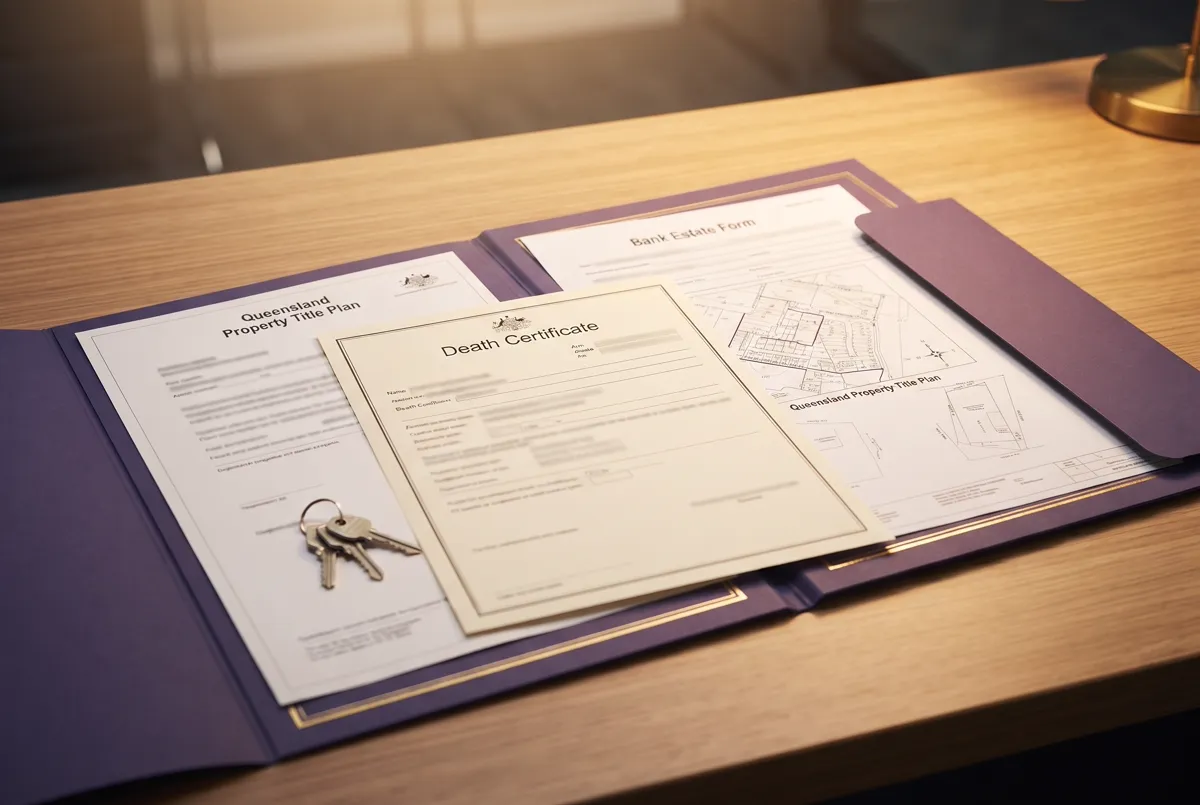
Sandra: My friend Julie lost her de facto partner. Julie is the executor and sole beneficiary. Their home was held as joint tenants, but he had a bank account in his sole name. Can she withdraw the money, and does she need probate?
Andrew: Julie should notify the bank and ask for its deceased-estate requirements. A bank may release a modest balance on production of the will, death certificate, identification and an indemnity, but may require probate for a larger balance or where risk exists. Being the only beneficiary does not remove the bank’s need to verify the executor’s authority.
The home is different. If the registered owners held it as joint tenants, the deceased’s interest passes to Julie by survivorship. She can lodge the required Record of Death material with Titles Queensland to update the register without using probate to transmit that joint-tenancy interest.
Colin: What does probate establish?
Andrew: A grant of probate confirms the will accepted by the Supreme Court and the executor’s authority to administer the estate. It gives asset holders a formal basis for dealing with that executor.
📎 See also: When Is Probate Needed for Bank Accounts and Joint Property? | Do I Need Probate in Queensland? | Avoiding Probate and Family Provision Claims
Caller Cleo: enduring power of attorney and an old will
⚖️ Topic: Lifetime decision-making, joint assets and a will made in 1994 Relevant law: Powers of Attorney Act 1998 (Qld) and Succession Act 1981 (Qld)
Cleo: My husband was seriously injured in 2011 and now lives in a nursing home. Our property and bills are in joint names. I have been told about a power of attorney, and he has a will from 1994. What do those documents do?
Andrew: An enduring power of attorney authorises decisions while the principal is alive, according to its terms. It may cover financial and personal matters and can continue after loss of capacity. A will operates after death.
Assets held as joint tenants generally pass to the surviving joint owner. Sole-name estate assets are dealt with under the will. A will from 1994 does not expire merely because it is old, provided it was valid and has not been revoked or affected by a later event, but it should be reviewed against the current family, ownership and capacity circumstances.
📎 See also: What Happens Without an Enduring Power of Attorney? | Testamentary Capacity and Dementia in Queensland | Tenants in Common vs Joint Tenants | Legal Matters Ep 2, Enduring Power of Attorney
This transcript provides general legal information only; it is not personal legal advice. Everyone’s situation is different, so please seek independent legal advice for your own circumstances.