
Defamation Law in Queensland: The Complete Legal Guide

Need legal help with this topic?
Get a confidential assessment of your matter today.
Queensland’s defamation laws were substantially reformed in 2021, introducing a mandatory serious harm threshold and a compulsory concerns notice process. This guide explains every element a person must establish to bring a defamation claim, how to identify whether a publication is defamatory, what defences apply, how courts assess serious harm and damages, and what costs are involved in litigation.

What is Defamation? Meaning and Definition
Defamation (often referred to in non-legal terms as defamation of character) is one of the most frequently misunderstood areas of civil law in Australia. People encounter potential defamation every day, in negative Google reviews, social media posts, complaints to employers, emails to professional bodies, and neighbourhood disputes, but the gap between what a person believes to be defamatory and what the law actually requires is often substantial.
Queensland’s defamation laws were significantly reformed on 1 July 2021 by the Defamation (Model Provisions) and Other Legislation Amendment Act 2021 (Qld) .1 Those amendments introduced a mandatory serious harm threshold, a compulsory pre-litigation concerns notice process, a new public interest defence, changes to the single publication rule, and important modifications to the offer to make amends regime. Understanding those reforms is essential to any analysis of whether a defamation claim is viable and how it should be pursued.
This guide is designed to give any person a thorough, practical understanding of how Queensland’s defamation framework operates in 2026. Whether you believe you have been defamed, have received a concerns notice, or are simply trying to understand your rights and risks before taking action, this guide covers the law from first principles through to the practical realities of litigation, costs and outcome.
In This Guide
The Legislative Framework
The Defamation Act 2005 (Qld)
Defamation in Queensland is governed primarily by the Defamation Act 2005 (Qld) (the Act).2 The Act was enacted as part of a nationally uniform scheme of defamation legislation adopted across all Australian states and territories from 2005 to 2006. The full text of each provision of the Act is also available on AustLII .3
The Act was substantially amended by the Defamation (Model Provisions) and Other Legislation Amendment Act 2021 (Qld) , which came into effect on 1 July 2021.4 Those amendments apply to publications made on or after that date. Publications made before 1 July 2021 are governed by the Act as it stood before amendment.
The Act operates alongside the general common law of defamation, which continues to apply except where the Act modifies or displaces it. For most practical purposes, the Act is the primary instrument and is the one that governs the process from concerns notice through to judgement.
Key Instruments at a Glance
| Instrument | Link | Purpose |
|---|---|---|
| Defamation Act 2005 (Qld) | legislation.qld.gov.au | Primary legislation governing all defamation claims |
| Defamation (Model Provisions) and Other Legislation Amendment Act 2021 (Qld) | legislation.qld.gov.au | 2021 amendments: serious harm, concerns notices, public interest defence |
| Limitation of Actions Act 1974 (Qld), s 10AA & 32A | legislation.qld.gov.au | One-year limitation period for defamation claims and extension rules |
| Uniform Civil Procedure Rules 1999 (Qld) | legislation.qld.gov.au | Procedural rules governing District and Supreme Court litigation |
| Queensland Law Handbook, Defamation | queenslandlawhandbook.org.au | Plain-language overview from the Queensland Law Society |

The Four Essential Elements of a Defamation Claim
To bring a successful defamation claim in Queensland, a claimant must establish four essential elements. If any single element fails, the claim fails. Each element must be approached honestly before any action is taken.
Element 1: The Matter Was Published
Publication means the defamatory material was communicated to at least one person other than the claimant.5 The Act defines “publish” in section 4 to mean communicating defamatory matter about a person to a third party in any form. Publication can occur in writing, by spoken word, by image, or by any other means. The distinction between libel (written) and slander (spoken) that existed under the old law has been abolished by the uniform legislation.
Publication covers an extraordinarily wide range of communications, including social media posts, Google and TripAdvisor reviews, emails sent to third parties, letters to employers or professional bodies, newspaper and online articles, spoken words at public meetings, text messages forwarded to others, podcasts and YouTube videos, online forum posts, Reddit threads, and WhatsApp group messages.6
Every repetition is a separate and fresh publication. A person who forwards a defamatory email, shares a defamatory social media post, or repeats a defamatory statement in conversation can be held liable for their own act of publication even if they did not originate the content.7
Proving That Someone Read or Heard the Publication
One of the most practically challenging aspects of a defamation claim is proving that the publication actually reached a third party. Courts require evidence that the material was in fact communicated to at least one other person, not merely that it was uploaded or sent. The extent of publication beyond that minimum also affects the quantum of serious harm and damages.8
Evidence courts accept on publication and its reach includes:
- Screenshots showing post visibility settings and audience (public, friends, specific groups)
- Platform analytics data (views, impressions, engagement counts) obtained by the claimant or through preliminary discovery
- Evidence from witnesses who confirm they read or heard the publication
- Platform subscriber or follower counts as a proxy for potential audience where actual views cannot be established
- Website traffic data where the publication appeared on a public website
- Google cache data and archive.org captures demonstrating how long content remained online
- Evidence from the publisher themselves via discovery in proceedings
- Experienced Professional evidence on the reach and indexing of online publications9
It is important to understand that the claimant does not need to identify every person who read the publication, but must produce some evidence from which the court can infer that at least one third party received it, and enough to permit an assessment of its overall reach for the purposes of serious harm and damages.
Online Platforms and the Voller Principle
The High Court’s landmark decision in Fairfax Media Publications Pty Ltd v Voller [2021] HCA 27 confirmed that a person or entity that operates a Facebook page and permits third parties to post comments on it is a publisher of those comments for the purposes of defamation law, even where the page operator had no prior knowledge of the comment and did not write it.10 The mere facilitation of publication by maintaining a public-facing platform capable of receiving comments is sufficient to make the page operator a publisher.
The practical consequences are significant. A business, council, politician, or individual who maintains a public Facebook page is potentially liable for defamatory third-party comments posted on that page. Removing a defamatory comment promptly after becoming aware of it can mitigate damages but does not eliminate liability for the period during which it was published. The safest approach for any person or organisation with a public social media presence is to actively moderate comments or disable commenting entirely.
Element 2: The Claimant Was Identified
The publication must be of and concerning the claimant, a reasonable person who received the publication must be able to understand that it referred to the claimant, whether by name, description, photograph, context, or a combination of those things.11 The claimant does not need to be named. If the description is sufficiently specific that people who know the claimant would understand the material to refer to them, the identification element is satisfied. This is called identification by innuendo.
Where a publication refers to a group of people, each individual member of that group must show that the words could reasonably be understood to refer to them specifically. Defamatory statements about a large, unnamed class of people (for example, “all lawyers are dishonest”) are generally not actionable because no individual is sufficiently identified to bring a claim.
Element 3: The Publication Carries a Defamatory Imputation
An imputation is the meaning or conclusion that a publication conveys to a reasonable member of its audience.12 An imputation is defamatory if it tends to lower the reputation of the claimant in the estimation of ordinary reasonable members of the community, expose them to hatred, contempt or ridicule, cause them to be shunned or avoided, or disparage them in their professional, business or trade capacity.
The court asks what a reasonable person, reading or viewing the publication in full and in its proper context, would understand it to mean. This is an objective test, it is not what the publisher subjectively intended to convey, and it is not what the most sensitive or suspicious possible reader might take from it. It is what a fair-minded, ordinary person in the actual audience would understand the words to mean.13
An imputation may arise from the natural and ordinary meaning (the direct defamatory meaning) of the words, or from a true innuendo, where additional facts known to some readers give the words a defamatory meaning not apparent from the words themselves.14
What Has Been Found to Be Defamatory
Australian courts have found the following types of imputations to be defamatory:
- Allegations of criminal conduct, dishonesty, fraud, theft, or corruption
- Allegations that a person is professionally incompetent or unfit for their occupation
- Allegations of serious sexual misconduct or improper sexual behaviour
- Allegations that a professional charged excessive fees or acted improperly toward clients
- False business reviews alleging incompetence, dishonesty, or mistreatment of customers
- Allegations that a person was dismissed for misconduct or dishonesty
- Statements that a person is a liar or cannot be trusted
- Allegations of hypocrisy or deliberate deception regarded as morally reprehensible
- Allegations of racism, bigotry, or conduct right-thinking people would consider disgraceful
- Allegations associating a person with criminal organisations or activities15
What Has NOT Been Found to Be Defamatory
Not every damaging, hurtful, or embarrassing statement is defamatory. Courts have declined to find defamation in circumstances including:
- Statements of bare opinion that are clearly understood by the audience as the writer’s own view, not assertions of fact
- Robust political commentary and satire in a clearly satirical context where no reasonable person would understand the statement as a factual assertion
- True statements, regardless of how damaging they are, truth is an absolute defence
- Descriptions that are unflattering but do not damage reputation among right-thinking people
- Statements that lower a person’s esteem only among a discreditable subgroup but not among ordinary reasonable members of the community
- Mere abuse or insult in a context where no reasonable person would understand the words as factual assertions, though this depends heavily on context and the specific words used16
Element 4: The Publication Caused or Is Likely to Cause Serious Harm
Since 1 July 2021, a claimant must establish that the publication of defamatory matter has caused, or is likely to cause, serious harm to their reputation under section 10A of the Defamation Act 2005 (Qld).17 This element must be proven by the claimant, it is not presumed from the mere fact that a defamatory imputation was published. This element is dealt with in its own section immediately below.
Serious Harm: The Critical Threshold
The serious harm threshold introduced by the 2021 amendments is the element most likely to determine whether a defamation claim is viable. Many publications that carry defamatory imputations will not satisfy this threshold, and an honest assessment of it before committing to litigation is essential.
The Statutory Test
Section 10A of the Defamation Act 2005 (Qld) provides that it is an element of a cause of action for defamation that the publication of defamatory matter about a person has caused, or is likely to cause, serious harm to the reputation of that person.18 For an eligible corporation, the serious harm must consist of serious financial loss caused by the publication.19
What “Serious Harm” Means
The Act does not define “serious harm” and the threshold is deliberately set well above the mere possibility of reputational damage. The word “serious” is not a synonym for “some” or “real.” It requires a qualitative assessment of the actual or probable impact of the publication on how the claimant is regarded by the relevant community.20
The leading authority on the serious harm threshold in Australia is Newman v Whittington [2022] NSWSC 249, which has been applied in Queensland proceedings. The court in that case confirmed that serious harm is not assumed from the gravity of the imputation alone. Even a very serious allegation may not cause serious harm if it was published to a very small audience, if it has no connection to the claimant’s community or professional life, or if it was obviously disbelieved by those who received it.21
Courts have further confirmed that hurt feelings, distress, and embarrassment experienced by the claimant personally do not constitute serious harm to reputation within the meaning of section 10A. The Act requires harm to the claimant’s reputation, meaning how others view them, not harm to the claimant’s own psychological state.22
Factors the Court Considers
When assessing serious harm, courts examine:
| Factor | Why It Matters |
|---|---|
| Reach of the publication | A post seen by 10 people is assessed very differently from one seen by 10,000 |
| Gravity of the imputation | More serious allegations carry greater capacity to harm reputation |
| The claimant’s existing reputation | A person of established standing has more to lose |
| Whether the audience knew the claimant | Harm is greater when the publication reaches people in the claimant’s professional or social world |
| Duration the publication remained online | Content indexed for two years causes greater harm than something removed within hours |
| Evidence of actual consequences | Lost clients, severed relationships, employment consequences, all weigh heavily |
| Credibility of the publication | Content on an unreliable platform or from a known agitator may be discounted by its audience |
| The defendant’s response | An early apology or retraction can reduce harm; doubling down can increase it |
Deciding Serious Harm as a Preliminary Question
One of the most important procedural developments following the 2021 amendments is the ability of a court to determine the serious harm element as a preliminary question before the parties proceed to the full trial of all remaining issues. This was confirmed as appropriate in Lunnon v Allens [2023] NSWCA 67 and has been adopted in Queensland proceedings.23
A preliminary hearing on serious harm has significant practical and costs implications. If the court determines at a preliminary stage that the claimant cannot establish serious harm, the claim is dismissed at that point, often after a relatively short hearing, without the need for a full trial on imputations, defences, and damages. This can save both parties significant legal costs compared to a full trial.
Conversely, if the defendant believes the serious harm threshold has not been met, they may apply early in proceedings for a preliminary determination of that issue. A successful application results in a relatively inexpensive dismissal of the claim. From the claimant’s perspective, the risk of having serious harm decided against them at a preliminary hearing is a significant factor in assessing whether to proceed.
The Kennedy’s Law analysis published in March 2026 confirms that preliminary serious harm hearings are becoming a standard feature of Australian defamation litigation, and that claimants should be prepared to present concrete evidence of actual or probable harm at an early stage rather than expecting the issue to be deferred to trial.24
Serious Harm for Corporations
A corporation that qualifies as an eligible plaintiff must establish serious financial loss under section 10A(2) of the Act.25 Evidence of lost contracts, departing clients, cancelled orders, or measurable damage to business relationships is required. A generalised assertion that the publication has harmed the business’s reputation without concrete evidence of financial consequence is unlikely to satisfy the threshold.
Who Can Sue for Defamation in Queensland?
Individuals
Any living individual may bring a defamation claim. Deceased persons cannot be defamed, a defamation claim dies with the claimant and cannot be commenced on behalf of a deceased person’s estate.26 The Act does not permit estates to sue for defamation in respect of publications made after the claimant’s death, nor can proceedings be continued by an estate if the claimant dies after commencing them.
Corporations: The Excluded Corporation Rule
Under section 9 of the Defamation Act 2005 (Qld), a corporation can only sue for defamation if it is an excluded corporation.27 To be an excluded corporation, the company must have fewer than 10 employees at the time of publication and must not be a public body. Large companies, corporations with 10 or more staff, government bodies, statutory authorities, and public companies cannot bring defamation proceedings. They may have alternative remedies available, including misleading and deceptive conduct claims under the Australian Consumer Law, injurious falsehood, or passing off.
Associations and Groups
Unincorporated associations cannot sue for defamation as an entity. Individual members may be able to bring a claim if they are sufficiently identified in the publication.
The Limitation Period: Time Is Critical
Under section 10AA of the Limitation of Actions Act 1974 (Qld), a defamation claim must be commenced within one year of the date of publication.28 This is one of the shortest limitation periods in Queensland civil law and is strictly enforced.
The court has a discretion to extend the limitation period under section 32A, but only if the claimant satisfies the court that it was not reasonable in the circumstances for them to have commenced an action within 1 year. Extensions are granted sparingly. A claimant who does not discover a publication until after one year has passed may apply for an extension, but should never rely on this as a fallback. Act immediately upon discovering a publication that may be defamatory.
One Year. No Exceptions. The defamation limitation period in Queensland is one of the shortest in civil law. If you discovered a defamatory publication recently, the clock is already running — and courts rarely extend it. Don’t wait to see if the situation resolves itself.
Contact our defamation team today to assess whether your claim is viable before time expires. Call (07) 5532 8777.
The Single Publication Rule
The 2021 amendments introduced a single publication rule in section 23A of the Act.29 Under the old law, each time a person accessed a web page online, a fresh publication occurred and the limitation period potentially reset. Under the single publication rule, online content is treated as having been published once, at the time it was first uploaded, for the purposes of the limitation period. This prevents limitation periods from running indefinitely for online content.
The Mandatory Concerns Notice Process
Since 1 July 2021, sending a valid concerns notice is a mandatory pre-condition to commencing defamation proceedings in Queensland. This process is set out in Part 3 of the Defamation Act 2005 (Qld) (sections 12A to 27).30
What Is a Concerns Notice?
A concerns notice is a formal written notice sent by the aggrieved person (or their lawyer) to the publisher, identifying the publication, specifying the defamatory imputations complained of, and stating that the aggrieved person is requesting an offer to make amends.31 The notice is the mandatory first step and allows the publisher an opportunity to resolve the matter without litigation.
Guidance on the concerns notice process from the Queensland Government’s own Crown Law office is available at the Crown Law Queensland website .32
What a Valid Concerns Notice Must Include
Under section 12B of the Act, a valid concerns notice must:
- Identify the publication complained of, including the date, the platform or medium, and the URL if online
- Specify the defamatory imputations that the aggrieved person contends are carried by the publication, these must be clearly articulated as specific meanings the publication conveys, not vague descriptions of general upset
- State that the aggrieved person is requesting an offer to make amends under section 15 of the Act, or alternatively state that no offer is required and that the claimant intends to pursue another remedy
A concern notice that fails to comply with section 12B is not a valid pre-condition for proceedings. Courts have stayed or dismissed proceedings where the concerns notice was defective.33
Common Errors That Invalidate a Concerns Notice
- Failing to identify the specific defamatory imputations, merely describing the publication without articulating what meaning it conveys to a reader
- Sending the notice to the wrong person or legal entity (for example, addressing it to the Facebook account holder rather than their full legal name)
- Failing to state that an offer to make amends is being requested
- Including demands for criminal prosecution, police reports, or remedies not available under the Act
- Setting a response deadline of fewer than 28 days
- Using language so aggressive or threatening that it goes beyond a proper concerns notice into a letter of demand that conflates the pre-litigation process with substantive demands
Online Templates and Resources for Concerns Notices
A general template for a concerns notice is available from Wonder Legal Australia .34 A detailed plain-language guide to preparing a concerns notice is available from Stonegate Legal .35 These resources are useful starting points, but the imputations section of any concerns notice you send must be specifically tailored to the exact words published and the exact meaning they convey, this is not something a generic template can do for you.
The 28-Day Response Period
Once a valid concerns notice is received by the publisher, the publisher has 28 days to make an offer to make amends under section 15 of the Act.36 During this period, the aggrieved person cannot commence proceedings. The period is a mandatory cooling-off and negotiation window designed to encourage resolution without litigation.
What Is an Offer to Make Amends?
Under section 15 of the Act, an offer to make amends may include publication of a correction, clarification, or apology; payment of compensation; removal of the defamatory material; or any combination of these.37 The offer must be reasonable to be effective as a defence or mitigation. A bare offer to apologise without removing the material, or a correction published in a location the relevant audience is unlikely to see, is unlikely to constitute a reasonable offer.
If the publisher makes a reasonable offer to make amends and the aggrieved person unreasonably refuses it, that refusal may be a complete or partial defence in subsequent proceedings under section 18 of the Act and will significantly affect any costs order made against the defendant.38
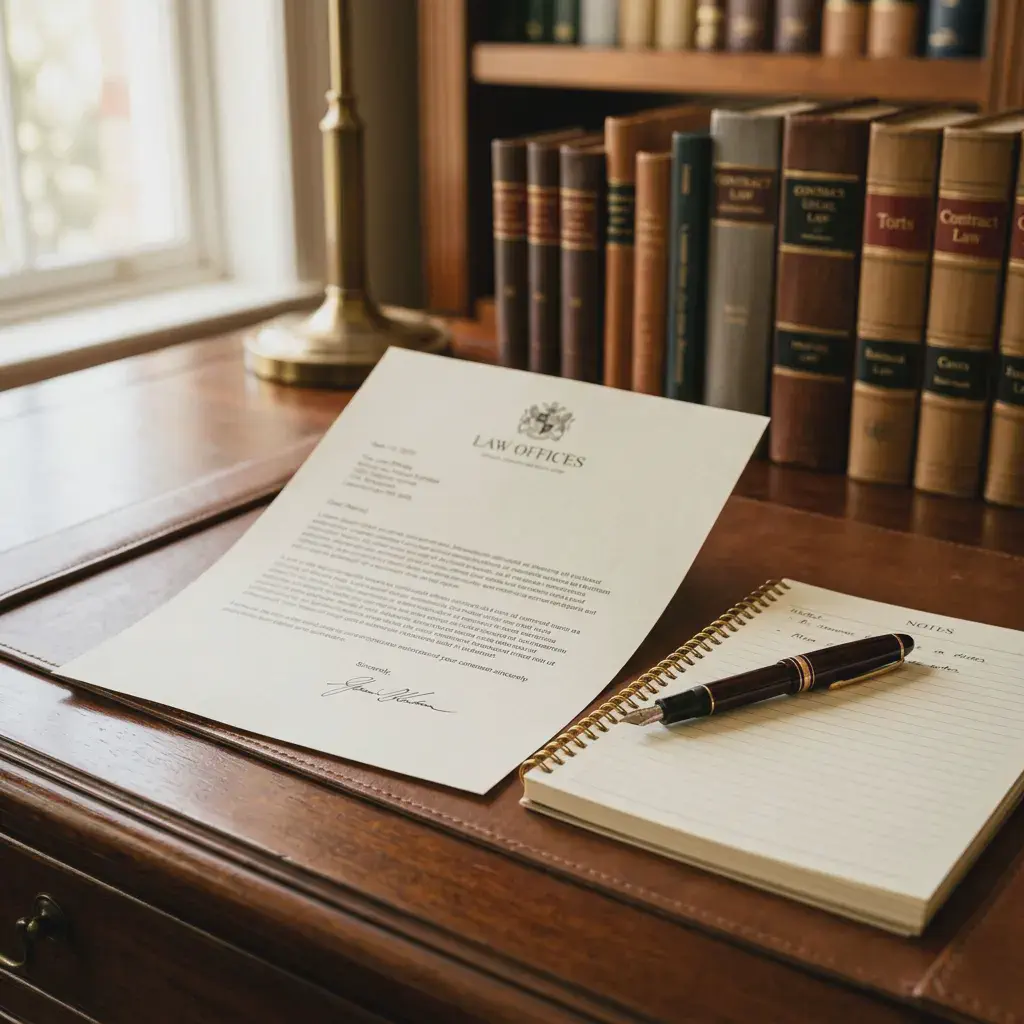
Sample Concerns Notice
The following structure reflects the requirements of section 12B of the Act. It is a general guide only and must be adapted with legal advice for your specific circumstances.
[Date]
To: [Full legal name of publisher] Address / Email: [Contact details]
Re: Concerns Notice — Defamation Act 2005 (Qld), section 12B
I am [full name] of [address]. This letter constitutes a Concerns Notice under section 12B of the Defamation Act 2005 (Qld).
1. The Publication
On [date], you published [description of the publication, for example, “a post on your public Facebook page located at [URL]” or “a review on Google Maps under the username [name] at [URL]”]. A screenshot of the publication is attached.
2. The Defamatory Imputations
The publication, in its natural and ordinary meaning, carries the following defamatory imputations of and concerning me:
(a) [State first imputation with precision, for example: “That I engaged in dishonest conduct in carrying out my professional duties as a licensed builder.”]
(b) [State second imputation if applicable, for example: “That I deliberately deceived my clients for financial gain.”]
These imputations are false. The publication has caused, and is likely to cause, serious harm to my reputation.
3. Request for Offer to Make Amends
I request that you make an offer to make amends under section 15 of the Defamation Act 2005 (Qld) within 28 days of receipt of this notice. An adequate offer would include the immediate removal of the publication, publication of a correction and apology in terms to be agreed, and compensation for the harm caused to my reputation.
If you do not make an offer to make amends within 28 days, I reserve all rights to commence proceedings without further notice to you.
Yours faithfully,
[Full name, signature, date]
What to Do If You Have Received a Concerns Notice
Receiving a concerns notice does not mean you have been sued. It means the person who sent it believes you have published material that is defamatory of them and they are required by law to give you an opportunity to resolve the matter before they can commence proceedings. You have 28 days from receipt to make an offer to make amends if you wish to do so.
Crown Law Queensland’s guidance on responding to a concerns notice is available at the Crown Law Queensland website .39
Immediate Steps Upon Receiving a Concerns Notice
-
Read the notice carefully and identify exactly what is complained of. Note the specific publication identified and the specific imputations alleged. Do not assume you understand what the claimant means, read the imputations precisely.
-
Do not delete the publication immediately. Deleting the publication before responding may be interpreted as an implied acknowledgment of liability and may not prevent proceedings from being brought. Take advice before taking the publication down.
-
Preserve all relevant evidence. Keep records of why the publication was made, any factual basis for the statements, any communications with the claimant or third parties relevant to the subject matter, and any context that supports a defence of justification, honest opinion, or privilege.
-
Obtain legal advice promptly. The 28-day window is short. The decision whether to make an offer, what that offer should contain, whether a defence exists, and the overall risk of proceeding to litigation all require careful legal analysis that takes time to complete properly.
You Have 28 Days From Receipt — Not 28 Days to Start Thinking About It Preparing a proper response to a concerns notice — assessing defences, taking instructions, drafting a legally effective offer — takes time. If you have received a concerns notice and haven’t contacted a lawyer yet, do it today.
Contact our defamation lawyers now for urgent advice on concerns notice responses. Call (07) 5532 8777.
- Assess the defences available to you. The most important questions are: Is the imputation substantially true? Was it honest opinion based on proper material? Was it published on an occasion of privilege? Answering these questions determines whether you should make an offer or defend proceedings.
Deciding Whether to Make an Offer to Make Amends
Consider the following factors in deciding whether to make an offer:
- If the imputation is substantially true, the defence of justification is likely available and you may elect not to make an offer and instead defend any proceedings on that basis
- If the publication was clearly opinion rather than a statement of fact, the honest opinion defence may apply
- If the publication was made to an appropriate recipient in discharge of a duty or interest, qualified privilege may apply
- If the audience was very small and the claimant cannot demonstrate serious harm, the claim may fail at the threshold stage regardless of whether the imputation is technically defamatory
- The cost of defending proceedings (likely to be $100,000 or more) versus the cost of an early apology, correction, or modest payment
- Whether making an offer will be misrepresented by the claimant as an admission, a carefully worded offer can be expressed without admitting liability
What a Reasonable Offer to Make Amends Should Contain
To be effective as a defence under section 18 of the Act, an offer to make amends must be genuine and must address the specific imputations complained of. A reasonable offer should include: removal or correction of the publication in the form and location where it appeared; publication of an apology or correction that reaches the same audience as the original publication; and, where appropriate, payment of compensation for harm caused. An offer that does nothing more than express regret for any offence caused, without removing or correcting the publication, is unlikely to be treated as reasonable.40
What Happens After the Concerns Notice Period
Jurisdiction: District Court vs. Supreme Court
If the matter is not resolved within the 28-day period, the aggrieved person may commence court proceedings. A critical decision is which court to file in. In Queensland:
- The District Court has jurisdiction to hear civil claims up to $750,000. Because general damages for defamation are capped (currently at approximately $478,500), the vast majority of defamation claims are filed in the District Court.
- The Supreme Court has unlimited civil jurisdiction and handles defamation claims where the total damages sought (including special economic damages like massive business losses) exceed $750,000.
Proceedings are commenced by filing a Claim (Form 2) and Statement of Claim (Form 16) under the Uniform Civil Procedure Rules 1999 (Qld) .41
The pleading of imputations in a Statement of Claim is highly technical. Imputations must be framed precisely and must reflect the actual meaning conveyed by the publication to a reasonable reader, not a paraphrased version or an exaggerated interpretation of it. Errors at the pleading stage can be fatal to a claim and are a common reason self-represented claimants encounter difficulty.
The Progression of Proceedings
Defamation proceedings in Queensland courts typically progress through the following stages:
Stage 1 — Service and Defence (weeks 1–8). The claim is served on the defendant. The defendant files a defence within 28 days of service. The defence will plead one or more of the statutory defences, most commonly justification, honest opinion, or qualified privilege, and will ordinarily also deny that the publication carries the imputations alleged, and deny serious harm.
Stage 2 — Preliminary Hearing on Serious Harm (if ordered, months 2–4). Increasingly, courts order a preliminary hearing to determine whether the serious harm threshold is satisfied before the full trial is heard. This hearing requires the claimant to present evidence, not merely submissions, of actual or probable serious harm.
Stage 3 — Mediation (months 3–6). The courts require parties to attend mediation before most matters proceed to trial. A significant proportion of defamation matters settle at mediation, and it is the most cost-effective point at which to resolve a dispute if the serious harm hearing has not already produced a resolution.
Stage 4 — Trial (months 6–18 or later). If the matter does not resolve, it proceeds to trial before a judge, and in some circumstances a jury.
Trials by Judge Alone or by Jury
Defamation proceedings may be tried by a judge alone or with a jury in either the District or Supreme Court. Under section 21 of the Act, either party may elect trial by jury, subject to the court’s discretion to order otherwise.42 If there is a jury, the jury determines whether the publication carries the imputations alleged and whether any defences (other than justification of a specific imputation) are established. The judge determines all questions of law and the quantum of damages. Jury trials are significantly more expensive and lengthy than judge-alone trials, which is why most modern defamation cases are determined by a judge alone.
Defences to Defamation
Even where all four elements of a defamation claim are established, the claim will fail if the defendant proves a valid defence. The defendant bears the onus of establishing the defence.
Defence 1: Justification (Truth)
Section 25 of the Defamation Act 2005 (Qld) provides a complete defence where the defendant proves that the defamatory imputation is substantially true.43 Truth is an absolute defence, no matter how damaging a true statement is, the defendant is entitled tojudgementt if the imputation is substantially true.
“Substantially” true means true in its substance. Minor inaccuracies in peripheral detail do not destroy the defence if the essential sting of the imputation is true. The defendant must prove the truth of the specific imputations pleaded by the claimant, not a broader or different version of events.
Defence 2: Honest Opinion
Section 31 of the Act provides a defence for the publication of honest opinion where:44
- The matter was an expression of opinion, not a statement of fact
- The opinion related to a matter of public interest
- The opinion was based on proper material — that is, facts that are true, or that were published on a protected occasion, or that the defendant reasonably believed to be true at the time of publication
The key question is whether the statement is an opinion or a factual assertion. A statement phrased as a fact (“He stole from his clients”) is not an opinion. A statement expressed as an evaluativjudgementnt on identified facts (“Based on what I witnessed at the meeting, his conduct was dishonest”) is more likely to attract the defence.
Defence 3: Qualified Privilege (Common Law)
The common law defence of qualified privilege applies where the publication was made on an occasion of privilege — where the publisher had a legal, moral, or social duty to communicate the information to the recipient, and the recipient had a corresponding duty or interest in receiving it.45 The duty-interest relationship must be reciprocal. Classic examples include employer references and reports of genuine professional misconduct to a regulatory body.
The defence is defeated if the claimant proves that the defendant was actuated by malice — that the dominant purpose of the publication was to injure the claimant rather than to discharge the duty that gave rise to the privilege.46
Defence 4: Statutory Qualified Privilege
Section 30 of the Act provides a statutory qualified privilege defence where the recipient had an interest or apparent interest in having information on a subject, the matter was published in the course of giving that information, and the defendant’s conduct was reasonable in the circumstances.47 Unlike the common law defence, the statutory defence turns critically on the reasonableness of the defendant’s conduct. Broadcasting a complaint to the world on social media when the appropriate course was a private communication to one recipient will ordinarily defeat this defence.
Defence 5: Absolute Privilege
Section 27 of the Act provides absolute privilege for publications in parliamentary proceedings, court and tribunal proceedings, and certain government communications.48 Absolute privilege is a complete defence regardless of the defendant’s motives or the falsity of the publication.
Defence 6: Public Interest (2021 Reform)
Section 29A of the Act, introduced by the 2021 amendments, provides a defence where the matter concerned an issue of public interest and the defendant reasonably believed that publishing the matter was in the public interest.49 This defence protects public interest journalism and commentary without requiring the pre-existing duty-interest relationship of qualified privilege.
Defence 7: Triviality
Section 33 of the Act provides a defence where the circumstances of publication were such that the claimant was unlikely to sustain any harm.50 This defence anticipates the serious harm threshold and may provide a basis for early dismissal in cases involving publications to very small audiences.
Defence 8: Consent
A claimant who consented to the publication of the defamatory material about themselves cannot maintain a claim. Consent may be express or implied from the circumstances.
Damages: What You Can Recover
Types of Damages Available
General Damages (Non-Economic Loss) compensate for harm to reputation, hurt, and distress caused by the defamatory publication under section 34 of the Act.51 They are assessed at large, precise proof of each dollar of loss is not required. As of the 2024–2025 financial year, the statutory cap on general damages for non-economic loss is $478,500 (indexed annually to the CPI under section 35A of the Act). This cap applies only to the non-economic component, it does not cap special or aggravated damages.
Special Damages under section 35 of the Act compensate for specific, provable financial loss caused by the publication, lost income, cancelled contracts, lost clients, or costs incurred responding to the reputational damage.52 Special damages must be specifically pleaded and proven with evidence.
Aggravated Damages under section 36 of the Act may be awarded where the defendant’s conduct in publishing the material, or in defending the proceedings, has been particularly high-handed, reckless, or malicious, and has increased the harm suffered by the claimant.53
Exemplary damages are not available in defamation proceedings in Queensland. The Act expressly prohibits them.
Key Damages Awards in Australian Cases
- Rush v Nationwide News Pty Ltd (No 7) [2019] FCA 496 — approximately $2.9 million in total (general damages $850,000, economic damages approximately $1.9 million, aggravated damages $250,000). False allegations of serious sexual misconduct against Geoffrey Rush as a prominent professional.54
- Wagner & Ors v Harbour Radio Pty Ltd & Ors [2018] QSC 201 — $3.7 million total damages awarded to four plaintiffs including aggravated damages to the Wagner family in respect of radio broadcasts making false allegations of responsibility for deaths at the 2011 Lockyer Valley floods, heard by hundreds of thousands of listeners.55
- Hockey v Fairfax Media Publications Pty Ltd [2015] FCA 652 — $120,000 in respect of billboard and online publications carrying an unjustifiable imputation separate from the full article.56
Costs: The Most Important Factor in Deciding Whether to Litigate
Costs in defamation proceedings are frequently the single most important consideration in deciding whether to litigate and are consistently underestimated by self-represented and legally represented claimants alike.
The General Rule on Costs
In Queensland civil proceedings, costs ordinarily follow the event, the losing party pays the winner’s legal costs as well as their own.57 In a defamation case, this means:
- If you bring a claim and lose, you will ordinarily be ordered to pay the defendant’s costs as well as your own
- If you bring a claim and win, you will recover a portion of your legal costs from the defendant, but only a portion (see below)
- If you bring a claim and succeed on liability but recover only nominal damages, you may still be ordered to pay the defendant’s costs if the court considers the claim was brought disproportionately to the harm suffered
What Defamation Proceedings Actually Cost
Defamation proceedings in the Queensland Courts are among the most expensive civil litigation you can pursue. Realistic costs estimates for proceedings that proceed to a contested hearing are:
| Stage | Typical Cost Range (per party) |
|---|---|
| Legal advice and concerns notice preparation | $2,000 – $8,000 |
| Preparing and filing proceedings | $10,000 – $25,000 |
| Preliminary serious harm hearing | $20,000 – $60,000 |
| Mediation | $5,000 – $15,000 |
| Full trial (judge alone, 3 days) | $80,000 – $200,000+ |
| Full trial (jury, complex matter) | $200,000 – $500,000+ |
| Appeal | $50,000 – $150,000+ |
These figures represent the costs of one party only. If you lose at trial, you face paying your own costs plus a significant portion of the defendant’s costs.
Party-Party vs. Indemnity Costs
The standard costs order in civil litigation is party-party costs, under which the paying party must pay a proportion (commonly 60 to 70 per cent) of the receiving party’s actual legal fees. If a court orders indemnity costs, the paying party must pay the receiving party’s actual legal costs in full (or very close to it).
Indemnity costs are awarded in defamation proceedings where the court finds that the losing party conducted the litigation recklessly, pursued a claim they knew or ought to have known was hopeless, or engaged in conduct that warranted particular sanction.
Calderbank Offers and Cost Consequences
A Calderbank offer is a settlement offer made in correspondence (not through the formal court process) that is stated to be “without prejudice save as to costs.” If a party receives a Calderbank offer and refuses it, then proceeds to trial and obtains an outcome no better than the offer, the court will ordinarily order that party to pay the other’s costs on an indemnity basis from the date the offer was made.58 This mechanism significantly incentivises early resolution of defamation disputes and is regularly used by defendants.
The Practical Costs Calculus for Claimants
Before committing to defamation proceedings, a claimant should work through the following honestly:
- What is the maximum amount of damages I could realistically recover?
- What is the realistic probability that I can prove all four elements and defeat all defences?
- What is the realistic probability that the court will find serious harm at a preliminary hearing?
- What will it cost me to run this case to trial?
- If I lose, what will I owe in costs to the other side on top of my own costs?
- Is there a proportionate relationship between the likely damages I would recover and the total costs risk I am taking on?
A claim that might result in a damages award of $30,000 is not worth pursuing through a contested trial that will cost each party $150,000 in legal fees. The costs risk is why the large majority of defamation disputes should be resolved through the concerns notice and offer to make amends process rather than through litigation.
Your Defamation Claim Has a 1-Year Time Limit Queensland’s limitation period for defamation claims is one year from the date of publication — one of the shortest in civil law. Courts grant extensions sparingly. If you have been defamed and are still weighing your options, the clock is already running.
Contact our defamation lawyers today for a confidential assessment of whether your claim is viable and what the concerns notice process looks like for your specific situation. Call (07) 5532 8777.
Social Media and Online Defamation
Online defamation through social media, review platforms, and online forums now represents the majority of defamation disputes in Queensland. The anonymity of online publication, the speed of content sharing, and the permanent indexing of internet content create particular challenges.
Platform Reporting Before Legal Action
Before commencing legal proceedings, use the platform’s own complaints process:
| Platform | Reporting Path |
|---|---|
| Facebook / Instagram | Report post → False information or Privacy |
| Google Reviews | Flag review → Conflicts of interest or Off topic |
| TripAdvisor | Report review → Factually incorrect or misleading |
| X (formerly Twitter) | Report → Abusive or harmful |
| Report → Harassment or targeted content | |
| YouTube | Report → Harassment and cyberbullying |
| App Store (Apple) | Report a concern via App Store review process |
Platform removal does not create legal liability for the publisher and does not prevent you from pursuing separate legal proceedings. However, removal stops the ongoing harm and is almost always faster than litigation.
Identifying Anonymous Publishers
Where defamatory material has been published anonymously, it may be possible to identify the publisher through a preliminary discovery application or Norwich Pharmacal order requiring the relevant platform to disclose user data to the court.59 This is a separate interlocutory step that requires an application to the Court and must be made before the substantive defamation claim. To succeed, the applicant must demonstrate that it has a reasonable prima facie case of defamation and that the platform holds information likely to identify the publisher.
Evidence to preserve before making such an application includes full screenshots with timestamps and URLs, screen-recorded video of the content in context, platform data on post interactions, and any evidence of who had the knowledge, motive, and access to make the publication.
The Google Search Indexing Problem
Even where defamatory content has been removed from its original source, search engines may continue to index cached or archived versions. Claimants often wonder if they can sue search engines directly.
In Google LLC v Defteros [2022] HCA 27, the High Court of Australia resolved this by finding that Google was NOT liable as a publisher of defamatory content merely by providing a hyperlink to it in search results, even if Google has been notified that the linked article is defamatory.60 Providing a link is merely facilitating access to the material, not communicating its substance.
Because you cannot sue Google simply for indexing a link to a defamatory page, your practical options are focused on the original author: request removal via Google’s Content Removal Tool under specific policy breaches, or seek a court order requiring the original publisher to remove the source content (which then organically enables de-indexing).
Key Australian Defamation Cases
Fairfax Media Publications Pty Ltd v Voller [2021] HCA 27
The High Court (4:3) confirmed that a media company that maintains a public Facebook page is a publisher of defamatory third-party comments posted on that page, because it voluntarily facilitated the publication by creating and maintaining the platform.61 This decision means every operator of a public social media page in Australia is potentially liable for defamatory comments by third parties, regardless of whether they wrote or were aware of those comments. Active moderation or disabling comments on public pages is essential risk management.
Google LLC v Defteros [2022] HCA 27
The High Court (5:2) found that Google was not liable as a publisher of defamatory content by continuing to provide hyperlinks in search results to articles it knew were defamatory.62 Providing a search result link does not amount to participation in the bilateral act of communication required for publication.
Roberts-Smith v Fairfax Media Publications Pty Ltd (No 41) [2023] FCA 555
In the most significant Australian defamation trial of the 21st century, the Federal Court dismissed Ben Roberts-Smith’s defamation claim against three major newspapers. The court found that the publishers had established the defence of justification — determining that the most serious imputations (that the Victoria Cross recipient had committed war crimes while serving in Afghanistan) were substantially true.63
The case is a stark reminder of the “truth defence” risk: once a claimant sues, the defendant is entitled to investigate and prove the truth of the allegations. Roberts-Smith was subsequently ordered to pay the defendants’ legal costs on an indemnity basis, estimated to be in the tens of millions of dollars.64 This case highlights why the Defamation Act is a “double-edged sword” for public figures.
Suing for Defamation Opens the Door to the Truth Defence Once you commence proceedings, the defendant has every right to investigate and prove the truth of the allegations. If there is any element of truth in what was published, pursuing a defamation claim can make things significantly worse. An honest assessment of your position before acting is essential.
Speak to our defamation lawyers confidentially before sending a concerns notice or commencing proceedings. Call (07) 5532 8777.
Wagner & Ors v Harbour Radio Pty Ltd & Ors [2018] QSC 201
The Queensland Supreme Court awarded $3.7 million total damages across four plaintiffs (the Wagner family) including aggravated damages in respect of radio broadcasts making false allegations of responsibility for deaths at the 2011 Lockyer Valley floods, broadcast to hundreds of thousands of listeners.65
Rush v Nationwide News Pty Ltd (No 7) [2019] FCA 496
The Federal Court found in favour of Geoffrey Rush, determining that imputations of serious sexual misconduct against him were not proven to be true, and awarded approximately $2.9 million in total damages including economic damages for loss of earning capacity.66
For more information on the strategic choice of filing in the Federal Court, see our article on Defamation in the Federal Court: A Queensland Plaintiff’s Guide .
Hockey v Fairfax Media Publications Pty Ltd [2015] FCA 652
The Federal Court found that newspaper billboards and promotional tweets conveying a “Treasurer for Sale” imputation carried a more serious defamatory meaning than the full article they promoted and that the additional imputation was not justified.67
Roberts v Bass [2002] HCA 57
The High Court provided authoritative guidance on malice for the purposes of defeating qualified privilege.68 Malice requires that the defendant’s dominant purpose was improper, to injure the claimant, rather than to discharge the duty or exercise the legitimate interest that created the privilege.
Newman v Whittington [2022] NSWSC 249
The New South Wales Supreme Court provided the leading analysis of the serious harm threshold following the 2021 amendments, finding that serious harm requires a qualitative assessment of the actual or probable impact on reputation and is not assumed from the gravity of the imputation.69

Defamation in the Professional and Workplace Context
Complaints to Professional Regulatory Bodies
Complaints made in good faith to a professional regulatory body, the Queensland Law Society, the Australian Health Practitioner Regulation Agency (AHPRA), the Queensland Building and Construction Commission (QBCC), or another authority, will generally attract qualified privilege, provided the complaint is made to the appropriate body, the complainant has a genuine basis for the concern, and the dominant purpose is to address the regulatory matter rather than to harm the subject of the complaint.70
A complaint made simultaneously to the regulatory body, the media, the employer, and social media loses its privileged character because the publication extends far beyond what is necessary to discharge the legitimate regulatory interest.
Employment References
The provision of a reference by a former employer to a prospective employer is a paradigm qualified privilege occasion. However, an employer reference that makes false factual allegations about a former employee, particularly allegations of dishonesty or unfitness, may not attract the privilege if the dominant purpose is to harm the employee rather than to assist the prospective employer make an informed decision.
Workplace Complaints and Grievances
Complaints made through a formal workplace grievance process, for example, a complaint of bullying, harassment, or misconduct lodged with a human resources department, will generally attract qualified privilege. However, communications about those complaints made outside the formal process, including discussions with colleagues, posts on social media, or emails to the complainant’s own personal network, will not attract the same privilege.
Injunctions and Urgent Relief
Where defamatory material is causing ongoing serious harm and needs to be removed urgently, a claimant may apply to the Court for an interlocutory injunction restraining the defendant from continuing to publish the material pending the final determination of proceedings.
Courts are very reluctant to grant interlocutory injunctions in defamation cases because of the fundamental tension between defamation law and the constitutional protection of freedom of political communication, and the broader public interest in freedom of expression generally.71 The test for an interlocutory injunction in defamation is significantly more demanding than in other civil proceedings. The claimant must show that the publication is clearly defamatory and not merely arguably so, that the defendant has no defence that is not plainly unsustainable, and that the balance of convenience clearly favours the granting of relief. If the defendant raises any plausible defence, justification, honest opinion, or qualified privilege, the injunction will ordinarily be refused.
In practice, interlocutory injunctions in defamation are rare and are generally confined to cases where the publication is obviously and egregiously false and no plausible defence can be identified. The leading authority is Australian Broadcasting Corporation v O’Neill (2006) 227 CLR 57; [2006] HCA 46.72
Step-by-Step Process for a Self-Represented Claimant
Step 1: Preserve the Evidence Immediately
Before doing anything else, capture and preserve the publication in its original form. Take full screenshots showing the URL, date and time, username, and complete content including any comments or interactions. Screen-record a video of the publication in context if possible. Note the exact date you first saw the publication. Record the approximate number of people who may have seen it. Evidence that is not preserved before it is deleted may be evidence you can never recover, and courts cannot award damages for a publication you cannot prove.73
Step 2: Assess the Publication Honestly
Before spending money on legal advice or proceedings, apply each of the core tests honestly:
- Was the matter published to someone other than me?
- Would a reasonable person reading it identify me specifically?
- Does it convey an imputation that would damage my reputation in the eyes of right-thinking, ordinary people?
- Is the imputation false? If it is substantially true, there is no viable defamation claim regardless of how damaging the statement is.
- Has it caused, or is it likely to cause, serious harm to my reputation? Think about concrete consequences, lost business, damaged professional relationships, withdrawal of opportunities, not merely hurt feelings or embarrassment.
- Was the publication within the past 12 months?
If you cannot honestly satisfy all of these, reconsider whether proceedings are the appropriate course.
Step 3: Attempt Informal Resolution First
Before sending a formal concerns notice, consider whether the matter can be resolved informally. Contact the publisher privately and request removal of the material. Use the platform’s reporting and complaints process. Seek mediation through a community or commercial mediation service. Many defamation disputes can be resolved without legal proceedings. Informal resolution is faster, cheaper, less escalatory, and in many cases produces the same practical outcome, removal of the material, without the costs and risks of litigation.
Step 4: Obtain Legal Advice
Obtain specific legal advice from a defamation lawyer before sending a concerns notice. The imputations section of a concerns notice must be carefully and precisely drafted. Poorly particularised imputations can result in the concerns notice being invalid and proceedings being stayed or dismissed. A lawyer can also assess the realistic prospects of your claim, advise on the serious harm analysis, and identify any defences the publisher is likely to rely upon.
Step 5: Send a Valid Concerns Notice
Prepare and send a valid concerns notice that complies with section 12B of the Act. Attach a copy of the publication as an annexure. Allow the publisher 28 days to respond. Keep a record of when and how the notice was delivered, delivery by email with read-receipt, or by registered post, is preferable to hand delivery or ordinary post.
Step 6: Evaluate Any Offer to Make Amends
If the publisher makes an offer to make amends within 28 days, evaluate it carefully with your legal adviser. Consider whether the proposed correction or apology adequately addresses the specific imputations complained of, whether it reaches the same audience as the original publication, whether any compensation offered reflects the actual harm caused, and the costs and risks of proceeding to litigation compared to the offer on the table. An offer that is commercially reasonable should be given serious consideration even if it does not fully satisfy your sense of grievance. Unreasonably rejecting a reasonable offer has significant costs consequences.
Step 7: File Proceedings if No Resolution Is Reached
If no offer is made or the offer is inadequate, you may file a claim in the appropriate Court (usually the District Court for claims under $750,000). File before the one-year limitation period expires. Your statement of claim must plead the specific imputations, the publication details, the serious harm caused, and any aggravating conduct. Consider applying for a preliminary hearing on serious harm to test the threshold issue early and avoid committing to full trial costs if that element cannot be established.
Proving Your Case at Hearing
Evidence Required at Trial
At a defamation trial, the claimant must present evidence sufficient to establish each element of their claim. This typically includes:
Evidence of publication — screenshots, archived copies, platform analytics data, evidence from witnesses who confirm they read or heard the publication, and any admissions by the defendant.74
Evidence of identification — where the claimant is not named, evidence that persons in the audience understood the publication to refer to them. This may include witness statements from people who read the publication and contacted the claimant, or from people who identified the claimant to others as the subject of the publication.
Evidence of the imputation — the claimant gives evidence of the publication and how they say it was understood. Lay witness evidence from actual readers about how they understood the publication is highly probative and courts prefer it over the bare assertions of the parties themselves.
Evidence of serious harm — this is the most important and often the most overlooked category of evidence. Concrete evidence of serious harm may include:
- Witness statements from clients, colleagues, or associates who confirm the publication changed their view of the claimant or affected their professional relationship with them
- Evidence of lost business, cancelled contracts, or departed clients with a demonstrated connection to the publication
- Evidence of professional or regulatory consequences flowing from the publication
- Medical evidence where psychological harm is claimed as part of the damage (noting that distress alone does not constitute serious harm to reputation)
- Platform analytics data showing the publication’s reach and engagement
- Evidence that the publication was shared, forwarded, or referenced by others, extending its reach beyond the original audience75
Evidence Required at a Preliminary Serious Harm Hearing
At a preliminary serious harm hearing, the claimant is required to present evidence, not merely argument, that the publication has caused or is likely to cause serious harm. Courts have been increasingly insistent on this point since the 2021 amendments. The claimant cannot simply assert that the publication was harmful or that a reasonable person would expect harm to result. There must be evidence from which the court can make a finding of serious harm on the balance of probabilities.
The Clayton Utz analysis of the serious harm threshold confirms that Australian courts have been willing to hear serious harm as a preliminary issue and to dismiss claims at that stage where the claimant cannot produce adequate evidence, and that this approach is likely to become more common as the case law develops.76
Frequently Asked Questions
Is it defamation if someone says something nasty about me on social media?
Not necessarily. The statement must carry a defamatory imputation, one that would lower your reputation in the eyes of reasonable ordinary people, must identify you, must be published to others, and must cause or be likely to cause serious harm to your reputation. Abuse, insults, and expressions of clear opinion are not automatically defamatory even when they are hurtful or embarrassing.
Can I sue for defamation if the publisher is in another state?
Yes. Australia has a nationally uniform defamation regime and the Defamation Act 2005 (Qld) applies where the matter was published in Queensland, meaning received and understood by at least one person in Queensland, regardless of where the publisher is located.77
Does a negative Google review constitute defamation?
It may, if it contains false statements of fact that carry a defamatory imputation and cause serious harm to your reputation. A review that says “I did not enjoy my experience” is an expression of opinion. A review that says “the owner deceived me” or “this business is fraudulent” may be defamatory if it is false and causes serious harm. Reviews that are vague, clearly subjective, or obviously an expression of dissatisfaction rather than a factual assertion are less likely to be actionable.
What if I republished something I found online?
Sharing, retweeting, forwarding, or reposting defamatory material makes you a publisher of that material under Queensland law, even if you did not originate it. Adding “allegedly,” “I have heard,” or “just asking questions” does not protect you if the substance of the communication conveys the defamatory imputation.78
Can I get an injunction to remove a social media post?
In very limited circumstances, yes. An interlocutory injunction requires the publication to be clearly defamatory and no plausible defence to exist. Courts are reluctant to grant injunctions in defamation because of the importance of freedom of expression. Removal through the platform’s own reporting process is almost always faster and does not require court proceedings.
How long does defamation litigation take?
From the date of filing a claim to a finjudgementent at trial typically takes between 12 and 24 months in Queensland courts, and longer in complex matters. Adding the concerns notice period and preliminary steps, a person whose publication occurred near the beginning of the limitation year may find their matter is not resolved for two years or more. Mediation or a preliminary serious harm hearing can resolve matters earlier.
Key Resources and Contacts
- Bell & Senior Lawyers — Gold Coast defamation law dedicated practitioners — 07 5532 8777 — bellsenior.com.au
- Defamation Act 2005 (Qld) — Full text — legislation.qld.gov.au
- AustLII, Defamation Act 2005 (Qld) — Section-by-section view — austlii.edu.au
- Queensland Law Handbook, Defamation — queenslandlawhandbook.org.au
- Crown Law Queensland, Concerns Notice Guidance — crownlaw.qld.gov.au
- Wonder Legal, Concerns Notice Template — wonder.legal
- Google Content Removal Tool — support.google.com
- Legal Aid Queensland — 1300 651 188 — legalaid.qld.gov.au
- Queensland Law Society, Find a Lawyer — qls.com.au
- Queensland Community Legal Centres — qclc.org.au
- Queensland Courts, Forms and Procedures — courts.qld.gov.au
Footnotes
Speak With a Lawyer
Contact our Gold Coast team for a confidential discussion about your matter.
Enquiry Sent
Thank you for reaching out. A member of our legal team will contact you shortly.
-
Defamation (Model Provisions) and Other Legislation Amendment Act 2021 (Qld), legislation.qld.gov.au , commencing 1 July 2021. ↩︎
-
Defamation Act 2005 (Qld), legislation.qld.gov.au . ↩︎
-
Defamation Act 2005 (Qld), AustLII section index . ↩︎
-
Defamation (Model Provisions) and Other Legislation Amendment Act 2021 (Qld); Crown Law Queensland, 2021 Changes to Queensland Defamation Law . ↩︎
-
Queensland Law Handbook, The Law Relating to Defamation in Queensland . ↩︎
-
Urbanchich v Drummoyne Municipal Council (1991) Aust Torts Reports 81-127; R Graham, Proving Extent of Publication in Defamation Proceedings (March 2025). ↩︎
-
R Graham, Proving Extent of Publication in Defamation Proceedings (March 2025). ↩︎
-
Ibid. ↩︎
-
Fairfax Media Publications Pty Ltd v Voller [2021] HCA 27, hcourt.gov.au . ↩︎
-
Knupffer v London Express Newspaper Ltd [1944] AC 116. ↩︎
-
Chakravarti v Advertiser Newspapers Ltd (1998) 193 CLR 519. ↩︎
-
Mirror Newspapers Ltd v Harrison (1982) 149 CLR 293. ↩︎
-
Lewis v Daily Telegraph Ltd [1964] AC 234. ↩︎
-
Wagner & Ors v Harbour Radio Pty Ltd & Ors [2018] QSC 201, inforrm.org . ↩︎
-
Queensland Law Handbook, The Law Relating to Defamation in Queensland . ↩︎
-
Defamation Act 2005 (Qld) s 10A , inserted by the Defamation (Model Provisions) and Other Legislation Amendment Act 2021 (Qld). ↩︎
-
McCullough Robertson, Serious Harm to Reputation: Case Law Development in Queensland (August 2024). ↩︎
-
Newman v Whittington [2022] NSWSC 249, at [44]–[55]. ↩︎
-
Ibid at [61]; Harris Defamation Lawyers, The Serious Harm Threshold (January 2025). ↩︎
-
Lunnon v Allens [2023] NSWCA 67; CGW Lawyers, Defamation Perspectives: Separate Serious Harm Hearings (March 2024). ↩︎
-
Kennedy’s Law, Cost Saver or Chimera? Preliminary Hearings on Serious Harm (March 2026). ↩︎
-
Defamation Act 2005 (Qld) s 23A , inserted by the 2021 amendments. ↩︎
-
Defamation Act 2005 (Qld) Part 3 (ss 12A–27) . ↩︎
-
Defamation Act 2005 (Qld) s 12B ; Harris Defamation Lawyers, Mandatory Concerns Notices Queensland (January 2025). ↩︎
-
Crown Law Queensland, Defamation: What to Do if You Receive a Concerns Notice . ↩︎
-
Stonegate Legal, Sending a Concerns Notice: Complete Guide (March 2024). ↩︎
-
Wonder Legal Australia, Defamation Concerns Notice Template . ↩︎
-
Stonegate Legal, Sending a Concerns Notice: Complete Guide (March 2024). ↩︎
-
Crown Law Queensland, Defamation: What to Do if You Receive a Concerns Notice . ↩︎
-
Uniform Civil Procedure Rules 1999 (Qld), legislation.qld.gov.au , r 22 (claim form). ↩︎
-
Defamation Act 2005 (Qld) s 31 ; Stonegate Legal, Defence of Honest Opinion in Defamation (July 2024). ↩︎
-
Adam v Ward [1917] AC 309; Bashford v Information Australia (Newsletters) Pty Ltd (2004) 218 CLR 366. ↩︎
-
Queensland Law Handbook, Defending Defamation Claims . ↩︎
-
Defamation Act 2005 (Qld) s 27 ; Stonegate Legal, Defending a Defamation Claim: Absolute Privilege . ↩︎
-
Defamation Act 2005 (Qld) s 29A , inserted by the Defamation (Model Provisions) and Other Legislation Amendment Act 2021 (Qld). ↩︎
-
Defamation Act 2005 (Qld) s 34 ; Queensland Law Handbook, Orders by the Court in a Defamation Claim . ↩︎
-
Rush v Nationwide News Pty Ltd (No 7) [2019] FCA 496, fedcourt.gov.au . ↩︎
-
Wagner & Ors v Harbour Radio Pty Ltd & Ors [2018] QSC 201, inforrm.org . ↩︎
-
Hockey v Fairfax Media Publications Pty Ltd [2015] FCA 652, timebase.com.au . ↩︎
-
Uniform Civil Procedure Rules 1999 (Qld) r 681; Queensland Law Handbook, Orders by the Court in a Defamation Claim . ↩︎
-
Calderbank v Calderbank [1976] Fam 93; UCPR 1999 (Qld) r 360. ↩︎
-
Norwich Pharmacal Co v Customs and Excise Commissioners [1974] AC 133; Uniform Civil Procedure Rules 1999 (Qld) r 242. ↩︎
-
Google LLC v Defteros [2022] HCA 27, hrlc.org.au . ↩︎
-
Fairfax Media Publications Pty Ltd v Voller [2021] HCA 27, hcourt.gov.au . ↩︎
-
Google LLC v Defteros [2022] HCA 27, hrlc.org.au . ↩︎
-
Roberts-Smith v Fairfax Media Publications Pty Ltd (No 41) [2023] FCA 555, fedcourt.gov.au . ↩︎
-
Roberts-Smith v Fairfax Media Publications Pty Ltd (No 42) [2023] FCA 1450, fedcourt.gov.au ; ABC News, Ben Roberts-Smith Ordered to Pay Indemnity Costs . ↩︎
-
Wagner & Ors v Harbour Radio Pty Ltd & Ors [2018] QSC 201, inforrm.org . ↩︎
-
Rush v Nationwide News Pty Ltd (No 7) [2019] FCA 496, fedcourt.gov.au . ↩︎
-
Hockey v Fairfax Media Publications Pty Ltd [2015] FCA 652, timebase.com.au . ↩︎
-
Roberts v Bass [2002] HCA 57, hcourt.gov.au . ↩︎
-
Newman v Whittington [2022] NSWSC 249. ↩︎
-
Queensland Law Handbook, Defending Defamation Claims . ↩︎
-
Australian Broadcasting Corporation v O’Neill (2006) 227 CLR 57; [2006] HCA 46, hcourt.gov.au . ↩︎
-
Ibid. ↩︎
-
R Graham, Proving Extent of Publication in Defamation Proceedings (March 2025). ↩︎
-
Ibid. ↩︎
-
McCullough Robertson, Serious Harm to Reputation: Case Law Development in Queensland (August 2024). ↩︎
-
Clayton Utz, What’s the Harm in That? Australian Courts Consider the Newly Introduced Serious Harm Threshold (June 2022). ↩︎
-
Dow Jones & Company Inc v Gutnick (2002) 210 CLR 575. ↩︎
-
Defamation Act 2005 (Qld) s 4 ; Dilena Defamation, How Do You Prove Defamation in Australia? (May 2025). ↩︎