Bell & Senior Logo

Legal Insights

Legal Insights & News

Latest Insights

Our team shares their insights on recent legal developments, case outcomes, and practical advice for businesses and individuals on the Gold Coast.

Gold Coast Apartment Strata Fees: What Levies Cover, Why They Rise, and What to Check Before You Buy
Property Law
• Andrew Bell

Gold Coast Apartment Strata Fees: What Levies Cover, Why They Rise, and What to Check Before You Buy

The apartment looks perfect, the price is right - and then the contract disclosures arrive with a levy figure that changes your borrowing maths. Strata fees are the most underestimated cost of Gold Coast unit ownership. Here is how levies actually work, why they climb, and what to check before you commit. The Two Funds (Sometimes Three) Every scheme levies owners into: Administrative fund - the day-to-day: cleaning, gardening, pool service, insurance, electricity for common areas, small repairs Sinking fund - the long game: repainting, lifts, concrete remediation, roof and pool replacement. Older schemes with thin sinking funds are one major works notice away from a special levy Some schemes also run a separate insurance fund or collect for a community title layer (master scheme levies sit on top of subsidiary scheme levies in layered developments) How Your Share Is Calculated: Unit Entitlements Levies are struck per unit entitlements - a schedule attached to the community management statement giving each lot a number reflecting its value/share. 1 Bigger or better-positioned lots pay proportionally more. Your entitlements also drive your voting power, so a lopsided schedule matters twice: in what you pay and what you control. Check them in the disclosure documents.

Body Corporate Disputes in Queensland: Your Options Before and Instead of Court
Property Law
• Andrew Bell

Body Corporate Disputes in Queensland: Your Options Before and Instead of Court

Apartment and townhouse living on the Gold Coast means living under a body corporate - and occasionally, disagreeing with one. The good news: Queensland has a purpose-built dispute ladder that resolves most strata conflicts without a courtroom. The bad news: each rung has its own rules and time limits, and skipping steps costs you. Who’s Who in a Dispute The body corporate - all owners collectively; owns and maintains common property The committee - elected owners making day-to-day decisions between meetings The body corporate manager - a paid professional running administration (not a decision-maker) The Commissioner’s office (BCCM) - the government dispute-resolution service An adjudicator - a decision-maker appointed by the Commissioner who decides disputes on the papers The Dispute Ladder 1. Talk, formally. Write to the committee or the lot owner. Many “disputes” are administrative errors - unapplied payments, misread by-laws, notices sent to old addresses. A precise letter (quoting the by-law or section) resolves a remarkable share.
Can Australia Regulate Frontier AI? Safety, Systems and Accountability
Technology Law
• Andrew Bell

Can Australia Regulate Frontier AI? Safety, Systems and Accountability

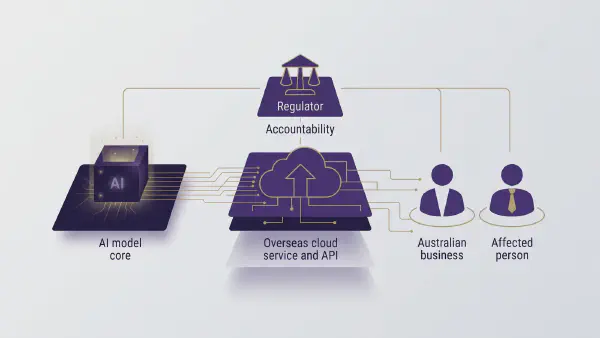
Australia is right to ask whether frontier artificial intelligence needs enforceable safety rules. The harder question is whether law can define the thing it intends to regulate, distinguish a model from the system built around it, decide what “safe” means, and allocate responsibility across a supply chain that may begin in a foreign data centre and end inside an Australian business. This article uses the Australian Government’s October 2026 frontier-AI speech as a case study in that larger problem. It examines what the proposed systems-based approach can learn from medicines, aviation, banking, work health and safety, critical infrastructure and consumer law; where those analogies break down; how regulation may affect developers, deployers and people exposed to AI decisions; and whether Australia can protect the public while still developing the domestic technology industry the Government says it wants.
Off-the-Plan Sunset Clauses in Queensland: How They Work and How They Are Used Against Buyers
Property Law
• Andrew Bell

Off-the-Plan Sunset Clauses in Queensland: How They Work and How They Are Used Against Buyers

Off-the-plan contracts trade today’s price for tomorrow’s building. The clause that manages that gap - the sunset clause - is also the clause most capable of ruining the deal. Here is how sunset clauses work in Queensland, what changed in 2023, and the protection gap that still exists for apartment buyers. What a Sunset Clause Does A sunset clause gives either party a right to terminate if the plan of subdivision/building format plan is not registered (practically: construction not complete) by a fixed date. On termination, deposits are refunded. Sounds balanced - in a falling or flat market, it mostly is.
Form 2 Seller Disclosure in Queensland: What Changed and What Sellers Must Disclose
Property Law
• Andrew Bell

Form 2 Seller Disclosure in Queensland: What Changed and What Sellers Must Disclose

On 1 August 2025, Queensland flipped from the old caveat-emptor (“buyer beware”) model to a mandatory seller disclosure regime. If you are selling - or bought before the transition and assumed nothing changed - here is what the new world requires. What Sellers Must Now Give Buyers Before a buyer signs, sellers must provide a Form 2 prescribed disclosure certificate. 1, accompanied by prescribed certificates and search results, including: Title details - plan, encumbrances, easements, covenants registered on title Body corporate information (for lots in a scheme) - levies, by-laws, insurance, litigation Planning and transport notices - including whether the property is affected by designated (future) transport infrastructure like Olympic-related corridors Notices and orders - pool safety non-compliance, building orders, contamination notices in some circumstances The Buyer’s Termination Right - the Big Change A buyer who was not properly given the Form 2 and attachments before signing can terminate the contract at any time before settlement. 2. That right sits on top of ordinary contract conditions - it is a disclosure-based escape hatch, and it is already generating disputes about whether disclosure was “proper.”
Do I Need Probate in Queensland? A Practical Decision Tree
Wills & Estates
• Andrew Bell

Do I Need Probate in Queensland? A Practical Decision Tree

“Do we need probate?” is usually the executor’s first question - and the answer saves or costs families thousands. Probate (the Supreme Court’s official recognition of the Will and the executor’s authority). 1 is sometimes essential, sometimes wasted money. Here is the decision tree we walk through with clients. Step 1: What Did the Deceased Own, and How? Jointly owned assets (house as joint tenants, joint bank accounts): these pass to the survivor automatically by survivorship - no probate needed for those assets. (But check tenancy: as tenants in common, the share does need the estate process.)
Contesting a Will in Queensland: The Family Provision Claims Timeline
Wills & Estates
• Andrew Bell

Contesting a Will in Queensland: The Family Provision Claims Timeline

Queensland’s Succession Act lets certain people challenge a Will that failed to make “adequate provision for their proper maintenance and support”. 1 These family provision claims are time-critical, evidence-heavy, and - handled well - very often settle. Here is the realistic timeline, from both sides of the dispute. Who Can Bring a Claim Eligible applicants under the Succession Act include: Applicant Notes Spouse (married) Includes de facto couples of 2+ years (or with a child) Former spouse Where maintenance was owed at death Children Including adult children - age is not a bar, need still matters Stepchildren Where they were maintained by the deceased Dependants Wholly or substantially maintained by the deceased at death Grandchildren In defined circumstances (dependence, or a parent predeceased) Eligibility is only step one. The court then asks whether the Will made adequate provision for proper maintenance and support - and answers it with a wide discretionary weighing, not a formula.
Call Us Book Time