
Legal Matters: Citizen's Arrest, Self-Defence and Card Surcharges

Stopping a suspected offender can turn a witness into an accused if the arrest or the force used is unlawful. In Episode 33 of Legal Matters, Andrew Bell and Colin Balewski examine the narrow rules for a citizen’s arrest in Queensland, the limits of self-defence, and why observing, recording and calling police is often safer than intervening physically.
The episode also explains the card surcharge changes commencing on 1 October 2026. Callers Glenda and David ask about using a phone for GPS navigation and declining casual conversation during a random breath test. Audrey Bell joins Andrew and Colin in the studio during the school holidays.
Key Topics
- When a private person may arrest without a warrant under Queensland law
- Reasonable force, notice of the arrest and immediate delivery to police
- Why security guards generally rely on consent, property rights and the same arrest law as other private citizens
- The safer alternative of recording an incident and reporting it from a distance
- Self-defence during road rage and the point at which defence becomes retaliation
- The qualified defence of a dwelling in Queensland, rather than an unlimited castle doctrine
- Card payment surcharge changes from 1 October 2026
- Using a mobile phone as a GPS under Queensland licence restrictions
- What a driver must provide during an RBT and how to complain about police conduct
Listener FAQ Highlighted in This Episode
- Can an ordinary person arrest a suspected offender in Queensland?
- What force can be used, and how quickly must the person be handed to police?
- Do security guards have powers to search bags or detain suspected shoplifters?
- When does self-defence during a road rage incident become assault?
- Can force be used against an intruder inside a Queensland home?
- Which card surcharges ended from 1 October 2026?
- Can a phone be used as a GPS on an open, P1 or P2 licence?
- Do drivers have to answer casual questions during an RBT?
- Where can a driver complain about intimidating police conduct?
Key Takeaways
- A private person can arrest without a warrant only within the circumstances authorised by the Criminal Code 1899 (Qld). It is not a general power to detain anyone who appears suspicious.
- The legal basis differs according to the offence and what the person actually witnessed or reasonably believed. The safer course is usually to call police and preserve evidence.
- Any force used must be reasonably necessary. More force than the law justifies is unlawful.
- If practicable, the person making the arrest must explain the cause of the arrest and must then take the arrested person before a justice or immediately deliver them to police.
- A private person cannot interrogate, punish or prolong the detention of a suspected offender.
- Security guards do not acquire general police search powers through their job. A request to inspect a bag usually depends on consent or conditions of entry, while physical detention requires a lawful basis.
- Self-defence protects force that is reasonably necessary against an unlawful assault. Once the danger ends, continued violence can become retaliation and assault.
- Queensland has a statutory defence of dwelling provision, but not an unlimited American-style castle doctrine. The circumstances, belief and necessity of the force still matter.
- From 1 October 2026, card network rules removed surcharges for Visa, Mastercard, American Express and eftpos card payments. Other unrelated surcharges can remain if lawfully disclosed.
- Open and P2 licence holders, and P1 holders aged 25 or over, can use navigation hands-free within the road rules. Learner and P1 drivers under 25 are subject to stricter restrictions.
- During an RBT, drivers must comply with identification, licence and breath-testing requirements, but generally need not answer exploratory questions.
- Complaints about police service or conduct can be made to Queensland Police Service, while serious police misconduct can be reported to the Crime and Corruption Commission. Requests for body-worn camera footage should be made promptly.
Annotated Transcript
Segment 1: Card payment surcharges from 1 October 2026
⚖️ Topic: Removal of card payment surcharges and the difference between payment fees and other surcharges
Relevant guidance: Reserve Bank of Australia, Removal of Card Payment Surcharges ; Australian Competition and Consumer Commission, Card Surcharges

Colin: Small and large businesses have been talking about the coming change. What should listeners expect when they use a card?
Andrew: Until the change, a business could pass on its permitted cost of accepting a card as a separate surcharge. From 1 October, the affected card networks will not allow businesses to add that separate card surcharge. Businesses still incur payment costs, so some may reflect those costs in their overall prices instead.
Colin: Does the change cover every fee a customer might see?
Andrew: No. It is directed at card payment surcharges. Weekend, public holiday and other service fees are separate questions. The practical point for consumers is to check the amount charged and ask the business about any card surcharge.
📎 See also: Can Businesses Charge Card Surcharges After 1 October 2026?
Segment 2: The narrow power of citizen’s arrest
⚖️ Topic: Arrest without warrant by a private person
Relevant law: Criminal Code 1899 (Qld) ss 254, 255, 546 and 552

Colin: People picture a shoplifter being chased through a shopping centre and tackled. What is a citizen’s arrest in Queensland?
Andrew: A private person can make an arrest in circumstances allowed by the Queensland Criminal Code. The important problem is that the rules are narrower than people assume. Your authority depends on the offence and on what you have seen or reasonably believe.
Colin: So suspicion alone is not enough?
Andrew: You need a proper legal basis. If you physically detain the wrong person, or the supposed offence did not permit the arrest, you may have to defend your own conduct. A phone is often the better tool. Record what you safely can, call police and keep them informed rather than starting a physical confrontation.
📎 See also: Can You Make a Citizen’s Arrest in Queensland? | What Should I Do If Arrested by Police in Queensland? | Legal Matters Ep 32: Police Roadside Stops Part 2
Segment 3: Force, detention and security guards
⚖️ Topic: Reasonable force and the limits on private security detention
Relevant law: Criminal Code 1899 (Qld) ss 254, 255 and 552
Colin: There must be boundaries on what a person can do after deciding to intervene.
Andrew: Absolutely. Only reasonably necessary force can be used. Hitting someone with a vehicle, prolonged restraint, zip ties or locking a person in a room may be far beyond what the circumstances justify. A private person cannot interrogate someone. The person must be delivered to police as soon as possible.
Colin: What about a shop assistant or security guard who sees a bottle being stolen?
Andrew: A security guard can ask someone to wait or ask to inspect a bag, but the uniform does not create general police powers. A lawful arrest still needs a lawful basis. Large retailers often direct staff not to intervene because an injury, a mistaken accusation or an unlawful detention can cost far more than the goods.
📎 See also: Can a Security Guard Detain or Search a Suspected Shoplifter? | Can You Make a Citizen’s Arrest in Queensland? | Criminal Law Services
Caller: Glenda, using a phone as a GPS
⚖️ Topic: Navigation apps and mobile phone restrictions by licence type
Relevant rules: Queensland Government, Driving and Mobile Phones
Glenda: Is it illegal to use your phone as a GPS while driving?
Andrew: For an open licence holder, a phone can be used hands-free for navigation if it is properly mounted and the driver complies with the road rules. Holding the phone remains unlawful.
📎 See also: Mobile Phone Rules While Driving: Fines, Demerits and Grey Areas | Legal Matters Ep 31: Queensland Police Roadside Stops
Segment 4: Road rage, self-defence and defence of a dwelling
⚖️ Topic: Reasonably necessary force, when a threat ends, and force inside a home
Relevant law: Criminal Code 1899 (Qld) ss 267, 271 and 273
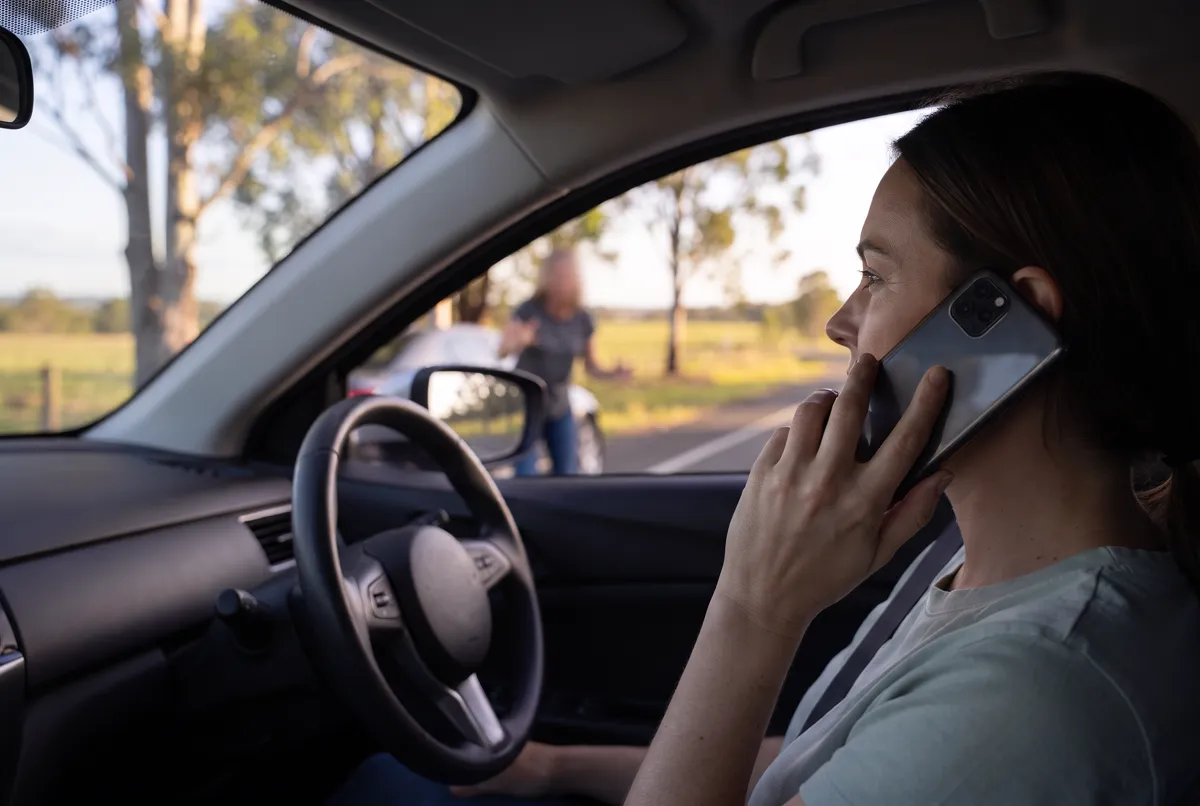
Colin: In a road rage confrontation, another driver gets out, damages your car and punches you. Can you punch back?
Andrew: If possible, stay in the car and avoid the confrontation. Queensland law permits reasonably necessary force in self-defence while the threat continues. The moment the threat ends, the justification ends. If someone is down and no longer a danger, continuing to kick or strike them is not self-defence.
Colin: Does being inside your own home create an unlimited right to attack an intruder?
Andrew: No. Queensland does not have an unlimited American-style castle doctrine. The facts still matter, including what you reasonably believed and why force appeared necessary.
📎 See also: Can I Claim Self-Defence for an Assault Charge? | Can I Carry Something in My Car for Self-Defence? | Legal Matters Ep 32: Police Roadside Stops Part 2
Caller: David, questions and conduct during an RBT
⚖️ Topic: Required cooperation, optional conversation and complaints about police conduct
Relevant law: Police Powers and Responsibilities Act 2000 (Qld) ; Transport Operations (Road Use Management) Act 1995 (Qld)

David: If police pull you over for an RBT, do you have to engage in conversation or answer their questions?
Andrew: Provide the identifying information and licence you are lawfully required to give, and comply with the breath test. You can respectfully decline small talk and exploratory questions about where you have been or what you were doing.
David: An officer recently became aggressive when I did not want to talk, then kept me there for licence and warrant checks. I found it bullying and intimidating.
Andrew: Police should not prolong a stop without a lawful purpose. If you believe the conduct was improper, you can make a complaint. Record the details and act promptly so that any available body-worn camera or other evidence can be identified and preserved.
📎 See also: How Do I Complain About Police Conduct After an RBT? | Do You Have to Answer Police Questions at a Traffic Stop? | What Happens If I Ask Police, Is That a Lawful Direction? | Legal Matters Ep 31: Queensland Police Roadside Stops
This transcript provides general legal information only; it is not personal legal advice. Everyone’s situation is different, so please seek independent legal advice for your own circumstances.
Related Episodes
-
Legal Matters Ep 35: Self-Defence, Defending Others and Estate Planning
-
Legal Matters Ep 34: Wills, Property Insurance, Land Tax and Probate
-
Legal Matters Ep 32: Police Roadside Stops Part 2, Settlement Extensions and Family Provision Claims
-
Legal Matters Ep 31: Queensland Police Roadside Stops, Your Rights and Obligations