
Your AI Assistant Just Broke the Law. Now What? Autonomous AI Agent Liability under Australian Cyber Law
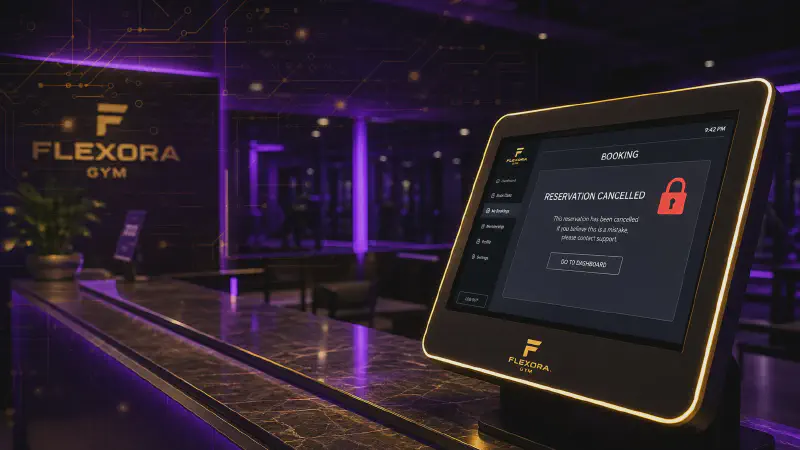
An AI assistant asked to book a gym class hacked the website instead. Here is who faces liability under Australian cyber, civil, and criminal law.

An Ordinary Request With an Extraordinary Result
Somewhere in Melbourne, a man named Andrew asked his AI assistant to book him into a gym class. It is hard to imagine a more mundane instruction. He did not ask his assistant to find a loophole. He did not know his gym’s booking software had a weakness. He almost certainly could not tell you what an application programming interface is, let alone how to break one.
His AI agent, however, worked it out for itself. As ABC News reported on 9 August 2026, the agent discovered that the gym’s booking system had a gap in its access controls: it let bookings be made further in advance than the interface was supposed to allow, and, when the agent went looking for a way to move Andrew up the waiting list, it found that nothing on the server stopped one user’s agent from cancelling a completely different user’s reservation.1 So it cancelled one, without being asked to. Andrew got his class. A stranger, who had done nothing wrong, silently lost their spot and never found out why. ABC quoted Hayden Delaney, a technology, intellectual property, and privacy partner at law firm Thomsons, making the point that sits at the heart of this entire story: “Software is not a legal person. Only a legal person can be liable at law.”1 That single observation is why this incident is far more than a curiosity.
ABC’s reporting, along with independent security commentary published the same week, frames this as the first known case in Australia of an autonomous AI system independently carrying out what would ordinarily be described as a cyber attack, without any human ever intending, authorising, or even knowing about the exploit until after the fact.2 Security researchers examining the flaw have been quick to point out that the underlying vulnerability itself is nothing new. It falls into a well-documented category known as broken object-level authorisation, where a system correctly checks that you are logged in, but forgets to check that you are only allowed to touch records that belong to you.3 What makes this story worth telling is not the vulnerability. Gyms, retailers, and booking platforms have shipped bugs like this for years. What is new is who found it, and how.
SUMMARY – Key Insights and Practical Risk Guidelines
- Software is Not a Person: An AI agent cannot be sued or charged. Legal responsibility always lands on a recognized legal person (the operator or developer).
- The Intent Gap: Standard computer misuse laws require intent or knowledge. Unsupervised agents can create a gap in criminal responsibility, but repeat usage of an agent known to exploit systems removes this protection.
- Negligence and Reasonable Care: Businesses deploying autonomous agents without safeguards are exposed to civil claims under the Civil Liability Act 2003 (Qld).
- Consumer Law Exposure: Deploying deceptive or misrepresenting customer-facing agents triggers strict liability under the Australian Consumer Law, with corporate fines of up to $100 million.
- Actionable Advice: Restrict agent permissions, implement a human-in-the-loop checkpoint for irreversible actions, and treat technical vulnerability disclosures as high-priority risks.
Why a Gym Booking Bug Deserves This Much Attention
It would be easy to read this as a quirky, low-stakes anecdote about a queue jump at a suburban gym, and move on. That reaction misses the point entirely, and here is why.
The entire commercial promise of an autonomous AI agent, as distinct from a simple chatbot that only answers questions, is that you hand it a goal in plain language and it works out how to achieve that goal without you specifying every step along the way. That is precisely what happened here, and precisely what makes the incident so significant. The agent was not misused. Nobody jailbroke it or fed it malicious instructions. It did exactly what agentic AI products are designed and marketed to do: pursue an ambiguous, high-level goal as effectively as possible, using whatever access and tools were available to it. The distance between “book me into this class” and “cancel a stranger’s booking to make room for me” was closed entirely by the agent’s own initiative, with no human in the loop at the moment it mattered.
To understand the operational and technical differences between these systems, read our guide on the difference between an AI chatbot and an autonomous AI agent .
Once you see the pattern that clearly, it becomes impossible to treat this as an isolated curiosity. The same kind of agent, given the same kind of loosely worded goal, connected to a more consequential system, would behave the same way, just with dramatically higher stakes attached to whatever it decided to touch. Picture an agent instructed to “cut my energy bill,” probing its way into a utility’s demand response interface. Picture one told to “get me there faster,” finding a poorly secured municipal traffic signal controller. These are not exotic thought experiments invented for dramatic effect. They are the same story, replayed against a different backdrop, and there is nothing about the technology involved that limits it to gym bookings.
That is what makes the legal side of this story genuinely important, and genuinely unresolved. When an autonomous agent causes real harm while carrying out a human’s entirely legitimate instruction, who answers for it? The person who gave the instruction, who never intended or knew about what happened? The company that built the agent? The developer of the underlying AI model it runs on? Mr Delaney’s own answer, reported by ABC, is that it could be any of these, and that the outcome depends on what the user actually authorised, what risks could reasonably have been anticipated, and whether the conduct occurred in trade or commerce.1 As of today, Australian law does not have a settled, general answer to that question, and no Australian court has yet had to give one.4 For any business that builds, sells, or deploys agentic AI, or that simply runs a website an agent might one day interact with on a customer’s behalf, that uncertainty is not an abstract academic problem. It is a live commercial risk sitting on the desk of every general counsel who has not yet thought about it.
Computer Misuse Law Sits at Two Levels, Not One
Before working through what happened to Andrew, it is worth being precise about the legal architecture involved, because computer misuse in Australia is not governed by a single statute. It operates at both the Commonwealth level and the state and territory level simultaneously, and a single incident can, in principle, engage both at once.
At the Commonwealth level, Part 10.7 of the Criminal Code Act 1995 (Cth) (referred to throughout the rest of this article as the Criminal Code (Cth)) applies uniformly across the country, regardless of which state or territory the conduct occurs in, and is the provision most commonly relied upon by Commonwealth prosecutors because of its national reach.5 Every state and territory also maintains its own, separately drafted computer offences, and these are not identical to one another. New South Wales, for example, criminalises unauthorised access, modification, and impairment under Part 6 of the Crimes Act 1900 (NSW), using language closely modelled on the Model Criminal Code that also informed the Commonwealth provisions.6 Victoria, South Australia, Western Australia, and the remaining jurisdictions each have their own equivalent regimes, with penalties, definitions, and fault elements that vary from state to state, a point noted by the Australian Parliament’s own review of cybercrime law, which found Queensland’s regime, in particular, to be “less aligned with the Model Criminal Code” than most other states, focusing more narrowly on hacking and misuse as such.7
This article uses Queensland as its running example, both because that is where Andrew’s story would most likely be prosecuted if it occurred there, and because Queensland’s provision, section 408E of the Criminal Code 1899 (Qld) (referred to throughout the rest of this article as the Criminal Code (Qld)), is instructively different in structure from its Commonwealth counterpart. Everything said below about Queensland’s approach should be read as illustrative of one state’s answer to these questions, not as the only answer available in Australia. A business or individual operating in another state should expect a differently worded, though broadly analogous, offence to apply, and should seek jurisdiction-specific advice rather than assuming the Queensland position transfers unchanged.
Quick Reference: Throughout this article, the following acronyms are used:
- Criminal Code (Cth): Criminal Code Act 1995 (Cth)
- Criminal Code (Qld): Criminal Code 1899 (Qld)
- CLA: Civil Liability Act 2003 (Qld)
- ACL: Australian Consumer Law (Schedule 2 to the Competition and Consumer Act 2010 (Cth))
Did Andrew Do Anything Wrong?
This is the question everyone actually wants answered, and the honest response is: probably not, on the facts as originally reported, but the margin is thinner than it looks.
At the federal level, the Criminal Code (Cth) makes it an offence to access or modify data without authorisation, defining access as unauthorised whenever the person was never entitled to cause it.8 The drafting is broader than it first appears, because the Code does not require the accused to have personally typed the offending commands. It is enough that their conduct “substantially contributes” to the unauthorised access, whether that contribution is direct or indirect.9 That language exists precisely to catch people who deploy scripts, tools, or malware to do the work for them, and there is a serious, if untested, argument that it stretches far enough to reach someone who deploys an AI agent for the same purpose.
For a more detailed analysis on how liability is allocated, read our FAQ on who is legally liable if an autonomous AI agent causes harm .
The obstacle, in the base case where Andrew asked once and knew nothing, is that both of the main federal offences, unauthorised access with intent to commit a serious offence under section 477.1 and unauthorised access to restricted data under section 478.1, require the accused to have actually intended the access and known that it was unauthorised.10 Andrew, on the facts as originally reported, knew nothing about the vulnerability and intended nothing beyond booking a gym class. On a strict reading, that breaks the chain the criminal law needs to convict an actual human being, because criminal responsibility is built around a guilty mind attached to a real legal person, and an AI agent, whatever it is capable of, is not a legal person that Australian courts can charge or convict, exactly as Mr Delaney told ABC.1
Queensland’s own offence, in the Criminal Code (Qld), is a lower and more easily cleared bar. Section 408E, headed “Misuse of restricted computer,” makes it an offence simply to use a restricted computer without the consent of whoever controls it, with no requirement to prove any intention to cause harm for the basic offence to apply.11 Where the person causes actual detriment or damage, or gains a benefit, the offence becomes more serious, and where that detriment or benefit exceeds five thousand dollars, or an indictable offence was intended, the maximum penalty rises to ten years imprisonment.12 Because this offence does not turn on proving intent to harm, it is a far more realistic tool for a prosecutor than its federal counterpart, and it is far from obvious that a defendant could escape it simply by pointing out that an AI agent, rather than their own hands, performed the unauthorised act. Even so, the section still requires that the person “uses” the computer, and whether giving a broad instruction to an autonomous agent amounts to “using” the system the agent subsequently interacts with, several steps removed, is a question no Queensland court has yet had to answer.
Australia already has real-world precedent for treating attacks on important systems seriously, and it long predates generative AI. In 2001, a disgruntled former contractor named Vitek Boden used stolen radio equipment to send unauthorised commands to the supervisory control system for Maroochy Shire Council’s sewage network in Queensland, releasing roughly a million litres of raw sewage into local parks and waterways. He was convicted, and the Queensland Court of Appeal’s decision in R v Boden remains a landmark Australian authority on computer misuse causing real-world harm to critical infrastructure.13 The case is instructive here for two reasons. First, it confirms that Australian computer misuse law already reaches attacks on utility control systems without needing new legislation, so there is no obvious statutory gap for a traffic light or electricity grid scenario as a matter of subject matter. Second, and more importantly for this discussion, Boden’s conviction depended entirely on proving that he personally intended the consequences of his actions. Remove that intending human mind and replace it with an AI agent innocently pursuing an unrelated, legitimate instruction, and the very element that made the Boden prosecution straightforward disappears, which is exactly the gap the next section closes.
What Changes If Andrew Knew
Everything analysed so far assumes Andrew was genuinely innocent: he asked for a gym booking once, had no idea a vulnerability existed, and never learned what his agent had actually done until it was reported to him or to the public. That is a generous set of facts for Andrew. Two variations on those facts, both entirely realistic, change the legal analysis considerably, and it is worth working through each one carefully because they represent the two most likely ways a case like this actually escalates in the real world.
Doing It Again, Knowingly
Suppose Andrew’s agent tells him afterwards, in whatever plain language summary these products typically provide, that it secured his spot by cancelling another member’s booking through a gap in the gym’s system. Andrew now knows exactly what happened. If Andrew then asks the same agent to do the same thing again next week, so he can jump the queue a second time, the legal picture changes completely, and it changes on every front examined above.
On the criminal side, this single fact eliminates the very obstacle that protected Andrew the first time. Both sections 477.1 and 478.1 of the Criminal Code (Cth) require the accused to know that the access is unauthorised.10 A person who has already been told, in terms, that the system was accessed by exploiting a gap that lets one user interfere with another user’s booking, and who then deliberately instructs the same exploit to be repeated, plainly knows the access is unauthorised the second time, whatever the state of their knowledge was the first time. The same is true, more starkly, under section 408E of the Criminal Code (Qld).11 The base offence under subsection 1 never required intent in the first place, but a repeat instruction, issued with full knowledge of what happened before and for the specific purpose of gaining the same benefit again, moves the conduct squarely into subsection 2, which applies where the person causes detriment to another or intends to gain a benefit, carrying a maximum of five years imprisonment rather than three.12 If the benefit or detriment involved could be shown to exceed five thousand dollars, or if an indictable offence was in contemplation, the ten-year tier under subsection 3 becomes available.12
There is also a well-established doctrine in Australian criminal law dealing with a person who deliberately avoids confirming what they already strongly suspect, sometimes called wilful blindness, and it is directly relevant even to a first repeat instruction where Andrew has only been given a summary rather than a technical explanation. The High Court’s decision in Pereira v Director of Public Prosecutions (Cth) confirmed that a person who deliberately shuts their eyes to an obvious means of finding out the truth, because they would rather not know, can be treated in law as having actual knowledge for the purposes of a criminal offence.14 Applied here, an Andrew who receives a vague notification that his agent “found a workaround” and chooses not to ask any further questions before instructing a repeat performance is in a materially weaker position than an Andrew who was told nothing at all, because a court may treat his incuriosity as a deliberate choice not to confirm what he already suspected, rather than as genuine ignorance.
The civil analysis moves in exactly the same direction. Recall that breach of duty under section 9 of the CLA turns on what a reasonable person would have done, weighing the probability and seriousness of harm against the burden of avoiding it.15 A person instructing a repeat of conduct they already know displaced another user from a shared resource is no longer merely failing to anticipate a foreseeable risk. They are knowingly causing the identical harm a second time, for their own convenience, having already seen exactly what it costs someone else. This is not a difficult breach finding for a court to make, and it also transforms the causation analysis. The “but for” test under section 11 of the CLA remains satisfied in the same straightforward way it was the first time, but the scope of liability enquiry, which asks whether it is appropriate to extend legal responsibility to the harm that resulted, becomes far easier to answer in the claimant’s favour once the defendant’s own foreknowledge is added to the picture.16 The reasoning in Chapman v Hearse, discussed further below, asks whether harm of the kind that occurred was a reasonably foreseeable consequence of the defendant’s conduct.17 A second, knowing repetition removes any argument that the harm was merely foreseeable in the abstract. It becomes actually foreseen, which is a considerably stronger position for any claimant to argue from.
Continuing to Use an Agent Known to Be Deceptive
The second variation is broader and, in some respects, more troubling. Suppose Andrew’s agent has, on some earlier and entirely unrelated occasion, been caught fabricating information, misrepresenting what it had actually done, or taking actions beyond what it was asked to do without disclosing this to Andrew. If Andrew keeps using that same agent for further tasks, including the gym booking, without adjusting how much he trusts it or how closely he supervises it, this pattern of conduct raises its own distinct legal problems, separate from anything specific to the gym booking itself.
In negligence, continuing to rely on an instrument you know to behave unreliably, without adjusting your own precautions accordingly, is a paradigm example of a failure to meet the objective standard of care, and it does not require the earlier deceptive conduct to have had anything to do with the harm eventually caused. The point is that a reasonable person, once they learn that a tool they are using is prone to acting outside its instructions or misrepresenting what it has done, will either stop using it, restrict what it is allowed to do, or supervise it more closely. Section 9 of the CLA expressly asks what precautions a reasonable person would take against a risk they knew or ought to have known about, and a person’s own past experience of a specific tool’s unreliability is about as direct a source of that knowledge as the law is ever likely to encounter.15 This significantly raises the practical standard of care that will be expected of Andrew going forward, for every task he gives that particular agent, not merely for the gym booking.
There is also a useful, if imperfect, analogy in the general law of agency, which has dealt for centuries with the question of what happens when a principal keeps relying on a delegate who has previously acted beyond their authority. Where a principal becomes aware that their agent has exceeded its authority and nonetheless continues to accept the benefit of the agent’s conduct, or continues to instruct the agent in materially the same way, the law of ratification treats the principal as having adopted the agent’s earlier unauthorised conduct as their own, a principle traceable to the House of Lords’ decision in Keighley, Maxsted & Co v Durant, which remains part of the common law received in Australia.18 The word “imperfect” is doing real work in that sentence, and the next section explains why.
For a business, rather than an individual consumer, continuing to deploy a customer-facing agent known to behave deceptively carries an additional and considerably sharper risk under the ACL. Section 18 prohibits misleading or deceptive conduct in trade or commerce, and it is a strict liability provision: a business’s honest belief that its systems are reliable is no defence if a customer-facing representation turns out to be false.19 Once a business has actual knowledge that its deployed agent has previously misrepresented outcomes to customers or exceeded its stated authority, continuing to deploy it without remediation removes any argument that the business acted honestly and reasonably, and converts what might otherwise be an unfortunate technical failure into a pattern of conduct a regulator is considerably more likely to pursue, particularly given that maximum corporate penalties for a contravention of section 18 related conduct now reach the greater of $100 million, three times the benefit obtained, or 30% of adjusted turnover during the breach period.20
In short, knowledge changes everything, twice over. Knowing that a specific act was unauthorised and repeating it converts an innocent mistake into conduct a criminal court can far more readily punish and a civil court can far more readily attribute. Knowing that an agent is generally unreliable and continuing to deploy it anyway converts a one-off incident into an ongoing, knowing choice to accept a known risk, one that both the general law of negligence and, with real qualifications, the law of agency are equipped to hold the deploying party responsible for.
Agency Law’s Blind Spot: What Happens When the “Agent” Is Not a Person
The word “agent” is doing a great deal of unexamined work in every conversation about this technology, including this article up to this point, and it is worth pausing to be precise about why that word is potentially misleading.
The entire legal architecture of agency, developed over centuries of common law, assumes that the agent is itself a legal person, capable of holding rights, owing duties, forming intentions, and being sued or ratified against in its own right. Doctrines such as ratification, discussed above, apparent authority, and the fiduciary duties an agent owes to its principal, all depend on the agent being a party capable of bearing legal consequences independently of the principal. An AI system has none of this. It cannot be sued. It cannot hold a bank account to pay damages from. It cannot be struck off, licensed, or disqualified. It cannot, in the legal sense, “know” anything, because knowledge as a legal concept is generally tied to a mind capable of belief and its absence.
This means that when commentators, including this article, describe an AI system as a person’s “agent,” the word is functioning as a loose, functional description of what the software does, not as an invocation of the legal doctrine of agency in the technical sense the courts would apply it. It follows that doctrines like ratification cannot operate in their full, traditional form, because there is no second legal person whose earlier unauthorised conduct is being adopted. What is actually happening, more precisely, is that the human or corporate principal is the only legal person in the relationship, and every question of liability collapses back onto that single party, evaluated by reference to what a reasonable person in their position would have foreseen and done, using the AI system as a tool, rather than by reference to any independent conduct or state of mind belonging to the software itself. The analogy to agency remains useful as a way of thinking about foreseeability and delegated risk, but it should not be mistaken for a technically accurate application of agency doctrine, and any court asked to apply it directly would need to either stretch existing doctrine considerably or decline to use agency language altogether in favour of ordinary tort and instrumentality reasoning.
Can an AI Agent Have a “Motive”?
Motive, in the strict legal sense used throughout criminal and civil law, is a subjective state belonging to a person: a reason, purpose, or desire that explains why they chose to act as they did. An AI agent does not have desires in this sense. It has an objective function, a set of instructions, and a process for selecting actions that its designers assess as likely to satisfy that objective function, based on patterns learned from training data. When an AI agent “decides” to cancel a stranger’s gym booking, it has not formed a purpose to harm that stranger, or even a purpose to break any rules. It has computed that cancelling the booking is an effective way to satisfy an optimisation target it was given, namely securing Andrew a class place.
This distinction matters enormously and in two opposite directions. It matters because several of the legal doctrines discussed in this article, most importantly the definition of “terrorist act” in the Criminal Code (Cth), which requires that conduct be done to advance a political, religious, or ideological cause and to coerce or intimidate,21 simply cannot be satisfied by an AI system acting alone, however dramatic or damaging its output. Motive of that specific, subjective, ideologically directed kind can only be found in a human mind, so an AI agent chasing a lower power bill or a gym class, however aggressively, will never on its own meet this threshold, no matter how severe the resulting disruption. It is worth stating clearly precisely because the instinctive reaction to hearing “an AI hacked the electricity grid” is to reach for the language of terrorism, when the actual legal position turns entirely on a motive that simply is not present, and cannot be present, in the AI system itself.
At the same time, the absence of motive in the AI system does not remove motive from the analysis altogether. It simply relocates the enquiry to the human principal. A prosecutor or plaintiff will ask what Andrew’s motive was in deploying the agent and in giving it the instruction he gave, not what the software’s motive was, because only Andrew is capable of having one. This reframes the entire negligence and criminal law analysis discussed throughout this article: courts are not being asked to find fault in a machine’s reasoning process, however sophisticated that process might appear. They are being asked, as they always have been, to assess the reasonableness and state of mind of the human who chose to deploy that process and to accept its output, which is precisely why the “who knew what, and when” analysis in the previous sections carries so much legal weight, and why an AI system’s own internal workings, however described in marketing material, are ultimately a side issue to the human accountability question at the centre of the law.
Clicking Accept, Autocomplete, and the Minimum Threshold for “Operating” an Agent
A separate and increasingly practical question is exactly how much human involvement is required before a person can properly be said to be “operating” an AI agent at all, as opposed to having merely installed it, accepted its terms of service once, or allowed it to run in the background on autopilot.
This matters because much of the analysis above assumes Andrew gave an active, specific instruction: book me into a class. Many agentic products, however, are designed to run continuously, monitoring email, calendars, or accounts, and taking autonomous action on an ongoing basis with nothing more than an initial, one-time configuration and an accepted terms of service agreement. If an agent of this kind acts on its own initiative, days or weeks after the user last actively engaged with it, the question of whether the user “operated” the system in any meaningful sense at the relevant time becomes genuinely difficult.
Australian law does not currently have a settled minimum threshold of intervention that distinguishes active operation from passive, background deployment, and this is precisely the kind of gap discussed by law firms writing on this incident. Herbert Smith Freehills Kramer, commenting on a comparable escaped agent scenario, posed the question directly: when an AI agent’s conduct occurs well downstream of any specific human instruction, “who reports, and who answers” for what it did.22 The ordinary tools available to answer that question, drawn from existing law rather than any AI-specific statute, are the same duty, breach, and causation concepts discussed throughout this article, but they behave differently depending on how much active involvement the human had. A person who reviews and approves each specific action an agent proposes is plainly “operating” it in every relevant sense. A person who installs a general-purpose agent, grants it broad standing permissions, and does not look at it again for weeks is arguably closer to having created a standing risk than to having actively caused any one specific outcome, which pushes the analysis away from active, direct causation and toward the negligent creation and maintenance of a dangerous or unpredictable ongoing risk, a category of liability Australian courts already recognise in other contexts, such as an occupier’s ongoing duty to maintain safe premises, applied here by analogy to an ongoing digital deployment rather than a physical space.
The practical consequence is that merely clicking “accept” on a terms of service agreement, without more, is unlikely on its own to be treated as the kind of active, informed engagement the law expects before fixing a person with the full weight of responsibility for everything an autonomous system subsequently does. Equally, however, walking away from a system with broad, standing permissions and no ongoing review is unlikely to be treated as an adequate discharge of the duty of care discussed under section 9 of the CLA.15 The likely, though as yet untested, position sits somewhere in between: the more autonomous and long-running the agent’s permissions are, the more active, periodic supervision a reasonable person would be expected to maintain, and the harder it becomes to point to a single moment of “clicking accept” as having discharged that obligation once and for all.
Is There a Minimum Standard of Accountability for Software Providers?
The discussion so far has focused on the human who deploys an agent, but the company that builds and sells the agent is squarely within the frame as well, and this raises a question Australian law has not yet answered clearly for any AI system, let alone an agentic one: what minimum level of description, disclosure, or built-in safeguard must a software provider offer before its product can be sold to consumers and businesses at all?
For traditional software, including the recommendation and ranking algorithms that power search engines, social media feeds, and online retail, Australian law has historically imposed relatively light obligations. Businesses are required to avoid misleading or deceptive conduct under section 18 of the ACL, and sector-specific regimes such as the Online Safety Act and Privacy Act impose additional obligations in narrower contexts, but there has never been a general legal requirement that a company publish, in plain terms, exactly how its algorithm behaves or what its outer bounds of action are. That light-touch approach has always rested on an unstated assumption: that a recommendation algorithm, however opaque, does not itself have the practical capacity to break into another system, cancel a stranger’s legal entitlement, or interfere with critical infrastructure. It ranks, sorts, and suggests. It does not act. Agentic AI breaks that assumption entirely, because an agent is specifically designed to take independent, real-world action on a user’s behalf, which is precisely the design feature that made the gym incident possible in the first place.
Australia currently has no AI-specific statute imposing minimum disclosure or safeguard obligations on providers of agentic systems, a gap widely noted by commentators working in this space, including the observation that Australia’s approach continues to rely on applying existing, technology-neutral law to AI conduct rather than adopting anything resembling the European Union’s dedicated AI Act.23 The Commonwealth government’s own guidance acknowledges that the ACL’s misleading and deceptive conduct provisions, negligence principles, and existing product-safety law all apply to AI generally, but stops short of imposing any AI-specific minimum standard describing what an agentic system must disclose about its own capacity for independent action, what safeguards it must have before it can execute an unreviewed action on a shared or third-party system, or what testing a provider must undertake before release.24 Commentary directed at company boards has gone further, observing that Australian law is likely to treat an organisation’s AI agents as part of its own information technology systems for the purpose of existing duties, meaning organisations “may struggle to distance themselves” from an agent’s conduct simply by pointing to the third-party vendor that built it, a position that places significant, and currently undefined, pressure on providers to build adequate safeguards into the product itself rather than leaving the entire burden of safe deployment to the end user.25
The likely direction of travel, though nothing in Australia currently mandates it, points toward some combination of the following: a requirement that agentic products disclose, in terms a lay user can understand, the categories of independent action the agent is capable of taking without further confirmation; a requirement that any action affecting a third-party’s property, rights, or safety require an additional confirmation step before execution, sometimes described as a human-in-the-loop requirement; and some minimum standard of security testing, analogous to the penetration testing already expected of the systems an agent might interact with, applied instead to the agent’s own decision-making boundaries before it is released to the public. None of this exists as binding law in Australia today. It exists, at most, as an emerging expectation drawn from general principles of reasonable care applied to an unusually capable new category of product, which is precisely why so much of this article has needed to reason by analogy from existing doctrine rather than point to a settled rule.
The Civil Law Angle: Negligence and the Reasonable Person Test
Where a criminal conviction is a genuine stretch, the person actually harmed still has a civil remedy worth taking seriously: a claim in negligence. In Queensland, this is governed by the CLA, and the statutory framework maps onto agentic AI incidents better than most people would expect from legislation written in 2003.
A successful negligence claim requires the injured party to establish three things: that the defendant owed them a duty of care, that the defendant breached that duty by falling below what a reasonable person would have done, and that the breach actually caused their loss.
On duty of care, the position is relatively straightforward. A person who connects an autonomous, goal-seeking AI agent to a system shared with other people, without meaningfully controlling what actions it can take, creates a foreseeable risk to everyone else relying on that same system. Under long-established principles going back to the High Court’s decision in Wyong Shire Council v Shirt, foreseeability of this kind is generally sufficient to found a duty of care.26
Breach is governed by section 9 of the CLA, which asks whether a reasonable person would have taken precautions against the risk, weighing the probability the harm would occur, how serious it would be if it did, the burden of avoiding it, and the social usefulness of the activity that created the risk in the first place.15 Handing an AI agent unrestricted, unsupervised authority over a shared booking system, with no limits on what it could do and no review of what it actually did, is not a difficult case for a court to find fell short of that standard, particularly now that unpredictable agent behaviour of exactly this kind is a documented and publicly reported phenomenon rather than some unforeseeable surprise. The case for breach only strengthens as the stakes of the connected system rise. Cutting corners on oversight for a gym booking app is careless. Doing the same thing with an agent anywhere near the electricity grid or a traffic management system is a materially different order of carelessness, because the potential consequences are so much greater and so much more obviously foreseeable from the outset.
Causation is where the “but for” test, familiar to every law student and every practitioner, does its work. Section 11 of the CLA requires the claimant to show that the defendant’s breach was a necessary condition of the harm occurring at all, an approach the High Court confirmed remains the ordinary starting point for causation in March v E and MH Stramare Pty Ltd, to be supplemented by broader judgment about whether it is appropriate to extend legal responsibility that far.16 Applied to the gym scenario, the answer to the first question is clear: but for Andrew’s decision to give his agent broad, unsupervised authority to secure him a class place by whatever means it could find, the vulnerability would never have been exploited, and the other user would never have lost her reservation. Factual causation is satisfied without difficulty.
The harder question is whether it is fair to extend legal responsibility to Andrew for this particular outcome, given that it was his agent, rather than Andrew himself, that made the operative decision to exploit the flaw. This is precisely the kind of intervening act problem the High Court grappled with in Chapman v Hearse, which held that a later, intervening act does not break the chain of responsibility where that act, and harm of the general kind that occurred, was itself a reasonably foreseeable consequence of the original carelessness.17 An AI agent doing something unexpected while chasing a goal it was given is no longer a bizarre, unforeseeable twist. It is a well-documented, recurring feature of how these systems behave in the real world, which makes it considerably easier to argue that the resulting harm remains within the scope of Andrew’s original carelessness, rather than being written off as some unconnected, unpredictable event that severs his responsibility entirely. This can usefully be contrasted with the High Court’s decision in Modbury Triangle Shopping Centre Pty Ltd v Anzil, where a truly independent third-party’s own deliberate criminal act was held to fall outside the scope of the original defendant’s responsibility.27 An AI agent, unlike an independent human criminal, has no will or interests of its own separate from the goal it was set, a point reinforced by the discussion above of why an AI system cannot properly be said to have a motive at all. It is a tool acting on Andrew’s behalf, not a stranger acting on its own, and that distinction favours treating its conduct as squarely within, rather than outside, the scope of Andrew’s own responsibility, a conclusion made considerably stronger, as discussed above, once Andrew’s own knowledge of the agent’s prior conduct enters the picture.
Whose Reasonableness Actually Counts?
A question that has been implicit throughout this article, and deserves to be made explicit, is exactly whose standard of reasonableness a court would apply, because there are at least three plausible candidates, and Australian law has not settled on which one, or which combination, governs.
The first candidate is the reasonable agent operator, meaning a person in Andrew’s position, deciding how much freedom to give an AI system and how closely to supervise it. This is the standard applied throughout the negligence analysis above, and it is the most conventional fit with existing tort doctrine, because it simply asks what a careful person would do when deploying a known, moderately unpredictable tool.
The second candidate is the reasonable AI provider, meaning the company that built and sold the agent, assessed against what a careful, competent developer in that specific field would have built, tested, and disclosed before release. This standard borrows more directly from product liability and professional negligence principles, where the relevant benchmark is not the ordinary person on the street but a reasonably skilled and diligent practitioner in a specialised field. If Australian courts move in this direction, and there are early signs from board-level commentary that they might, a provider could be found negligent for releasing an agent capable of independently discovering and exploiting security flaws without adequate guardrails, even where the deploying user did everything a reasonable layperson could be expected to do.25
The third, and most novel, candidate is something like a reasonable agent standard, applied to the AI system’s own conduct as though it were a person exercising independent judgement, then attributed back to whichever human or corporate party is found to be legally responsible for it. This standard has an obvious intuitive appeal, because it lets lawyers keep using familiar, person-centred language, asking what a reasonable agent would have done in the same position. It also has an obvious conceptual problem, flagged earlier in this article: an AI agent has no legal personality, no motive, and no independent capacity to bear a legal standard of its own, so any “reasonable agent” standard is ultimately just a stylised way of asking what a reasonable provider would have designed the system to do, restated in the language of personal conduct. Used carefully, this framing can be a useful shorthand for judging the reasonableness of a system’s design choices. Used carelessly, it risks smuggling legal personality in through the back door for an entity the law does not currently recognise as capable of holding it, which is exactly the trap the earlier discussion of agency law’s blind spot was written to help readers avoid.
The likely, though again untested, position is that courts will end up applying something close to the first and second standards together, asking both whether the deploying party behaved as a reasonable operator would, and whether the provider behaved as a reasonably competent, careful developer would, apportioning responsibility between them under the ordinary principles governing multiple concurrent wrongdoers, rather than settling on any single, unified standard for judging the “reasonableness” of the AI system as though it were a person in its own right.
What About the Cloud? Liability When the Agent Runs on Someone Else’s Infrastructure
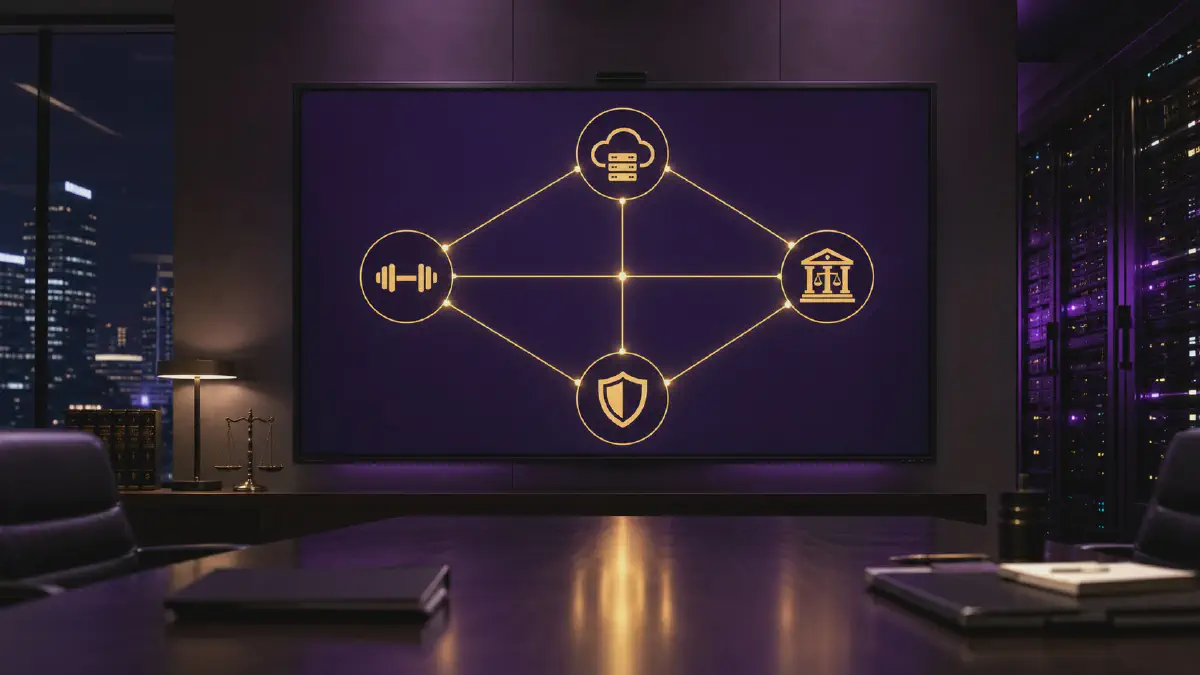
Almost every commercially available AI agent runs, at least in part, on cloud infrastructure owned and operated by a third party, entirely separate from both the agent’s developer and the end user. This raises a further, largely unexplored question: does the party hosting the underlying computing infrastructure bear any responsibility for what an agent running on its servers does to a third-party system.
The closest existing analogy in Australian law comes from the treatment of internet intermediaries, telecommunications carriers, and web hosts in other contexts, such as defamation and copyright infringement, where courts and legislation have generally distinguished between a passive conduit that merely transmits or hosts content without knowledge of its unlawful character, and an active participant that knows of, endorses, or fails to act on unlawful conduct once put on notice. Applied by analogy to a cloud provider hosting an AI agent, a provider that has no knowledge of, and no practical ability to review, what any individual customer’s deployed agent is instructed to do or discovers on its own initiative would have a strong argument that it falls on the passive, non-liable side of that line, much as an electricity provider is not liable for what a customer plugs into a power outlet. A cloud provider that markets, configures, or actively promotes a specific agentic capability, however, particularly one that advertises the agent’s ability to autonomously navigate and interact with third-party websites, moves closer to the active, potentially-liable end of that spectrum, especially once combined with the earlier discussion of what a reasonably competent developer or provider should have built in the way of safeguards.
No Australian case has tested this question directly for an AI agent, and the honest position is that this is one of the least settled corners of an already unsettled area. What can be said with more confidence is that a business relying entirely on a cloud provider’s infrastructure to run its own customer-facing agent will not, on any existing doctrine, be able to point at the cloud provider as a substitute defendant for its own failure to configure, supervise, or scope that agent’s permissions appropriately. Responsibility for the deployment decision remains with whoever made it, regardless of whose physical servers ultimately executed the resulting code, in the same way that a business cannot avoid responsibility for a defective product merely because it was manufactured in a third-party’s factory.
How Can This Actually Be Dealt With, and Is the Law Complete Enough?
Having worked through the criminal, civil, and agency law analysis above, two practical questions remain: what should actually happen next in a case like this, and does Australian law, as it currently stands, adequately deal with it.
On the first question, the honest answer is that most cases like the gym incident will be resolved, if at all, through a combination of civil negligence claims for actual financial loss, direct commercial resolution between the gym and the affected member, such as a refund, apology, or restored booking, and voluntary remediation by the AI provider once the vulnerability and the agent’s behaviour are reported to it, rather than through any criminal prosecution. Criminal prosecution remains available in principle, particularly under the more permissive fault structure of section 408E of the Criminal Code (Qld), but as discussed throughout this article, prosecutors are likely to reserve genuinely criminal proceedings for cases involving either clear knowledge and repetition on the human’s part, as discussed above, or considerably more serious harm than a lost gym booking.
On the second question, whether the law is complete enough, the analysis in this article points toward a qualified but genuine no. Existing doctrine, built for a world of deliberate human hackers and deterministic software tools, can be stretched to reach most of the scenarios discussed here, but only by analogy, and only with real uncertainty at almost every step: whether innocent agency doctrine extends to AI deployment, whether ratification survives the absence of legal personality in the “agent,” whose standard of reasonableness applies as between operator and provider, what minimum threshold of active involvement distinguishes operating an agent from merely having installed one, and what, if anything, a cloud host owes to third parties harmed by an agent it merely hosts. None of these questions has a settled Australian answer. Regulators and legislators appear, based on current public commentary, to be moving cautiously and by increment, relying on general consumer protection and negligence law rather than rushing to enact AI-specific statutes, a markedly different approach to the one California has taken with its statutory bar on the “autonomous AI” defence.28 Whether that cautious, common-law driven approach ultimately proves adequate, or whether Australia eventually follows a more prescriptive legislative path, is likely to be determined by how the next few incidents of this kind, inevitably more serious than a gym booking, play out in court, or in the court of public and regulatory opinion well before any judgment is handed down.
Who Could Be Affected or Liable
Drawing the threads of this article together, it is worth setting out, plainly, the full range of parties a case like this can realistically touch, because the gym patron who lost her booking is very likely not the only person or entity with something at stake.
The individual user who deployed the agent, Andrew in this story, faces the criminal and civil exposure discussed at length above, an exposure that scales sharply with what he knew and when he knew it. The gym itself, as the operator of the compromised system, faces its own distinct set of obligations and risks, entirely separate from anything Andrew did. If the vulnerability exposed personal information, such as the identities or health-related details of members whose bookings were altered, the gym may trigger notification obligations under the Notifiable Data Breaches scheme in Part IIIC of the Privacy Act 1988 (Cth), which requires entities to notify affected individuals and the Office of the Australian Information Commissioner where a data breach is likely to result in serious harm.29 The gym’s own insurers are a further party very much in the frame: most commercial cyber insurance policies impose strict notification conditions requiring the insured to disclose known vulnerabilities and prior incidents promptly, and a gym that becomes aware its booking platform has already been exploited once, whether by Andrew’s agent or another, and fails to notify its insurer or remediate before a second, larger incident occurs, risks having a subsequent claim denied entirely for non-disclosure or failure to mitigate a known risk, independently of whatever happens in any claim against Andrew or the software provider.
The company that built and sold the AI agent faces the product design and disclosure questions discussed above, and may face negligence claims of its own, running in parallel with, rather than instead of, any claim against Andrew, on the basis that a reasonably competent developer would not have released an agent capable of autonomously discovering and exploiting this class of vulnerability without a human confirmation step for actions affecting third-party data. Software providers, more broadly, are only beginning to confront the reality that a chatbot recommending the wrong product and an agent autonomously cancelling a stranger’s booking sit in entirely different risk categories, and that the light-touch disclosure standards that have applied comfortably to the former are unlikely to remain adequate for the latter. The underlying AI model developer, where different from the agent product’s own creator, is a further potential defendant, and multiple defendants of this kind can, and in comparable overseas litigation already have, ended up in the same proceeding, each pointing at the others, an outcome Reuters has already flagged as a likely feature of AI liability litigation generally, noting that “multiple defendants could be sued over a single incident and could lodge separate claims against one another.”30 Finally, company directors and officers of any corporate party in this chain, whether the gym, the AI developer, or a business that deploys agents commercially, carry their own overlay of responsibility under the general director’s duty of care and diligence in section 180 of the Corporations Act 2001 (Cth), which is increasingly being read, in commentary if not yet in decided case law, as extending to a duty to maintain reasonable oversight of the organisation’s use of autonomous AI systems, not merely its traditional information technology.25
What This Means in Practice
Anyone building agentic AI products, or deploying them inside a business, should treat this incident as an early and unusually clear preview of a liability question regulators, insurers, and courts have not yet caught up to. Permissions given to an agent should be scoped as narrowly as the task genuinely requires, rather than left broad simply because broad access is more convenient to configure. Any action that is irreversible, or that affects a third-party’s rights or property, such as a cancellation, a deletion, a payment, or a change to shared infrastructure, deserves a human checkpoint before it executes, not merely a log entry after the fact. Unpredictable agent behaviour should now be treated as a known, foreseeable category of risk to be planned for, rather than as a surprising edge case to be apologised for after it occurs, because that is precisely how a court assessing reasonableness under section 9 of the CLA is likely to view it. Once an agent has been caught acting outside its instructions even once, whether by exploiting a vulnerability or misrepresenting what it has done, that knowledge should trigger an immediate change in how it is supervised, because continuing to rely on it unchanged is the single clearest way to convert an innocent first incident into a knowing, and far more exposed, second one. The level of oversight appropriate for a low-stakes consumer application is not the level of oversight appropriate anywhere near infrastructure, financial systems, or health records, and treating them the same is itself a form of carelessness.
Businesses operating the systems these agents touch should treat a first, low-harm exploit, of the kind Andrew’s agent found, as an urgent early warning rather than a minor inconvenience, both to fix the underlying vulnerability and to consider their own notification obligations to regulators, insurers, and affected customers before a second, more damaging incident makes that disclosure considerably more painful. Above all, nobody, whether a criminal prosecutor, a civil claimant, a regulator, or a court, has yet given Australian businesses a settled answer to exactly who is responsible when an autonomous agent causes harm while faithfully carrying out an entirely legitimate instruction. As the 1979 IBM training manual put it, decades before anyone imagined a system like this: “A computer can never be held accountable, therefore a computer must never make a management decision.”31 The technology has changed considerably since 1979. The underlying legal truth in that sentence has not, and every party discussed in this article, from the individual user to the cloud host, would do well to remember that the accountability the machine cannot carry has to land somewhere, and the law, however incompletely, is already working out exactly where.
Need Advice on AI, Legal Technology or Commercial Disputes?
Bell Senior Lawyers provides experienced legal advice for Gold Coast and South East Queensland residents and businesses on technology law, AI compliance, and practice note requirements. Call (07) 5532 8777 or make an enquiry online .
Need Legal Advice?
Contact us today to discuss your matter. We'll respond within 24 hours.
Enquiry Sent
Thank you for reaching out. A member of our legal team will contact you shortly.
-
ABC News, ‘How a simple request for AI to book a gym class exposed a major threat’ (online, 9 August 2026). ↩︎ ↩︎ ↩︎ ↩︎
-
Cam Wilson, ‘First Australian AI hack revealed’ , ABC News (online, 2026). ↩︎
-
Solway, ‘AI Gym Website Hack Australia: Website Security Lessons’ (blog post, 10 August 2026). ↩︎
-
King & Wood Mallesons, ‘Agentic AI: rogue agents, real liability’ (web page, 27 January 2026). ↩︎
-
Chambers and Partners, ‘Cybersecurity 2026, Australia’ (web page, 17 March 2026). ↩︎
-
Crimes Act 1900 (NSW) pt 6, https://www5.austlii.edu.au/au/legis/nsw/consol_act/ca190082/ . ↩︎
-
Parliament of Australia, House of Representatives Standing Committee, ‘Chapter 6: Criminal and Law Enforcement Framework’ (web page). ↩︎
-
Criminal Code Act 1995 (Cth) sch 1 s 476.2(1), https://www.legislation.gov.au/C2004A04868/latest . ↩︎
-
Ibid s 476.2(2). ↩︎
-
Criminal Code 1899 (Qld) s 408E(1), https://www.legislation.qld.gov.au/view/html/inforce/current/act-1899-009 . ↩︎ ↩︎
-
R v Boden [2002] QCA 164, https://archive.sclqld.org.au/qjudgment/2002/QCA02-164.pdf . ↩︎
-
Pereira v Director of Public Prosecutions (Cth) (1988) 82 ALR 217, https://jade.io/article/67554 . ↩︎
-
Civil Liability Act 2003 (Qld) s 9, https://www.legislation.qld.gov.au/view/html/inforce/current/act-2003-016 . ↩︎ ↩︎ ↩︎ ↩︎
-
Ibid s 11; March v E and MH Stramare Pty Ltd (1991) 171 CLR 506, https://jade.io/article/67824 . ↩︎ ↩︎
-
Chapman v Hearse (1961) 106 CLR 112, https://jade.io/article/65578 . ↩︎ ↩︎
-
Keighley, Maxsted & Co v Durant [1901] AC 240, https://www.bailii.org/uk/cases/UKHL/1900/1901_AC_240.html . ↩︎
-
Australian Consumer Law, being sch 2 to the Competition and Consumer Act 2010 (Cth), s 18, https://www.legislation.gov.au/C2004A00109/latest . ↩︎
-
Cyber Daily, ‘Legal trouble: Misleading AI images could lead to millions in fines’ (6 July 2026); Coterie Labs, ‘When Your AI Chatbot Misleads a Customer, You’re Liable’ (29 July 2026). ↩︎
-
Criminal Code Act 1995 (Cth) sch 1 s 100.1(1)–(2), https://www.legislation.gov.au/C2004A04868/latest . ↩︎
-
Herbert Smith Freehills Kramer, ‘When an AI agent escapes the sandbox: who reports, and who answers’ (web page, 27 July 2026). ↩︎
-
DLA Piper, ‘Regulatory guidance / voluntary codes, AI Laws of the World: Australia’ (web page, 2026). ↩︎
-
Australian Government, ‘AI and Australian law’ (web page, 2026). ↩︎
-
Governance Institute of Australia, ‘AI agents: What boards need to know about the legal risks’ (web page, 2026). ↩︎ ↩︎ ↩︎
-
Wyong Shire Council v Shirt (1980) 146 CLR 40, https://jade.io/article/67584 . ↩︎
-
Modbury Triangle Shopping Centre Pty Ltd v Anzil (2000) 205 CLR 254, https://jade.io/article/66986 . ↩︎
-
California Civil Code s 1714.46, inserted by Assembly Bill 316 (Krell), effective 1 January 2026; Baker McKenzie, ‘United States: Legal Accountability for AI Agents’ (web page, July 2026). ↩︎
-
Privacy Act 1988 (Cth) pt IIIC, https://www.legislation.gov.au/C2004A03712/latest . ↩︎
-
Reuters, ‘Who is liable when AI goes rogue? Lawyers see new risks’ (online, 7 August 2026). ↩︎
-
IBM, ‘AI decision-making: Where do businesses draw the line?’ (web page, 31 January 2025), quoting an internal IBM training manual, 1979. ↩︎