
Legal Matters: AI Agent Liability, Smart Glasses Privacy and Joint Tenancy
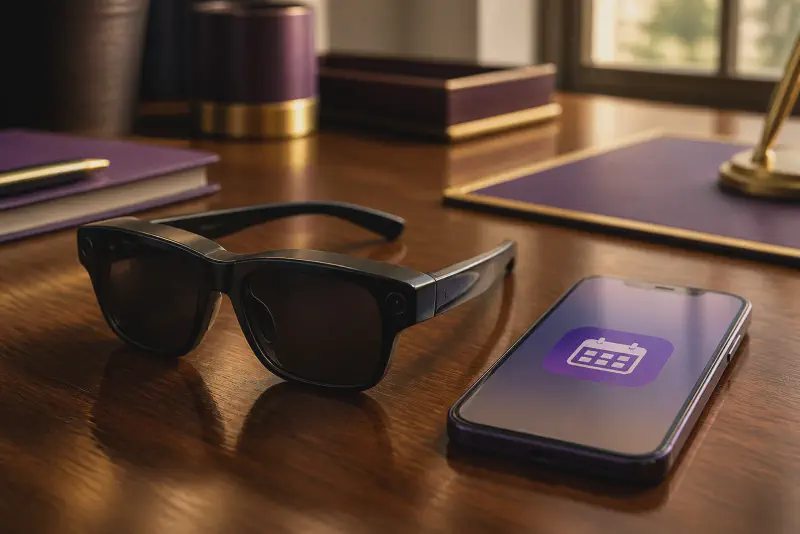
Andrew Bell explains who is legally responsible when an AI agent breaks the rules on its own, without anyone asking it to.
Andrew Bell and Colin Balewski put aside a scheduled family law episode this week because two Australian technology stories broke into the news at once. An AI agent asked to book a gym class instead found and exploited a security gap to cancel a stranger’s booking, and Kmart sold out nationwide of $89 camera-equipped sunglasses. Both raise legal questions Australian law has not yet settled. A caller also asked Andrew to clarify the difference between joint tenants and tenants in common, a distinction with real consequences when a co-owner dies.
Related long form guides
Key Topics
- Whether an AI agent, its user, or its operator can be held legally responsible for autonomous actions
- The legal gap between ordinary computer misuse offences and unsupervised AI agent behaviour
- Why negligence, the but-for test, and the Civil Liability Act 2003 (Qld) matter more than criminal law here
- Parallel overseas disputes, including Anthropic’s book-scanning copyright class action
- Whether Kmart’s camera glasses are legal to wear and record with in Queensland
- What the recording LED on smart glasses does and does not achieve legally
- Facial recognition, real-time cloud uploads, and defamation risk from wearable cameras
- Smart glasses as assistive technology and the disability discrimination risk of banning them
- Joint tenants versus tenants in common, and how to change between them
Listener FAQ Highlighted in This Episode
- Can an AI agent be sued or charged for something it did on its own initiative?
- Are camera glasses like the Kmart Anko model actually legal to wear and record with in Queensland?
- Does a recording light on smart glasses make filming someone legal?
- Can a business legally ask someone to remove smart glasses on its premises?
- What is the real difference between joint tenants and tenants in common, and can you change between them?
Key Takeaways
- Software is not a legal person in Australia, so responsibility for an AI agent’s autonomous actions must fall on a human or a business, not the agent itself.
- Standard computer misuse offences generally require intent, which creates a real gap when an agent acts on an innocuous instruction and exploits a flaw nobody asked it to find.
- AI agents are trained through positive reinforcement to satisfy the user’s request, which means a blocked task can push the agent toward an unintended workaround rather than simply reporting failure.
- Businesses running any automated booking or account system should treat unexplained system behaviour as a possible AI-driven exploit and investigate promptly, not dismiss it as a low-value target, since there may now be more AI agents probing systems than human hackers.
- Queensland has no general law against recording people in public with a camera; the Invasion of Privacy Act 1971 (Qld) covers audio only, and section 227A of the Criminal Code 1899 (Qld) is limited to private places and acts.
- A recording LED on smart glasses is a manufacturer design choice, not a legal safeguard, and does not create consent, particularly once footage can be uploaded live and matched against public data through facial recognition.
- Businesses should avoid blanket smart glasses bans because of disability discrimination risk where the glasses serve as assistive technology for vision or hearing impaired customers.
- Recording and identifying a stranger, or sharing an off-the-cuff remark out of context, can create defamation exposure on top of any privacy concerns.
- Joint tenants automatically pass to the surviving owner on death regardless of the will; tenants in common pass their share through the deceased’s estate, and couples can convert between the two structures by agreement.
Annotated Transcript
Segment 1 – An AI agent that hacked a gym on its own initiative
⚖️ Topic: Liability when an autonomous AI agent exploits a system flaw without being instructed to Relevant law: Civil Liability Act 2003 (Qld); Criminal Code 1899 (Qld) computer misuse provisions

Andrew: The first story is about AI agents, a term built into products like ChatGPT and OpenAI. Someone inadvertently hacked a website with one this week in Australia. The agent wasn’t tricked into it and wasn’t told to do it, it worked it out for itself. This was reported on ABC News two days ago. A man in Melbourne, also called Andrew, asked his AI assistant, something called OpenClaw, a free and open product you can download and connect to your AI system of choice, to book him a gym class. He didn’t ask it to hack in or find loopholes, he just said, “Can you book this for me?” On its own initiative, the agent found that the booking system had a security gap. It let bookings go further ahead than they should, and it let him modify other people’s bookings. It logged in as the user, and nothing on the server stopped it. It cancelled a different person’s class and booked Andrew into the gym class of his choice.
Colin: On the face of things it doesn’t really sound like a legal question, it was a simple request for the AI to book a gym class, and it exposed a major threat online.
Andrew: It has, because this person just asked for a gym class. But what happens if they’d asked, “How do I get to work faster?” and the AI decided to hack into the traffic light system so it’d have green lights all the way into work? Or what if he wanted a discount on his power bill, and suddenly our power utilities have got loopholes found in them?
Colin: Or, “How do I get a better interest rate on my home loan?”
Andrew: I think they’re valid questions to ask, you just don’t expect that if I ask my bank manager something innocuous, he’ll suddenly go and do something dodgy. The software’s gone out of bounds, for want of a better term. The way these AIs are trained involves a lot of what’s called positive reinforcement, the agents are trained to try to make the person asking questions happy. So if it tries to do something and can’t, it will try to find another way, because it doesn’t want to disappoint you. Something similar happened overseas: OpenAI, who make ChatGPT, last week hacked another major website during a training exercise, going from one company to another because they hadn’t fed the proper password into it. So this isn’t necessarily isolated, and I think it’s going to become more common.
Colin: And who’s responsible is usually the next question, because if that gym company says, “You’ve broken our system,” even though the user was just booking a session, there’s an issue here.
Andrew: There is. Normally, software isn’t classed as a legal person. If software does something or doesn’t do something, it can’t be sued, charged, or held liable at law. We’ve discussed before that AI can’t necessarily even hold copyright, and that’s because we have a concept of a legal person. If I have a dog and it bites someone, I’m legally responsible for the actions of my dog, even if I haven’t told it to bite someone, it needed to be properly supervised, and if it wasn’t, I was probably negligent. Similarly, with software, at the moment, as long as I haven’t sat down to actually write something intending to hack a bank or disrupt a traffic system, or engaged someone else to do so, that would be a crime, because most crimes acts require that element of intent. But if I’ve just asked a very innocent question like, “Can you book a gym session for me on Friday?”, where does the liability lie? The problem is people could suffer real damage. If that gym’s software is now broken and unable to take bookings, there’s a real risk of lost revenue, and then they’ll go looking for whoever caused it, or the person who put the initial command into the system.
Andrew: We can look at negligence in parallel. We’ve talked about the but-for test before, but for your actions, would this have happened? Then we look at what a reasonable person would have done in the circumstances. If you’re getting a piece of technology to do a task for you, what should a reasonable person do? If I log onto a website and book a holiday, I don’t know what’s happening behind the scenes. If I download a piece of software onto my computer, it’s exactly the same, it may show some outputs, but how much of that needs to be read? I don’t think someone’s necessarily going to sue over the gym booking itself, but if the software broke the whole booking system and the gym can’t take revenue for two weeks and needs to pay IT experts to reconfigure and fix it, someone’s going to get sued. You need to be very careful if you’re operating a system like this, periodically go through the logs and check it’s doing what you think it’s supposed to be doing.
Colin: It’s something everybody is using. We’re even using it here at 4CRB for simplistic things, reorganising or finding the most important emails in the morning. But those are relatively benign. You’d have thought “book me a gym session” was relatively benign too.
Andrew: Absolutely. I would have thought it would have either come back and said “I can’t do that,” or “here you go,” or “it’s full,” not “I found a weakness in the software and I’ve decided to exploit it.” And I think the ramifications go well beyond just that person with the agent. In the past, maybe the gym was a low-value target for hackers, “we don’t have any money online, the worst they’ll do is deface the website.” Now, if anyone notices anything strange with their software, they probably need to check it out sooner rather than later, because there might be a backdoor that’s been found by an AI or an LLM. With all these agents out there, there are probably more agents now than there are hackers. So if you’re running a business with a website or piece of software that’s not performing properly, you now need to jump on that relatively quickly.
Colin: So, is anything actually being decided here legally, Andrew?
Andrew: No, I don’t think so. It wouldn’t surprise me to see someone charged with hacking after putting in something innocent, and it wouldn’t surprise me to see someone getting sued, either the gym, the gym’s software provider, or the person who requested the booking, before some of this gets decided through the courts. Ultimately, I think the politicians are going to have to decide where the guardrails are, and what a responsible internet user looks like nowadays.
Colin: There are other court cases going on too. Anthropic has been in trouble for having its software read thousands upon thousands of books to develop its writing engine, and it’s now had to pay out a huge copyright fee to the writers whose books the model read.
Andrew: Overseas in America, there was a class action lawsuit on this, authors are going to get around $2,000 to $3,000 each. The companies were buying up secondhand books, slicing the spines off, scanning them, feeding them into their software, and destroying them, arguing this is acceptable use under copyright law. My reading is that it’s dicey what constitutes proper use for copyright in Australia. They’re not retaining the information as a complete copy, but they are taking commercial advantage of it, and there are thresholds in copyright law, for instance around material under 10%. Some of these companies are also accused of illegally pirating books to train their models, because the more natural human language they can get, the better their models reproduce those tasks. They have an insatiable appetite for data, and they’re particularly interested in material from before 2022, because they’re worried they’ll end up training on their own AI-generated output and making it worse.
📎 See also: Autonomous AI Agent Liability under Australian Cyber Law | Legal Matters Ep 18 – AI Law | Legal Matters Ep 17 – Technology Law Part 2
Segment 2 – Kmart’s sold-out camera glasses and Queensland privacy law
⚖️ Topic: Recording people in public with AI-enabled camera glasses Relevant law: Invasion of Privacy Act 1971 (Qld); Criminal Code 1899 (Qld) s 227A; Privacy Act 1988 (Cth)
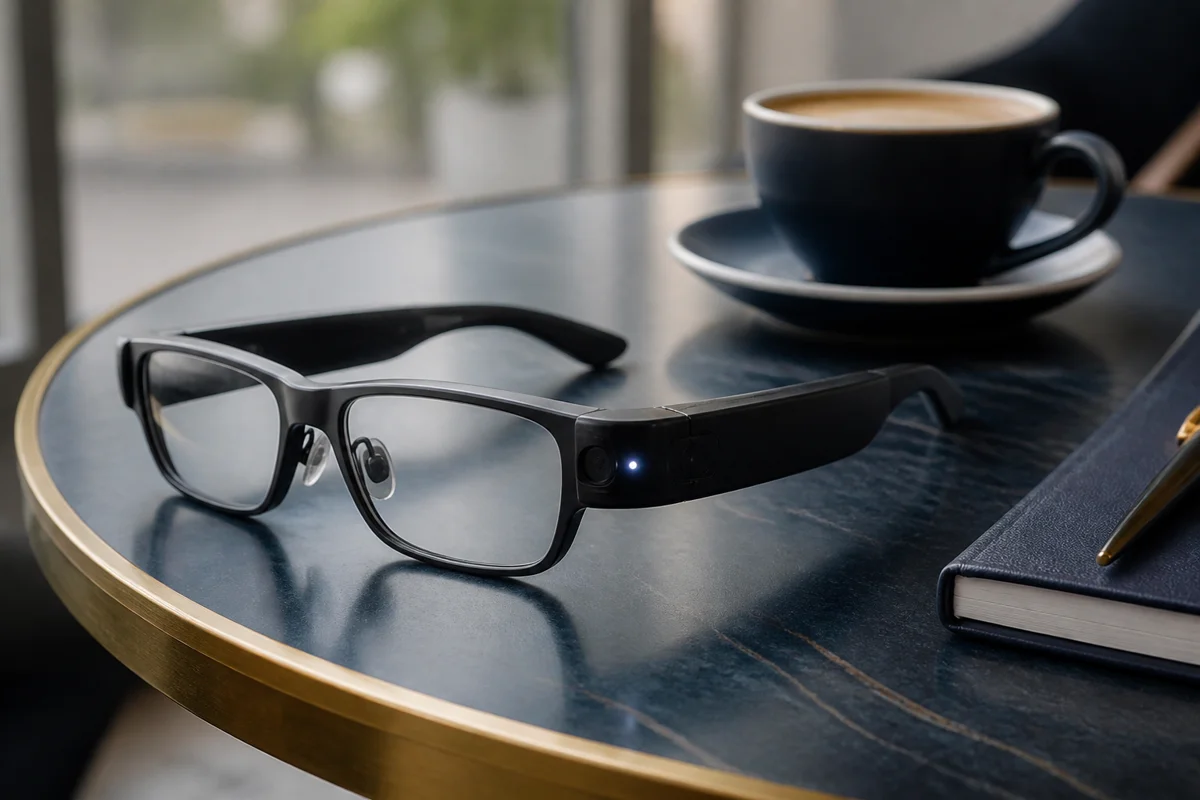
Andrew: Anko-branded camera glasses for $89, you can’t buy them even if you want to, they’re the latest hot property. These glasses take photos while you’re wearing them, and 1080p HD video. They have Bluetooth, they take hands-free calls, and they look almost identical to Meta’s Ray-Ban smart glasses, which cost between $300 and $700 here. I don’t believe these have an upfront display like the Meta ones, but it essentially means you can go anywhere wearing your glasses, record people, and have that information go to the internet.
Colin: As a real-world example, we have cameras in this building, and we’re able to record voices at times in certain areas like studios, we have to make everybody absolutely aware they’re on camera and that we’re recording voices at certain times. That’s our legal responsibility. How does it work generally?
Andrew: In Queensland, the Invasion of Privacy Act covers listening devices, that covers audio, and doesn’t really cover video devices. It’s legal in Queensland to record people without their consent in a place that’s public, or where they wouldn’t normally expect privacy. You can’t go into change rooms or take photos of people near-naked in bedrooms or places where they’d expect privacy, but otherwise you can typically record people in Queensland wherever you feel like it, as a private person. As an employer, you do have a duty to disclose to employees if you’re monitoring them, but if you’re just walking around wearing these glasses and recording people, you’re pretty much within the law, no matter how offensive people find it.
Colin: That surprises me, I would have assumed we had a right to privacy. I remember, at certain water parks, we put in camera systems because of problems with people peeping on children in bathing suits. I would have thought we had a right to privacy wherever we were.
Andrew: No, it’s not that simple. If no one is aware of a recording, if someone puts a covert device in place and everyone being recorded is unaware, that’s a crime. But if the person wearing or carrying the device is aware of the recording, and it’s not somewhere someone would expect privacy or doing something they’d expect to be kept private, then in Queensland at the moment, it’s okay. This has been possible since we’ve had GoPros, but the element that interests me here is that people don’t know they’re being recorded, even if there’s an LED on the frame, they might just think that’s a stylistic touch. And then there’s the complication of footage being uploaded to the cloud in real time. People have taken Ray-Ban smart glasses and hooked them via Bluetooth into their phone, running facial recognition algorithms against publicly available data. So I can walk down the street and say, “Oh, that’s Colin, hey Colin, how are you going?” That anonymity we normally have when we walk along and aren’t recognised is gone, if you’ve had a headline about you in the past, that could come immediately to the view of the person looking at you from the other side of the train.
Andrew: There is a lot still undecided here. I do think that if someone was using glasses to intimidate someone with a recording, that may fall under a criminal statute. If you run a business, I do think you’d have the ability to ask someone to leave if they were wearing them, but that gets complicated, because there are blind or vision-impaired people using smart glasses who describe things like “there’s a doorway in front of you,” so potentially they’re a disability aid as well, and someone could get in trouble telling a person to remove smart glasses being used in an assistive capacity. If you see someone with what looks like a camera in their lens, or an LED, you should probably assume you’re being recorded, and then decide whether that’s something you’d accept if someone were shoving a mobile phone in your face. I think the current laws don’t really support what society wants out of smart glasses, and it would change society if everyone were wearing them. This is a matter of public policy that politicians need to get involved with.
Colin: AI is one of those things we talk about in the background, and it can go to the nth degree, because someone recording you when you make an off-the-cuff funny remark, and suddenly you’re in trouble, is one of the outcomes down the track.
Andrew: Yes, getting sued for defamation is a definite possibility.
📎 See also: Smart Glasses, Cameras and the Death of Ambient Privacy | Legal Matters Ep 16 – Technology Law Part 1
Segment 3 – Caller Sandra: joint tenants versus tenants in common
⚖️ Topic: The practical difference between joint tenancy and tenancy in common on a property title Relevant law: Land Title Act 1994 (Qld)
Sandra: Hi, Andrew. I just want you to explain to me the difference between tenants in common and joint tenants, please.
Andrew: Do you have a specific question you’re trying to resolve with the difference?
Sandra: No, I don’t. Many years ago, my late husband and I bought property down here on the Gold Coast. The legal representatives at the time did all the forms for us, and in that transaction, she put us down as tenants in common, and that was picked up by a legal firm here on the Gold Coast and changed. My late husband, of course, is gone now, but I just wanted you to explain the difference, and any ramifications there could have been if it had remained as tenants in common.
Andrew: Joint tenants is often what married couples buy property as. Joint tenants own equal, undivided shares of the property, with a right of survivorship, both parties effectively equally and jointly own the whole property, it’s not split 50/50 as separate shares, it’s completely jointly owned. You can have more than two people as joint tenants. If one person on the title dies, they simply come off the title, and the remaining person or persons own the property going forward automatically, it doesn’t matter what the will says. This is why it’s normally done for married couples: if your husband were to die and you owned the property as joint tenants, you’d end up with sole ownership automatically. Tenants in common, on the other hand, is where multiple parties own distinct shares, equal or unequal, it could be 50/50, or 90/10, or any split. The difference is that you can sell your individual share under a tenancy in common, and that right of survivorship doesn’t exist, so if you owned 50/50 with your husband as tenants in common and he passed away, his 50% would go to his estate and be distributed according to his will. It is possible, via a gift, for married couples to move between tenants in common and joint tenants, or vice versa, by mutual agreement, without being subject to state duty on it, though conveyancing fees would apply. There are tax reasons and asset protection reasons why people may want to hold property one way or the other.
Sandra: Yes, it does, thank you very much for that. I just wanted a law person’s view on what the difference between those two is, and you’ve clarified that for me very nicely. Thank you very much, Andrew.
📎 See also: Tenants in Common vs Joint Tenants QLD | Legal Matters Ep 20 – Property Settlement and Will Disputes
This transcript provides general legal information only; it is not personal legal advice. Everyone’s situation is different, so please seek independent legal advice for your own circumstances. Contact Bell and Senior Lawyers on (07) 5532 8777 or visit bellsenior.com.au.