
AI Defamation and Search Summaries: When the Machine Gets It Wrong

AI-generated search summaries and chatbot answers can quietly publish false allegations to users who may never realise the information is wrong. This guide explains the emerging law of AI defamation in Queensland and Australia, comparative developments in the United States and Germany, and what individuals and businesses should do when reputational harm may be occurring in real time.

AI Defamation May Be Happening Before the Victim Even Knows
Defamation law was built around a recognisable idea of publication: a newspaper article, a broadcast, a social media post, or a webpage with fixed words that can be captured and proved. AI-generated summaries disrupt that model. A false allegation may now appear only briefly, in new wording each time, in response to a search query or prompt, and disappear before the subject even knows it existed.
That creates a new kind of reputational harm. It can be insidious rather than spectacular. A person may lose business, credibility or trust because an AI summary told users something false, while the person affected never sees the exact statement, never knows how many people saw it, and struggles later to prove what was said.
This is not merely theoretical. Litigation in the United States and Germany has already involved AI systems fabricating factual claims about identifiable individuals and businesses in language that appears authoritative and self-contained.12 The difficult legal question is no longer whether AI can generate defamatory-sounding content. It plainly can. The harder questions are who published it, how harm is proved, and what practical remedies exist where the output is dynamic, personalised and ephemeral.
SUMMARY: Why AI Defamation Is Different
AI-generated summaries create a more difficult defamation landscape than ordinary web publications because:
- the wording may change from user to user;
- the output may be generated fresh each time rather than stored as a stable article;
- the subject may not know publication occurred until well after the event;
- proving audience, repetition and serious harm may be more difficult than in conventional media cases; and
- Queensland’s statutory search-engine exemption for automated search results may not extend to AI-generated synthesis.
In This Guide
Hyperlinks, Search Results and AI-Generated Statements
Any Australian analysis should begin with Google LLC v Defteros [2022] HCA 27.3 The respondent, a Melbourne criminal defence lawyer, discovered that searching his name in Google’s search engine returned a result hyperlinking to a 2004 newspaper article that defamed him. He sued Google as publisher of both the search result and the underlying article. The High Court held that Google’s provision of the relevant hyperlink did not make it publisher of the linked article’s defamatory matter. The Court reasoned that a hyperlink “merely facilitated access” to the article and was not “an act of participation in the bilateral process of communicating” its contents to a third party.3
This is a narrower holding than it is sometimes given credit for. It concerns the specific hyperlink and the specific linked article in issue. It is not a general immunity for every output a search engine produces, and it says nothing directly about a synthesised statement generated by the engine itself rather than a link to someone else’s page.
That distinction matters. If the defamatory sting lies in the generated summary itself, the platform is no longer merely indexing third-party content, and Defteros may only get a defendant part of the way in a future case involving an AI Overview.
Queensland’s Statutory Search-Engine Exemption May Not Cover AI Summaries
Since amendments introduced by the Defamation (Model Provisions) and Other Legislation Amendment Act 2021 (Qld), the Defamation Act 2005 (Qld) contains specific digital-intermediary provisions at ss 10C to 10E.4 Section 10D provides a defence for a search-engine provider where its role in publication is limited to providing an automated process that generates “search results” linking to material published by someone else, subject to specified conditions including that the provider did not know, and could not reasonably have known, that the search result was defamatory.4
The critical issue is definitional. A “search result” under the provision is limited to material that identifies a webpage by its title, a hyperlink, an extract from the page, or an image drawn from the page.4 An AI-generated overview does something different in kind. Rather than identifying and excerpting a webpage, it synthesises material from multiple sources and generates new sentences expressing propositions that may not appear verbatim on any single underlying page.
This has not yet been judicially determined in Australia. However, it is a strong candidate for early litigation, because a defendant search-engine provider relying on s 10D would need to establish that an AI-generated overview is a “search result” within the statutory meaning, and that argument faces a real textual obstacle. The narrower the statutory definition is construed, the more force the wider argument, discussed below in relation to the Munich litigation, that an AI Overview is the platform’s own statement rather than a mere search result.
Why Serious Harm Is a Real Barrier in Queensland and Australia
Section 10A of the Defamation Act 2005 (Qld) makes serious harm to reputation an element of the cause of action, and provides that a judicial officer, rather than a jury, determines whether the element is established, including on an application before trial.5
Recent Australian litigation shows how demanding that threshold can be. In MacInnes v Wilson [2026] FCA, decided in the Federal Court on 22 July 2026, the Court dismissed a defamation claim brought by actor Charlotte MacInnes against Rebel Wilson over social media posts.6 Reporting on the judgment indicates the Court made findings touching on defamatory meaning and substantial truth, and separately found that the applicant had not established that the posts caused, or were likely to cause, serious harm to her reputation.67 MacInnes has reportedly indicated she intends to appeal.7
The case illustrates the practical significance of the serious harm threshold, although its outcome turned on its own facts and should not be read as a general Queensland authority on AI-generated content. AI defamation raises the serious harm problem in an acute form. If a summary is shown only to some users, in varying wording, for uncertain periods, the plaintiff may face immediate proof problems: what exactly was published, to how many people, on how many occasions, whether the audience was likely to believe it, and whether actual reputational loss can be shown.
Fresh Every Time: Why Dynamic AI Summaries Create Proof Problems
A static article can be tendered in court. A dynamic AI summary is harder. One user may see a summary containing one formulation, another may see a softer version, and a third may see no summary at all. If the answer is generated anew for each query, the evidence landscape becomes unstable.
Publication. A claimant still needs to prove publication to at least one third party. If the only record is a fleeting output seen by a user who did not preserve it, the claim may stall before it begins.
Meaning. Defamatory meaning depends on the words actually used. Slight variations in wording can matter, and a summary that blends true and false material ambiguously raises its own meaning difficulties.
Serious harm. If each user sees something slightly different, a defendant may argue there was no sufficiently stable or widespread imputation capable of causing serious reputational harm under s 10A. Conversely, a claimant may argue that repeated, materially similar false outputs should be viewed cumulatively.
Delay and preservation. Delay is especially dangerous where AI outputs are transient. No Australian appellate authority appears yet to have squarely resolved preservation obligations for dynamic AI outputs in a defamation dispute. As a practical matter, sending a preservation request to the platform should now be treated as standard in any serious AI defamation complaint, though this is a request rather than an established legal duty on the platform’s part.
A Reported German Decision: Munich Treats AI Overviews as Google’s Own Statements
A reported first-instance decision of the Regional Court of Munich I (Case No. 26 O 869/26, 28 May 2026) has taken a more claimant-favourable approach than any Australian decision presently identified.8 The reported decision restrained Google from repeating claims that falsely linked two Munich-based publishers to scams and dubious business practices. Google has said it will appeal, and the decision is a preliminary injunction from a regional court, not a final ruling of a higher German court, so it does not yet operate as settled precedent even within Germany.9
Subject to that qualification, the reasoning is significant. The court reportedly held that an AI Overview does more than display search results as links or short previews; rather, Google’s system summarises and presents results in its own words and structure, at times including information that does not appear in the underlying sources at all, characterised as “new, independent statements” attributable to Google itself.89 The court reportedly distinguished this from earlier German Federal Court of Justice authority granting search engines limited liability for indexing third-party content, and rejected an argument that users could simply click through and verify the cited sources themselves.9
For Australian lawyers, this litigation is useful commentary on the same distinction raised by the Queensland statutory search-result definition discussed above: a hyperlink or extract is one thing, an AI-generated statement in the platform’s own words may be another. It should be treated as persuasive overseas commentary at an early procedural stage, not as settled law even in its own jurisdiction.

Australia, Germany and the United States are each approaching AI-generated defamation from different starting points, producing genuinely divergent early outcomes.
The United States Shows the Other Side of the Problem
The best-known US chatbot defamation case is Walters v OpenAI, LLC, brought in the Superior Court of Gwinnett County, Georgia (No. 23-A-04860-2).10 ChatGPT wrongly described radio host Mark Walters as a defendant in a lawsuit accused of fraud, fabricating details of a case that did not exist. The journalist who received the output, Fred Riehl, promptly verified that it was false before publishing anything based on it.10 The court granted summary judgment for OpenAI on three independent bases: the output could not reasonably be understood as describing actual facts, particularly given the disclaimers accompanying the tool and the journalist’s prompt verification; Walters had not shown OpenAI was at fault under a negligence or actual malice standard; and Walters had not proven he suffered any recoverable damages.10
That result should not be overread. It does not mean AI defamation claims will always fail, in the United States or in Australia. But it highlights recurring features: defendants will rely on disclaimers and the known fallibility of AI tools, courts may ask whether the recipient actually believed the statement, and damages will remain contested, particularly for one-to-one outputs seen by a single sceptical user.
What Has Gone Before in Search Engine Litigation
Before AI summaries, the core search engine cases concerned indexing, snippets, ranking and hyperlinks, and the law distinguished between saying something and helping someone find where someone else said it. That framework made sense in the pre-generative era. Defteros reflects that logic, and Queensland’s s 10D exemption was drafted around the same conception of a “search result.”34
AI Overviews and similar products strain that framework. In the author’s view, the boundary between facilitating access to third-party content and publishing a fresh statement of one’s own is likely to be the central issue in any future Australian litigation over AI-generated search summaries, informed by both the statutory search-result definition and overseas commentary such as the Munich litigation.
Multiple Similar Infractions: Can Repetition Build Serious Harm
A practical issue for claimants is whether multiple similar but non-identical AI outputs can be aggregated. There is a respectable argument that repetition of substantially similar false imputations should count toward serious harm under s 10A, even where wording varies. Otherwise, dynamic generation could operate as a practical shield against accountability. This has not been tested in Australia, and the observation should be read as commentary on a plausible line of argument rather than a statement of settled law. Evidence of repetition, including multiple screenshots, multiple users, multiple dates and materially similar outputs, may collectively support a serious harm case that a single isolated screenshot cannot.
What To Do If an AI Summary Is False and Harmful
Preserve evidence immediately. Consider preserving screenshots and screen recordings showing the query, the summary and the linked sources; the exact search terms or prompts used; dates, times and device details; whether the user was logged in and whether the result recurred; witness identities; and any business or reputational consequences that followed.
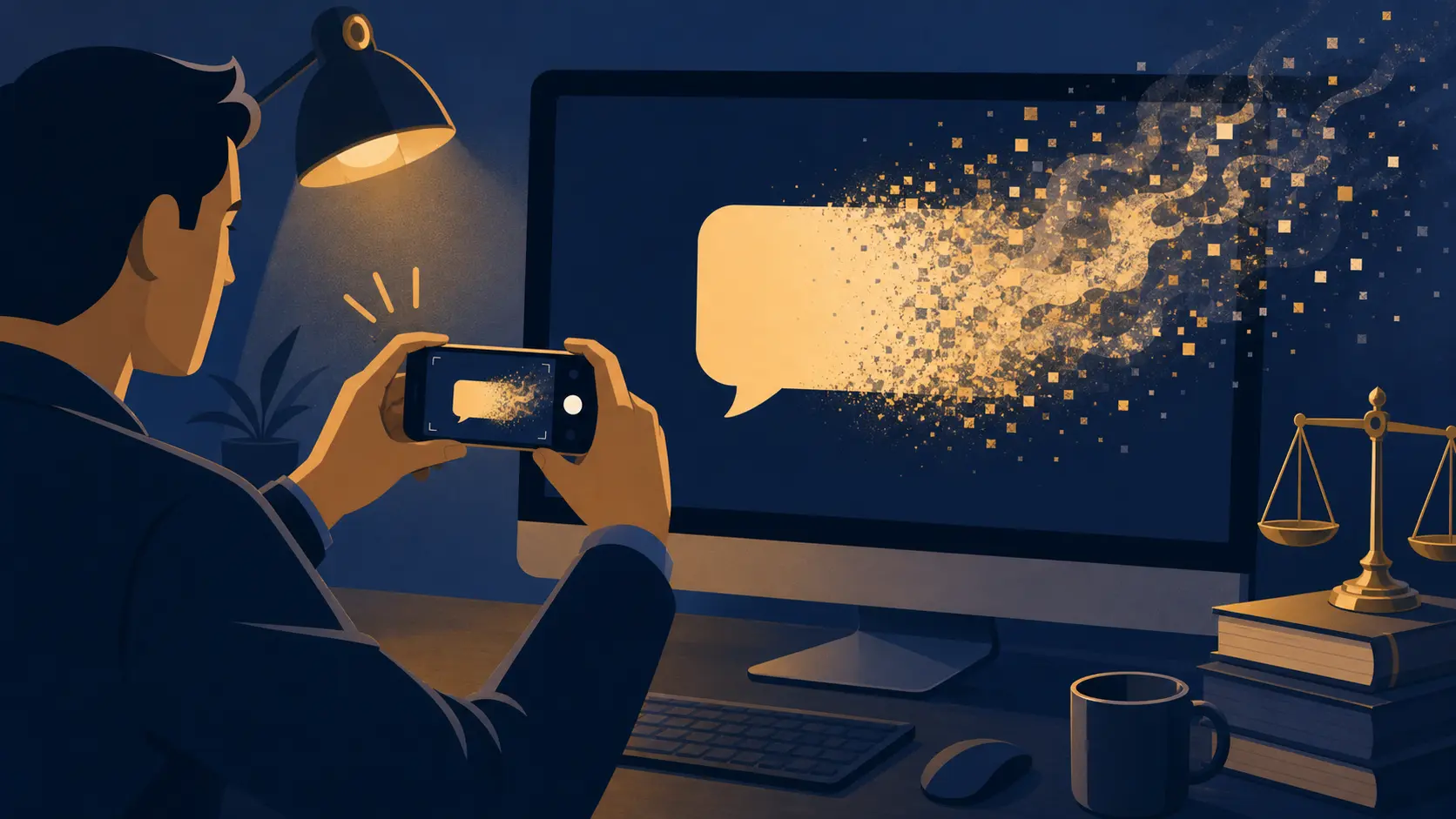
Because AI outputs can change or disappear between queries, prompt screenshots and dated records may be the only evidence a future claim can rely on.
Send a preservation request and, where appropriate, a concerns notice. A precise written complaint to the platform should identify the false statement and request preservation of relevant output and query data, framed as a request rather than an assertion of an established legal duty. Separately, for a Queensland defamation claim, a formal concerns notice will ordinarily be required before proceedings are commenced. It should identify where the matter can be accessed, the imputations relied upon, and the serious harm alleged, and include a copy of the matter where practicable.4
Check corporate standing before assuming a business can sue. Under s 9 of the Defamation Act 2005 (Qld), a corporation generally has no cause of action in defamation unless it is an “excluded corporation,” broadly a not-for-profit or a corporation with fewer than 10 employees that is not an associated entity of another corporation, and even then it must establish serious financial loss to satisfy the serious harm element.11 A business affected by a false AI summary should obtain advice on whether it qualifies, or whether another cause of action such as injurious falsehood or misleading conduct is more suitable.
Practical Point
In conventional defamation, the publication is often obvious and stable. In AI defamation, the subject may need to prove the publication ever existed. That makes immediate evidence collection and a carefully framed preservation request unusually important.
In This Guide
Where This Area May Be Heading
In the author’s view, these issues are likely candidates for future litigation and legislative attention, rather than settled propositions of law. Three themes seem plausible. First, courts may need to determine whether the s 10D “search result” definition can stretch to cover AI-generated synthesis, or whether that exemption is confined to conventional links and extracts. Second, the serious harm threshold under s 10A will likely remain a genuine gatekeeper, and AI claimants may need stronger evidence than traditional plaintiffs because publication is less transparent and less stable, as MacInnes v Wilson illustrates even in a conventional social media context. Third, preservation and proof may become procedural flashpoints as courts grapple with what records, if any, platforms should be expected to retain once on notice of a complaint.
Takeaway
AI defamation is not only about spectacular chatbot hallucinations. It may be quietly affecting people through search summaries and generated answers that look authoritative, disappear quickly, and are difficult to reconstruct later. Queensland’s statutory search-engine exemption under s 10D was drafted for links and extracts, and may not comfortably extend to AI-generated synthesis, though this remains untested. A reported first-instance German decision, currently under appeal, has taken a more claimant-favourable approach than any Australian authority presently identified. The United States shows that not every AI defamation claim will succeed, particularly where publication, belief and damage are weak, as Walters v OpenAI demonstrates. For now, the practical lesson is to move quickly, preserve evidence, send a properly framed concerns notice where proceedings are contemplated, and get advice on standing and cause of action before assuming a straightforward path exists.
When to Get Legal Advice
You should seek advice before:
- Responding publicly to a false AI-generated summary or chatbot statement about you or your business.
- Sending a formal complaint, preservation request or concerns notice to a search engine or AI provider.
- Deciding whether to commence proceedings, given the serious harm threshold under s 10A and the evidentiary demands discussed above.
- Assessing whether your business qualifies as an “excluded corporation” under s 9 before assuming you can sue in defamation.
- Advising a business on reputational risk arising from AI-generated content about its products, directors or conduct.
Bell Senior Lawyers advises Gold Coast and South East Queensland clients on defamation, reputation management and emerging technology law issues, including AI-related publication disputes.
Affected by a False AI-Generated Statement?
Get advice from Queensland defamation and technology lawyers on evidence preservation, concerns notices and your options. Call 07 5532 8777 or make an enquiry online .
In This Guide
Related Topics
- Legal Risks of AI for Business – Australia, US and UK
- Technology Law Practice Area
- Is Your Business Data Breach Ready? The NDB Scheme Checklist for Queensland Businesses
Need Legal Advice?
Contact us today to discuss your matter. We'll respond within 24 hours.
Enquiry Sent
Thank you for reaching out. A member of our legal team will contact you shortly.
-
Walters v Open AI, LLC, No 23-A-04860-2 (Ga Super Ct, Gwinnett Cnty, 2025); see Knowing Machines, ‘Walters v OpenAI’ (Case Explainer, updated 21 November 2025). ↩︎
-
Landgericht München I [Regional Court of Munich I], Case No 26 O 869/26, 28 May 2026 (under appeal); see Reuters, ‘Google to Challenge German Ruling Saying It Is Liable for AI Overviews False Claims’ (News Article, 12 June 2026). ↩︎
-
Google LLC v Defteros [2022] HCA 27; see High Court of Australia, ‘Google LLC v Defteros’ (Judgment Summary, 17 August 2022). ↩︎ ↩︎ ↩︎
-
Defamation Act 2005 (Qld) ss 9, 10A, 10C–10E, as inserted by the Defamation (Model Provisions) and Other Legislation Amendment Act 2021 (Qld); see Queensland Legislation, ‘Defamation Act 2005’ . ↩︎ ↩︎ ↩︎ ↩︎ ↩︎
-
Defamation Act 2005 (Qld) s 10A; see Queensland Legislation, ‘Defamation Act 2005’ . ↩︎
-
MacInnes v Wilson [2026] FCA (Raper J, 22 July 2026); see Federal Court of Australia, ‘Charlotte MacInnes v Rebel Wilson: Online File’ (Online File). ↩︎ ↩︎
-
ABC News, ‘Charlotte MacInnes Plans to Appeal Her Failed Rebel Wilson Defamation Case. Here’s How’ (News Article, 23 July 2026); The Guardian, ‘Rebel Wilson Wins Defamation Case Brought by Co-Star After Bitter Dispute’ (News Article, 22 July 2026). ↩︎ ↩︎
-
Landgericht München I [Regional Court of Munich I], Case No 26 O 869/26, 28 May 2026 (under appeal); see Deutsche Welle, ‘German Court Holds Google Liable for Fake AI Answers’ (News Article). ↩︎ ↩︎
-
Reuters, ‘Google to Challenge German Ruling Saying It Is Liable for AI Overviews False Claims’ (News Article, 12 June 2026). ↩︎ ↩︎ ↩︎
-
Walters v Open AI, LLC, No 23-A-04860-2 (Ga Super Ct, Gwinnett Cnty, 2025); see Knowing Machines, ‘Walters v OpenAI’ (Case Explainer, updated 21 November 2025); Loeb & Loeb LLP, ‘Walters v OpenAI, L.L.C.’ (Case Update, 18 May 2025). ↩︎ ↩︎ ↩︎
-
Defamation Act 2005 (Qld) s 9; see Queensland Legislation, ‘Defamation Act 2005’ . ↩︎