
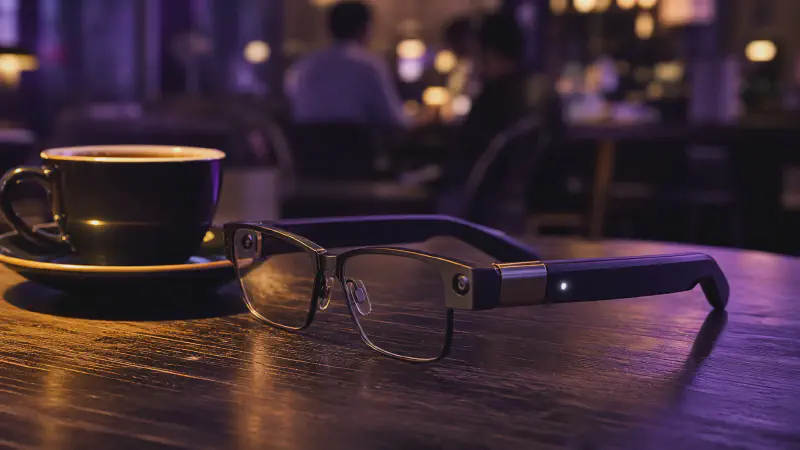
An $89 pair of camera glasses just sold out at Kmart, months after Meta’s Ray-Bans made AI-enabled recording eyewear mainstream. Here is what Australian law actually says about where you can point them, whether the recording light means anything, whether it matters if you are vision impaired, and why Queensland has almost no dedicated law covering any of it.

In This Guide
The Ninety Dollar Privacy Problem
In early August 2026, Kmart sold out of a pair of sunglasses. Not because they were fashionable. The Anko-branded “Camera Glasses,” retailing for eighty nine dollars, contain a built-in camera capable of eight megapixel photos and 1080p video, Bluetooth music, hands-free calls, and touch controls, and they look, by design, almost identical to Meta’s Ray-Ban smart glasses, which sell in Australia for between $337 and $709.1 A digital rights expert quoted by The Guardian called the moment a “privacy nightmare,” warning that people now face being filmed without their consent by a device costing less than a week’s groceries.1 Within days, both Kmart and Target had reportedly sold out nationwide.2
This matters far beyond a viral shopping story. Meta’s own glasses have already generated genuine controversy: reports that moderators employed by Meta have reviewed intimate footage captured by users, including footage of people in bathrooms and during sex, and a well documented cottage industry of services that physically disable the glasses’ recording indicator light so wearers can film covertly.13 In July 2026, Meta responded by pushing a firmware update that disables the camera entirely if the indicator LED is detected as tampered with, covered, or destroyed.4 That single response tells you almost everything about where this technology sits, legally speaking. Meta has decided, unilaterally and through code rather than through any Australian statute, what counts as an acceptable signal that someone might be being recorded. No Australian government has yet done the same.
SUMMARY: Key Legal Positions at a Glance
- Queensland has no general camera surveillance law. The Invasion of Privacy Act 1971 (Qld) covers audio only. Section 227A of the Criminal Code 1899 (Qld) covers only private places and private acts.
- The recording LED is not a legal compliance feature. It is a voluntary manufacturer design choice that affects intent analysis but does not create consent.
- The federal statutory privacy tort applies nationally. Since 10 June 2025, using AI glasses to identify, research, or track a stranger can constitute a serious invasion of privacy under the Privacy Act 1988 (Cth).
- Businesses face full Privacy Act obligations when deploying smart glasses for staff or customer analytics, including biometric data obligations for facial recognition data.
- Blanket premises bans risk disability discrimination claims under the Disability Discrimination Act 1992 (Cth) where glasses are used as assistive technology.
What Actually Makes Smart Glasses Different
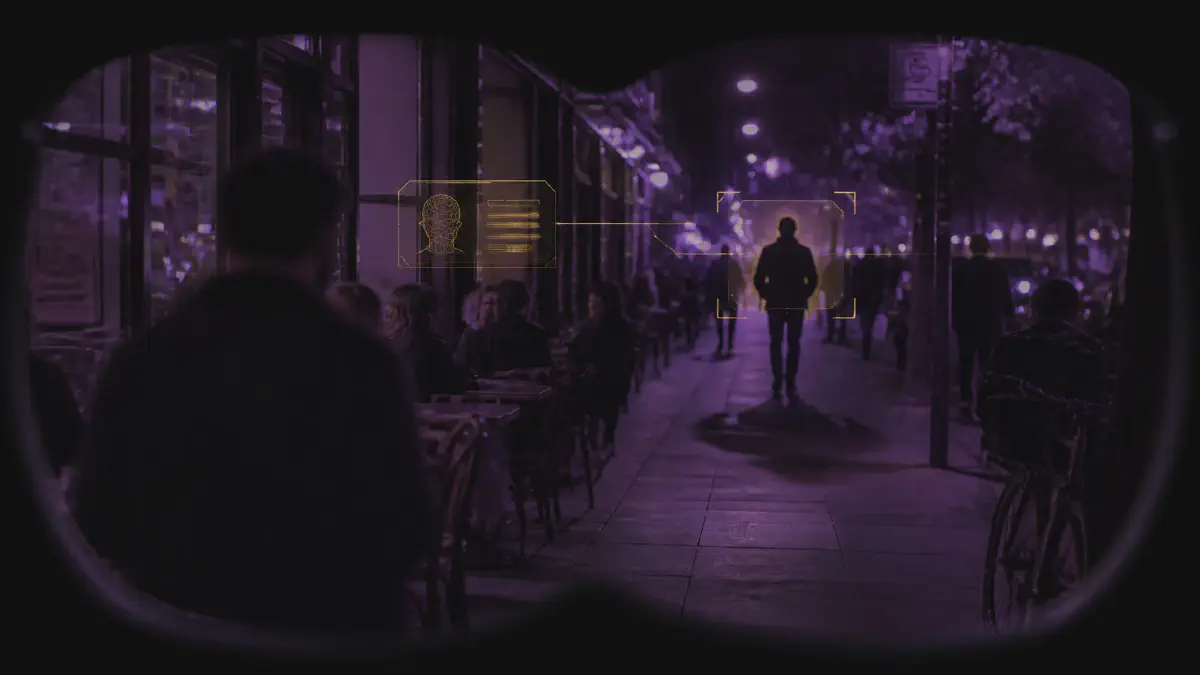
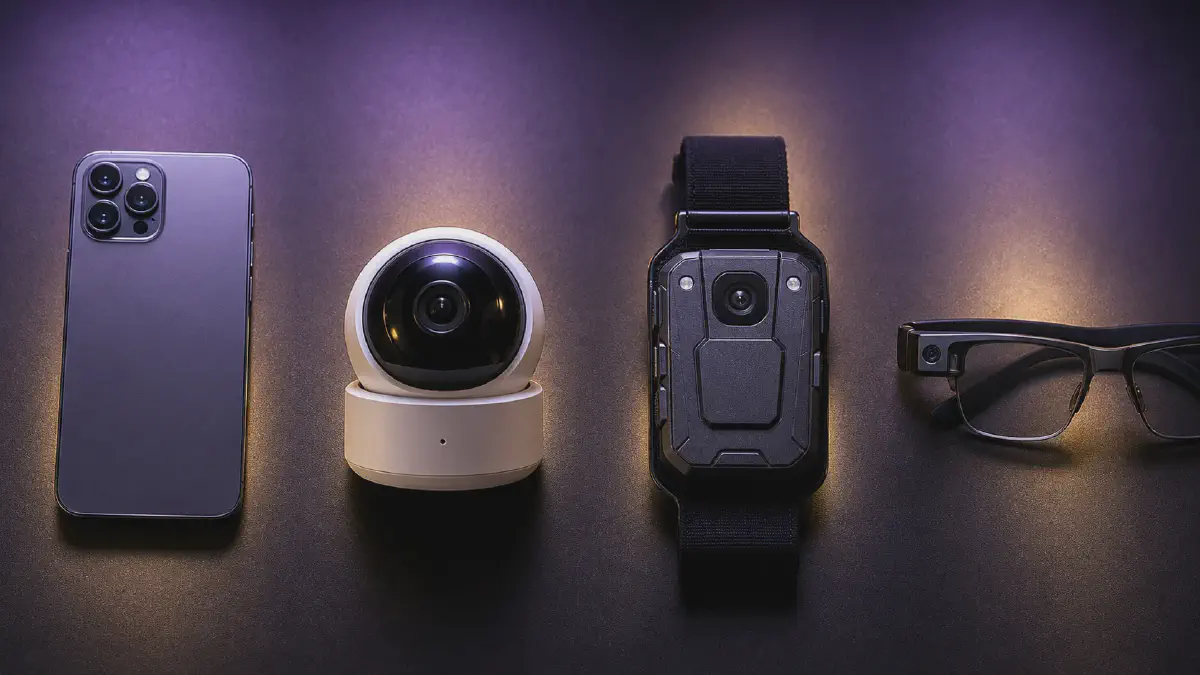
A phone camera, a security camera, and a body-worn camera all capture images. So do smart glasses. The interesting legal question is not whether the technology is new, but whether the manner of capture is different enough to matter, and it is, in three specific ways.
First, smart glasses capture continuously rather than deliberately. A phone camera requires a person to consciously raise it, aim it, and press a button, an act that is itself a visible signal to anyone nearby. Glasses worn all day are, by design, always in a position to capture, and many models support hands-free, voice-activated, or gesture-activated capture that requires no visible physical act at all.
Second, they offer no reliable visible cue. Meta’s glasses include a small white LED that illuminates during capture, described by the company as having “no off switch.”5 But independent reviewers have been blunt about its practical limits: it is small, easily missed at a distance or in bright daylight, only useful if a bystander happens to be looking directly at the wearer at the right moment, and conveys no information about what was actually captured or for how long.6 Compare this to a phone camera’s shutter sound or a security camera’s visible housing and signage, both of which, however imperfectly, put a reasonable person on notice.
Third, and most significantly, smart glasses increasingly perform automated downstream processing that a static photograph never did on its own: real-time facial recognition, optical character recognition of documents and signage, and live identification queries answered by an AI agent. A photograph sitting in a phone’s camera roll is inert until a human does something with it. An AI-enabled pair of glasses can identify a stranger, search for information about them, and surface an answer to the wearer before that stranger has finished walking past. This is not a difference of degree. It is a difference of kind, and Australian privacy law, built for an era of deliberate, visible, non-automated capture, has almost nothing specific to say about it.
For context on how autonomous AI systems create legal liability more broadly, read our article on AI agent liability under Australian cyber law .
What the Recording Light Actually Means, Legally
Nothing, in the strict legal sense. There is no Australian statute that requires an optical recording device to carry a visible indicator light, and no statute that treats the presence or absence of such a light as determinative of anything. The LED is a voluntary manufacturer design choice, not a legal compliance feature, however much it is marketed as a privacy safeguard.
That said, the LED is not legally irrelevant either. It simply operates at the margins of existing doctrine rather than as a standalone rule. Two places it plausibly matters:
- Evidence of intent. Section 227A of the Criminal Code 1899 (Qld) criminalises observing or visually recording a person without consent, in circumstances where a reasonable adult would expect privacy, when that person is in a private place or engaged in a private act, and the offence in relation to a private act requires the recording to be made for the purpose of observing or recording that act.7 A visible, functioning recording light tends to cut against an inference that a wearer intended to covertly observe someone, while a deliberately disabled or tampered light is strong circumstantial evidence pointing the other way.
- The new federal privacy tort. The statutory tort for serious invasions of privacy, in force since 10 June 2025, requires proof that the invasion was intentional or reckless.8 A wearer who left a functioning indicator active has a stronger case that any resulting invasion was not reckless than one who disabled it, though this is far from a complete defence given the tort’s other elements.
What the LED does not do is create consent. A bystander who happens to notice a small light and says nothing has not thereby agreed to being recorded, identified, or having information about them surfaced to a stranger’s AI assistant. Any argument that visibility of the light amounts to implied consent asks the law to treat passive, uninformed non-objection as if it were an affirmative choice, and nothing in Australian law currently supports that leap.
For more on the new federal tort, see our FAQ on the statutory tort for serious invasions of privacy and how it applies to smart glasses .
Where You Can and Cannot Use Them: The Real Legal Picture in Queensland
This is where the story gets genuinely surprising. Queensland does not have a general law regulating optical surveillance devices at all.
Most Australians assume, reasonably, that some equivalent to South Australia’s Surveillance Devices Act 2016 or New South Wales’s Surveillance Devices Act 2007 exists in every state. It does not. Queensland’s only dedicated surveillance statute, the Invasion of Privacy Act 1971 (Qld), regulates listening devices, meaning audio, and nothing else.9 It makes it an offence to use a listening device to overhear, record, monitor, or listen to a “private conversation.”10 It says nothing whatsoever about cameras. The Queensland Law Reform Commission confirmed this gap directly in its 2018 review, noting that the Act “does not prohibit or regulate optical, tracking or data surveillance devices,” leaving Queenslanders to rely on general law where a camera has unreasonably intruded on their privacy.11 As recently as 2025, independent legal commentary confirmed the position has not changed: Queensland remains one of the few Australian jurisdictions without dedicated optical surveillance legislation.12
That does not mean Queensland has no relevant criminal law, but what exists is much narrower than a general camera statute. Section 227A of the Criminal Code 1899 (Qld) creates two offences: observing or visually recording a person without consent when they are in a private place or engaged in a private act, and separately, observing or recording a person’s genital or anal region without consent, each carrying a maximum penalty of three years imprisonment.7 The Queensland Office of the Information Commissioner’s own community guidance is explicit about the boundary this draws: section 227A “makes it an offence to video record people without their consent in places where they would expect to be private, such as a bedroom, bathroom, or changeroom.”13 A cafe table, a gym floor, or a footpath are, on ordinary language, none of those things. Ordinary clothed activity in a public or semi-public space sits outside section 227A’s reach entirely.
The one genuinely national backstop is the statutory tort for serious invasions of privacy, which commenced 10 June 2025 under new provisions inserted into the Privacy Act 1988 (Cth).8 A plaintiff must establish: that the defendant intruded on their seclusion or misused information relating to them; that a person in the plaintiff’s position would have had a reasonable expectation of privacy in the circumstances; that the invasion was intentional or reckless; that it was serious; and that the public interest in the plaintiff’s privacy outweighed any countervailing public interest.14
For a detailed walkthrough of this statutory gap, see our FAQ on smart glasses and privacy laws in Queensland .
Does It Matter If You Are Vision Impaired or Disabled?
Genuinely, yes, and in more than one direction.
On one side, the vision-impairment carve-out discussed above means a device used by a person to overcome an actual vision impairment is, at least in South Australia, Victoria, and New South Wales, arguably outside the statutory definition of an optical surveillance device altogether, though this depends on the device being used for that purpose rather than merely resembling ordinary glasses.
On the other, more practically important side, AI-enabled glasses are a genuine assistive technology for people with vision or hearing impairment: live scene description, object and obstacle identification, real-time captioning of speech, and navigation assistance. If a business responds to the Kmart controversy by imposing a blanket ban on camera-equipped glasses on its premises, it risks indirectly discriminating against a person who relies on that exact technology as a reasonable adjustment, a live issue under the Disability Discrimination Act 1992 (Cth).15 A business that would ban a person’s assistive AI glasses while permitting an equivalent hearing aid or white cane would need a considered, case-by-case policy, not a blanket rule, to avoid that exposure.
For a detailed analysis of how this plays out in practice, see our FAQ on whether a business can ban smart glasses and the risk of disability discrimination .
Does It Matter If You Disclose?
In most public settings in Queensland, disclosure is not a strict legal requirement, precisely because there is no general statute requiring it. But disclosure still matters practically and evidentially for two reasons: it weakens any inference of the intent or recklessness required for section 227A or the new federal tort, and it is emerging as a genuine best-practice expectation regardless of whether a specific law demands it.
The workplace is the one setting where disclosure is a hard legal requirement, just not in Queensland specifically. New South Wales’s Workplace Surveillance Act 2005 requires an employer to give employees written notice at least fourteen days before camera, computer, or tracking surveillance commences, setting out the kind of surveillance, how it will be carried out, when it starts, and whether it is continuous or intermittent.16 Covert workplace surveillance without a court-authorised covert surveillance authority is a specific offence.17 Queensland has no directly equivalent statute, meaning an employer here is not bound by the same explicit notice regime, but the general work health and safety duty of care and the same statutory tort exposure discussed throughout this article mean adopting an equivalent notice practice voluntarily is sound risk management.
What About the Lack of an Off Switch?
Meta has stated its glasses’ recording LED “has no off switch,” by design.5 That design choice cuts both ways legally. It strengthens the manufacturer’s argument that it has built a genuine, tamper-resistant privacy safeguard, relevant to any future negligence or Australian Consumer Law claim against the manufacturer itself. But it also means a wearer cannot claim ignorance of when their device is capturing, and that if a wearer genuinely cannot disable capture and does not want to be recording, the practical remedy is not disabling the indicator, which now disables the camera entirely on updated devices, but removing the glasses.
Is Sending Footage to an AI Agent the Same as Recording?
This is one of the genuinely open questions this technology creates. Section 227A’s language covers a person who “observes or visually records” another person, which is broader than recording alone.7 A live camera feed processed in real time by an AI agent, identifying a face or reading a sign without ever saving a persistent file, plausibly still constitutes “observing” someone through a technological proxy, even if no traditional stored video file ever exists. No Australian court has considered whether an AI system’s momentary inference over a live feed counts as a human observing through the device.
The same problem exists in the Privacy Act framework in a different form. Whether footage is stored locally on the device, uploaded to a manufacturer’s cloud, processed by a third-party AI agent, or relayed to a companion phone app is not a merely technical distinction. Individual, personal use of a device falls within the Privacy Act 1988 (Cth)’s exemption for acts done in the course of a person’s “personal, family or household affairs.”18 The moment a business deploys the same technology, that exemption disappears entirely, and the full weight of the Australian Privacy Principles attaches: collection limits under APP 3, notification obligations under APP 5, use and disclosure restrictions under APP 6, cross-border disclosure obligations under APP 8 if the AI agent processing the footage runs on overseas servers, and security and destruction obligations under APP 11.19 Facial geometry data specifically is likely to constitute “sensitive information” under the Privacy Act’s biometric information category, triggering a higher consent threshold for collection under APP 3.3.19
For more on biometric data obligations, see our FAQ on smart glasses, facial recognition and the Privacy Act .
What If You Use Them to Gather Further Information?
This is where the analysis sharpens considerably. Simply capturing an image of a stranger is one act. Asking an AI agent to identify that stranger, search for information about them, and surface an answer is a materially different and more serious act. It is squarely within the reach of the new statutory tort’s “misusing information” limb, which applies to any person, not just businesses or APP entities.8 A private individual who uses AI smart glasses to identify a stranger in a cafe and then researches them is doing exactly the kind of thing the tort’s drafters had in mind when they built misuse of information into the cause of action as a distinct wrong from mere observation.
This also directly echoes a recurring theme in AI law: an AI agent given a broad instruction closing the gap between an innocuous initial act and a serious privacy invasion entirely through its own initiative. The wearer did not personally research the stranger. Their AI assistant did, on their behalf, because it could. For the parallel analysis in a different context, see how AI agents can create legal liability under Australian cyber law .
Company Liability: Who Answers for the Backend
Two distinct categories of business face exposure here, and they should not be conflated.
The device manufacturer faces a product design and disclosure question: did the company build genuine, tamper-resistant safeguards, or a cosmetic indicator easily defeated by tape or a third-party removal service? Meta’s July 2026 tamper-detection update is a direct, public response to exactly this exposure, and a company that had not made an equivalent update once the vulnerability became well known would have a harder time defending a negligent design claim from a third party harmed by a user’s covert recording.
Separately, the AI backend provider, the company operating the cloud service that identifies faces or answers a wearer’s queries about a stranger, faces its own liability if that identification is wrong, outdated, or defamatory. This is a direct application of the AI defamation analysis developed in AI defamation and search summaries: when the machine gets it wrong to a new fact pattern: an AI system stating something false about an identifiable person, triggered by a camera rather than a search query.
Training Data and Business Deployment
A business that issues smart glasses to staff, for training, quality assurance, or customer service purposes, sits squarely inside the Privacy Act framework, with two additional layers. First, staff themselves are being recorded at work. Second, if that footage is later used to train an internal AI model, the business needs a lawful basis for that specific, secondary use under APP 6, separate from its lawful basis for the original capture. If the footage or any resulting model incorporates identifiable biometric data, the higher consent threshold for sensitive information applies again.19
The most instructive comparative benchmark here is Illinois’ Biometric Information Privacy Act, which requires a private entity to inform a person in writing that their biometric identifier is being collected or stored, explain the purpose and retention period, and obtain a written release before collection.20 No Australian law currently imposes anything this specific or this strict for biometric data collected through smart glasses, which means a business operating in both jurisdictions would find itself meeting a considerably higher bar in Illinois than in Queensland.
Deletion Obligations
For a business, the position is comparatively clear: Australian Privacy Principle 11.2 requires an entity to destroy or de-identify personal information once it is no longer needed for any purpose for which it may be used or disclosed under the Privacy Act.19 Footage of bystanders captured incidentally during a business’s legitimate use of smart glasses should not simply sit in cloud storage indefinitely once its purpose has been served.
For an individual using the device personally, no equivalent statutory destruction duty exists, again because of the personal, family or household affairs exemption. The practical constraint instead comes from the statutory tort: retaining and later using or disclosing footage of a person can itself constitute a fresh act of “misusing information,” meaning the legal risk from old, retained footage does not disappear simply because the original capture is long past.
The Police Body Camera Parallel
It is tempting to look at police body-worn cameras as a working model this technology could simply borrow. It is not quite that simple, because police occupy a specifically authorised legal position civilians do not. Section 609A of the Police Powers and Responsibilities Act 2000 (Qld) makes it lawful for a police officer to use a body-worn camera to record images or sounds while performing their duties, expressly including recording that is “inadvertent or unexpected.”21 No equivalent blanket authorisation exists, or could sensibly exist, for a private citizen wearing consumer AI glasses. Police body-worn camera footage also becomes a government record subject to Queensland’s public records retention and disposal framework, and to formal access and correction rights under the Right to Information Act 2009 (Qld) and Information Privacy Act 2009 (Qld).22
How the UK and the US Handle the Same Problem
The comparison is genuinely instructive, because both jurisdictions have made different trade-offs than Australia is currently making by default.
In England and Wales, there is no general law prohibiting photographing people in public at all. The Metropolitan Police’s own public guidance states plainly that “members of the public and the media do not need a permit to film or photograph in public places.”23 The narrower voyeurism offence under section 67 of the Sexual Offences Act 2003 (UK) criminalises observing or recording a person doing a “private act” without consent, but only where done for the purpose of sexual gratification, materially narrower than Queensland’s section 227A, which is not limited to a sexual purpose at all.24
In the United States, the First Amendment provides strong constitutional protection for photographing scenes visible from public places. For biometric identification specifically, Illinois’ Biometric Information Privacy Act, discussed above, is widely regarded as the most stringent regime in either country, and its written-consent-before-collection model has generated substantial class action litigation against technology companies operating facial recognition features, a legal environment Australia’s businesses currently do not face to anywhere near the same degree.20
Republishing: A Separate Legal Act
Once an image exists, sharing or publishing it is a distinct legal act from taking it. Publishing footage of an identifiable person alongside a false or damaging caption or context can found a defamation claim entirely independent of whatever did or did not make the original capture unlawful. Separately, republishing intimate or sexual imagery without consent falls within the image-based abuse civil penalty scheme under the Online Safety Act 2021 (Cth), regardless of whether the original recording was itself lawful.25 The statutory tort’s “misusing information” limb also treats republication as its own separate wrong, meaning a wearer who lawfully captured footage in a public place can still commit a serious invasion of privacy purely through what they do with it afterward.
Comparison: Devices and Applicable Law
| Feature | Phone camera | Security camera (CCTV) | Police body-worn camera | Smart glasses |
|---|---|---|---|---|
| Visibility to subject | High: deliberate act of raising the device | Moderate: visible housing, usually signposted | Low to moderate: visible on uniform, not always noticed | Low: small or no visible cue, easily missed |
| Consent mechanism | Implied by the deliberate, visible act | Signage-based implied notice | Statutory authorisation, not consent-based | None built in; LED is a voluntary manufacturer feature only |
| Primary applicable law (Qld) | Criminal Code 1899 (Qld) s 227A (narrow, private place/act only) | Criminal Code s 227A; Privacy Act if a business | Police Powers and Responsibilities Act 2000 (Qld) s 609A (specific authorisation) | Criminal Code s 227A (narrow); statutory tort (civil, national) |
| Realistic cause of action in public | Very limited outside s 227A’s narrow scope | Very limited outside s 227A’s narrow scope | Not applicable: lawfully authorised | Statutory tort, if serious, intentional or reckless, and reasonable expectation of privacy existed |
Consent: The Thread Running Through All of It
Draw the threads of this article together and one point stands out clearly: Australia has no general, uniform requirement to obtain a person’s consent before photographing or recording them. Consent is only a strict legal requirement in narrow, specifically defined situations: private places or private acts under section 227A, private conversations under the Invasion of Privacy Act 1971 (Qld), installed surveillance devices involving trespass under the New South Wales, South Australian, and Victorian Acts, and workplace surveillance in New South Wales specifically. Outside those bands, the default position in Queensland mirrors England and Wales far more closely than most people would assume: a person in an ordinary public or semi-public space has no general, enforceable legal right to prevent being photographed at all, a position now qualified, but not overturned, by the new federal statutory tort’s narrow, civil, serious-invasion safety net.
Practical Guidance
For individuals wearing this technology, the safest working assumption is that ordinary public capture of people going about ordinary activities carries limited legal risk in Queensland, but real reputational and civil risk once an AI agent is used to identify, research, or republish anything about a stranger, and real criminal risk the moment a private place, a private act, or a genital or anal region enters frame. Leaving the manufacturer’s recording indicator functional, rather than disabling it, is both a straightforward safety practice and a meaningful piece of evidence should intent or recklessness ever be in issue.
For businesses, three concrete steps matter most: adopt a clear premises policy on recording-capable eyewear that distinguishes ordinary customers from staff and from people relying on the technology as a disability aid, rather than a blanket ban that risks discrimination exposure; treat any deployment of smart glasses for staff, training, or customer analytics purposes as a full Privacy Act compliance exercise from day one, not an afterthought once a complaint arrives; and build a genuine destruction and retention schedule for any footage captured through business use, consistent with APP 11.2, rather than allowing incidentally captured bystander footage to accumulate indefinitely in cloud storage.
For more specific guidance, see our related FAQs:
- Are smart glasses legal in Queensland?
- Can a business ban smart glasses on their premises?
- Smart glasses, facial recognition and the Privacy Act
- What is the federal privacy tort for serious invasions of privacy?
References
Need Legal Advice?
Contact us today to discuss your matter. We'll respond within 24 hours.
Enquiry Sent
Thank you for reaching out. A member of our legal team will contact you shortly.
-
Josh Taylor, ‘Kmart sells out of low-cost rival to Meta camera glasses amid privacy fears’ , The Guardian (online, 4 August 2026). ↩︎ ↩︎ ↩︎
-
Nine News, ‘Kmart low-cost camera glasses sell-out amid privacy concerns’ (online, 4 August 2026). ↩︎
-
Yahoo Lifestyle, ‘Kmart, Target’s $89 Anko version of Meta glasses cause Aussie uproar’ (online, 27 July 2026). ↩︎
-
Mashable, ‘Meta Ray-Ban glasses brick the camera if you mess with recording light’ (online, 8 July 2026); al.com, ‘Meta updates Ray-Ban smart glasses with new privacy safeguard’ (online, 13 July 2026). ↩︎
-
ByeLED, ‘Ray-Ban Meta Recording Light Explained Clearly’ (blog post, 14 May 2026); Glasses Radar, ‘What the Ray-Ban Meta Recording Light Actually Means (and Its Limits)’ (guide, 10 July 2026). ↩︎
-
Criminal Code 1899 (Qld) s 227A, https://www.legislation.qld.gov.au/view/whole/html/current/act-1899-009 . ↩︎ ↩︎ ↩︎
-
Privacy Act 1988 (Cth) sch 2, as inserted by the Privacy and Other Legislation Amendment Act 2024 (Cth), https://www.legislation.gov.au/C2024A00128/latest . ↩︎ ↩︎ ↩︎
-
Invasion of Privacy Act 1971 (Qld), https://www.legislation.qld.gov.au/view/whole/html/current/act-1971-050 . ↩︎
-
Ibid s 4 (definition of “private conversation”). ↩︎
-
Queensland Law Reform Commission, Review of Queensland’s Laws Relating to Civil Surveillance and the Protection of Privacy in the Context of Current and Emerging Technologies (Working Paper No 77, 7 December 2018) [2.118]–[2.119]. ↩︎
-
TechSafety, ‘Legal Guide to Surveillance Legislation in QLD’ (27 February 2025); Netcorp, ‘GPS Tracking Surveillance Laws in Australia’ (2025). ↩︎
-
Office of the Information Commissioner Queensland, ‘Camera surveillance, video, and audio recording – a Queensland community guide’ (13 May 2026). ↩︎
-
Privacy Act 1988 (Cth) sch 2 cl 7; Office of the Australian Information Commissioner, ‘Statutory tort for serious invasions of privacy’ (17 June 2025). ↩︎
-
Disability Discrimination Act 1992 (Cth), https://www.legislation.gov.au/C2004A04426/latest . ↩︎
-
Workplace Surveillance Act 2005 (NSW) s 10, https://legislation.nsw.gov.au/view/whole/html/inforce/current/act-2005-047 . ↩︎
-
Ibid pt 3. ↩︎
-
Privacy Act 1988 (Cth) s 7B(1), https://www.legislation.gov.au/C2004A03712/latest . ↩︎
-
Privacy Act 1988 (Cth) sch 1 (Australian Privacy Principles) APPs 3, 5, 6, 8, 11. ↩︎ ↩︎ ↩︎ ↩︎
-
Biometric Information Privacy Act, 740 ILCS 14/15(b), https://www.ilga.gov/Legislation/ILCS/Articles?ActID=3004&ChapterID=57 . ↩︎ ↩︎
-
Police Powers and Responsibilities Act 2000 (Qld) s 609A, https://www.legislation.qld.gov.au/view/pdf/inforce/current/act-2000-005 . ↩︎
-
Right to Information Act 2009 (Qld), https://www.legislation.qld.gov.au/view/whole/html/inforce/current/act-2009-013 ; Information Privacy Act 2009 (Qld), https://www.legislation.qld.gov.au/view/whole/html/inforce/current/act-2009-014 . ↩︎
-
Little Magazines, ‘UK Street Photography Laws: A Lawyer’s Guide to Your Rights’ (15 March 2024), quoting Metropolitan Police guidance. ↩︎
-
Sexual Offences Act 2003 (UK) s 67, discussed in UK Parliament, ‘Digital Images and Consent’ (Hansard, 25 April 2018). ↩︎
-
Online Safety Act 2021 (Cth), https://www.legislation.gov.au/C2021A00076/latest . ↩︎