
The DCS Defamation Lawsuit: Corporate Litigation, Karl Jobst, and the DARVO Archetype


The digital landscape has fundamentally changed how businesses interact with critics. A negative product review that once reached a handful of local customers now finds a global audience on YouTube, Reddit, and social media within hours. As the saga of Deep Cycle Systems Pty Ltd v Stefan Fischer in Queensland demonstrates, using defamation law to silence online critics is a high-stakes gamble — one that can trigger the Streisand Effect, where the very act of suppression causes exponentially greater publicity than the original publication ever could have achieved.
In This Guide
The DCS v Fischer Saga
Background
In August 2023, Stefan Fischer — operator of the YouTube channel All Off-Road 4x4 — published a technical review video documenting his experience with Deep Cycle Systems (DCS) lithium batteries installed under the bonnet of his Land Cruiser. The video was measured in tone but critical: the batteries had lost a significant portion of their rated capacity far sooner than expected, and Fischer was switching back to a lead-acid configuration. After the video published, Fischer received a substantial volume of messages from other DCS customers reporting similar experiences. In December 2023 he published a second video documenting those experiences and raising concerns about the company’s warranty practices.
In May 2024, Deep Cycle Systems Pty Ltd commenced defamation proceedings against Fischer in the District Court of Queensland, alleging his videos were the work of a "vindictive liar" who was intentionally defaming DCS because the company had refused to supply him with free products.1 Lawyers Weekly reported the matter as likely the first defamation action of its kind in Australia — a corporation suing a YouTube product reviewer.2
The Case Becomes a Cause
Recently, after it was decided that DCS lacked sufficient standing to sue, it has been brought back into popular attention by prominent Brisbane-based YouTuber Karl Jobst. Jobst posted a video with an extensive independent investigation into DCS and its owner, Paul Tamoloitz. Jobst brought particular insight to his investigation: he was himself a veteran of Queensland defamation proceedings, having been the losing defendant in Mitchell v Jobst [2025] QDC 41 — a case examined in detail below. His commentary on the DCS matter was informed by lived experience of the personal and financial cost of defamation litigation.
Jobst’s investigation documented a catalogue of alleged conduct that extended well beyond the Fischer lawsuit itself, including:
- False manufacturing claims: DCS’s website, Instagram page, and court filings characterised the company as a lithium battery manufacturer. In cross-examination, Paul Tamoloitz admitted the batteries were imported from a Chinese supplier — a fact further confirmed when a Maxley (Chinese battery manufacturer) social media post showed a completed DCS-branded battery on the production floor.3
- The "Michelle" fiction: Customers dealing with complaints believed they were communicating with a customer service representative named Michelle Walker. In cross-examination, Tamoloitz admitted Michelle did not exist — the email account was operated by him using ChatGPT-generated responses.3
- Stolen and trademarked logo: The DCS logo is, according to the US company DCS Corporation, an exact copy of their own — used without permission and, remarkably, subsequently trademarked by DCS in Australia. DCS Corporation confirmed in writing to Fischer’s legal team that no permission had ever been granted.3
- Covert warranty change: Using Australia’s national web archive (distinct from the Wayback Machine), Jobst documented that DCS quietly reduced its capacity warranty from 80% to 70% for under-bonnet batteries between March and November 2023 — after Fischer’s first video — without updating the "last modified" date on the policy page. DCS sued Fischer in part for making this allegation; the archived evidence confirmed it was accurate.3
- ITP Renewables independent testing: A government-backed ARENA-funded test by ITP Renewables, conducted from 2019 to 2022, purchased DCS batteries at full retail price from third-party distributors. The DCS battery performed atrociously compared to every other brand tested.3 DCS responded by claiming on their website that they had been invited to participate and had voluntarily submitted a four-year-old used battery — a claim flatly contradicted by ITP’s published methodology, which specified that all batteries were purchased independently to ensure integrity.
- Product Review.com.au: Australia’s leading verified product review platform flagged DCS with a 93% negative rating and publicly noted that it had detected and removed suspected fake positive reviews. DCS threatened legal action against the platform in response.3
- The Steven Richardson vehicle fire: A Queensland man, Steven Richardson, reported that his DCS battery had exploded while installed in his vehicle, destroying his car with his seven-year-old son in the back seat. DCS retrieved the battery, ostensibly to send it to their Chinese "factory" for testing. It was never returned or tested. DCS subsequently threatened to sue Richardson because he had posted a review describing the incident.3 In separate third-party proceedings brought by solar installer SPS Energy (who had installed a DCS battery that allegedly caused a fire destroying over $500,000 worth of property), DCS filed a defence asserting it "does not hold itself out as manufacturer of the batteries" — the precise opposite of what its own lawyers had argued in the Fischer proceedings.3
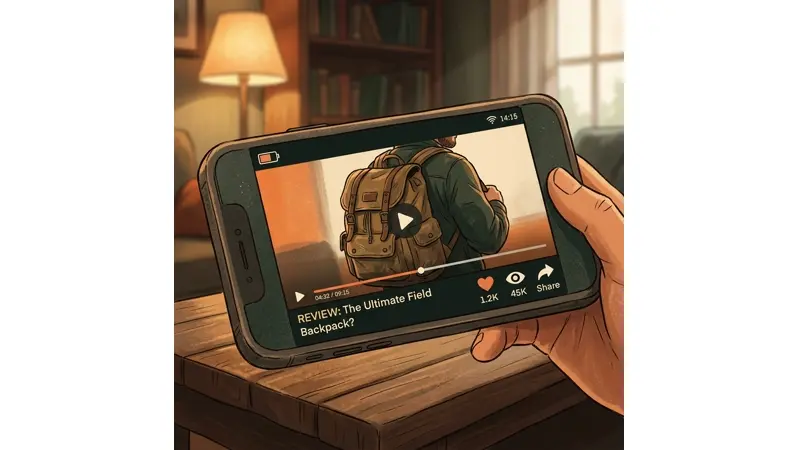
The DCS v Fischer litigation began with a technical product review on a small YouTube channel — and ended as a national accountability story.
The Section 9 "Standing" Trap
The critical procedural development in Deep Cycle Systems Pty Ltd v Fischer [2025] QDC 25 turned not on the truth or falsity of Fischer’s videos, but on a threshold question of corporate standing that DCS could not overcome.4
The Excluded Corporation Test
Under section 9(1) of the Defamation Act 2005 (Qld), a corporation has no cause of action for defamation unless it was an "excluded corporation" at the time of the relevant publications.5 Section 9(2) defines an excluded corporation as one that employs fewer than 10 persons and is not an associated entity of another corporation and not a public body — with both requirements to be established on the balance of probabilities at the time of each publication.
The legislative policy is clear: large corporations, which have extensive resources to defend and promote their reputations through advertising, public relations, and commercial leverage, do not require defamation litigation as an additional weapon. That remedy is preserved for small businesses genuinely vulnerable to reputational harm from publications they cannot otherwise address.
The Catch-22
The bitter irony in the DCS case was the company’s own decade of prior marketing. For years, DCS and Paul Tamoloitz was reported to have publicly represented the business as a global manufacturer operating factories in China and Belgium, with international branches and distribution networks across multiple countries — messaging designed to build consumer confidence. To maintain the legal right to sue for defamation, the company now had to prove in court that it was a small business run from a residential shed, employing fewer than 10 people, with no associated entities.
The Court found DCS failed to discharge that burden on the balance of probabilities.4 The financial records tendered as evidence — including the balance sheet and profit and loss statements — were inconsistent with the characterisation of the business as a sub-10 employee operation. The owner’s credibility was significantly damaged by the gap between his prior public representations and what he was now asserting in litigation. District Court Judge Byrne KC dismissed the claim on 11 March 2025. In the subsequent costs judgment Deep Cycle Systems Pty Ltd v Fischer (No 2) [2025] QDC 61, the Court ordered DCS to pay Fischer’s costs.6

The section 9 standing trap caught DCS in its own marketing: a company that claimed to be a global manufacturer could not also claim to be a small business entitled to sue for defamation.
The DARVO Archetype in Litigation
A recurring and recognisable theme in aggressive corporate digital litigation is the DARVO archetype: Deny, Attack, and Reverse Victim and Offender.
Origins of DARVO
DARVO was coined by Professor Jennifer Freyd, Professor Emerit of Psychology at the University of Oregon, in a 1997 peer-reviewed article: "Violations of power, adaptive blindness, and betrayal trauma theory", published in Feminism & Psychology 7, 22–32.7 It was developed in the context of betrayal trauma theory — specifically the mechanisms by which institutional and interpersonal perpetrators of wrongdoing respond when held accountable. The three stages are:
- Deny — deny the behaviour, often including gaslighting the person raising the concern;
- Attack — attack the credibility, motives, or character of the accuser; and
- Reverse Victim and Offender — reframe the perpetrator as the true victim of a false, malicious, or orchestrated attack.
Originally developed in the context of sexual misconduct and abusive relationships, DARVO has since been applied in family law proceedings, employment disputes, and — as the DCS case illustrates precisely — corporate defamation litigation.8 English court commentators have specifically warned that DARVO tactics can distort judicial fact-finding where the conduct is not identified and named.8 Professor Freyd herself has noted the intersection of DARVO and defamation law, observing that defamation proceedings are themselves sometimes weaponised as a DARVO tool — the litigation becoming the "Attack" phase, and the resulting public controversy serving as the basis for the "Reverse" claim of victimhood.7
DARVO in the DCS Case
The DCS matter is a documented illustration of all three stages:
-
Deny: DCS denied the technical failings of its batteries publicly, claiming reports of thermal runaway events and capacity underperformance were fabricated or the result of user error. DCS’s blog post responding to the ITP Renewables test — claiming the company had voluntarily submitted a four-year-old used battery — was, as Jobst documented, directly contradicted by ITP’s published methodology.
-
Attack: The statement of claim framed Stefan Fischer as a "vindictive liar" motivated by personal grievance after being refused free products. The allegation appears to have been fabricated. The court’s findings about Paul Tamoloitz’s credibility — described in the judgment as someone who had admitted to lying many times and appeared not to particularly care about it — are notable in this context.
-
Reverse Victim and Offender: Once the lawsuit triggered significant public attention and investigative coverage, DCS pivoted to characterising the resulting commentary as an "orchestrated cyber-bullying attack." The company authored correspondence to the Australian government making that claim, attempting to reframe a company that had filed a $100,000+ lawsuit against a small reviewer as the innocent victim of mob action.

DARVO is not merely a psychological concept — in litigation, it is a recognisable tactical pattern that often signals proceedings aimed at narrative suppression rather than establishing truth.
Recognising DARVO in litigation has two practical consequences for practitioners. First, it frequently signals a litigant whose objective is narrative management and suppression rather than the recovery of damages — and such clients carry disproportionate Streisand Effect risk. Second, the Reverse Victim and Offender phase almost always involves conduct that qualifies as an aggravating factor for damages purposes: correspondence designed to compound the defendant’s reputational harm, public mischaracterisations of the litigation, and conduct that is reckless or malicious in its disregard for truth.
Karl Jobst: The Costs of Winning and Losing
Karl Jobst’s commentary on the DCS matter provides a thorough understanding of the case and the extreme cost and stress involved in such a lawsuit. He was not a party to the DCS proceedings — he was an independent commentator whose coverage reached an audience of millions. But Jobst brought something unusual to his analysis: direct personal experience of Queensland defamation litigation from the defendant’s chair.
Mitchell v Jobst [2025] QDC 41
William "Billy" Mitchell — a prominent American arcade game champion whose Donkey Kong records had been recognised by Guinness World Records before being withdrawn following a dispute about the use of original hardware — commenced proceedings against Jobst in the District Court of Queensland over a video Jobst published in May 2021.9 The video made claims connecting a prior legal action by Mitchell against a fellow YouTuber (Apollo Legend) to that creator’s death by suicide in December 2020, alleging Mitchell had known of and expressed satisfaction at the prospect.
The Court, per Barlow KC DCJ, found all defamatory imputations pleaded by Mitchell were conveyed by the publication. The contextual truth defence under section 26 of the Defamation Act 2005 (Qld) failed on its second limb: while Jobst established the substantial truth of contextual imputations (that Mitchell had been publicly exposed as having submitted doctored gameplay footage and had used litigation to silence critics), the specific imputations about Mitchell’s conduct in relation to Apollo Legend’s death were more damaging to Mitchell’s reputation than those true contextual matters, and the defence therefore did not apply.9
The following damages were awarded:
| Component | Amount |
|---|---|
| General damages (including grapevine effect) | $300,000 |
| Aggravated damages | $50,000 |
| Total | $350,000 |
Aggravated damages were awarded on the basis of Jobst’s reckless indifference to the accuracy of his claims, his reinstatement of the offending content after initially removing it following receipt of Mitchell’s concerns notice, his use of sensationalised language, and his public maintenance of the allegations throughout the proceedings.9
The grapevine effect — the viral persistence of defamatory material published online through republication, discussion threads, and search engine indexing — was expressly factored into the general damages quantum. This reflects a growing and important principle in Queensland practice: taking down a video does not undo the harm it caused while live. Damages must account for the continuing republication that online content generates even after removal.
Why the Mitchell Case Matters for DCS
Jobst’s Mitchell v Jobst experience illuminates both the DCS matter and his own commentary on it. First, it demonstrates the real financial exposure that defamation defendants in Queensland face — a $350,000 judgment, plus legal costs across several years of contested proceedings. Second, it explains why Jobst’s analysis of the DCS material was notably careful: he cited documentary sources for every substantive claim, framed characterisations in first-person opinion language, and built his commentary on the foundation of court-tendered documents, government reports, and on-the-record confirmations. Third, and critically, it illustrates why the Streisand Effect is so dangerous for corporate plaintiffs — Jobst had never heard of DCS before the lawsuit. The litigation created the investigation.
Jobst’s Video: A Defamation Risk Assessment
Analysing the content of Jobst’s DCS investigation requires separating its statements into categories: statements of verifiable fact anchored to primary sources; honest opinion expressed on the basis of that documented material; and characterisations that carry some theoretical risk.
Strongly Protected Content
The following categories of statements in the video are, in the analysis of this firm, strongly protected by a combination of the Truth defence (section 25) and the Honest Opinion defence (section 31) of the Defamation Act 2005 (Qld):1011
| Statement | Defence Basis | Source Material |
|---|---|---|
| DCS failed to establish excluded corporation status and the claim was dismissed | Truth | [2025] QDC 25 |
| The court ordered DCS to pay $130,000 in costs | Truth | [2025] QDC 61 |
| Paul Tamoloitz admitted in cross-examination they did not own a factory in China | Truth | Court transcript (verbatim quotation) |
| DCS balance sheet showed $500K cash and $1M+ in director loans | Truth | Document tendered in evidence |
| DCS covertly changed its warranty policy and backdated it | Truth | Australian National Web Archive |
| ITP Renewables found the DCS battery "performed atrociously" | Truth | Government-backed ARENA-funded published test |
| Product Review.com.au noted 93% negative rating and removed suspected fake reviews | Truth | On-the-record confirmation from platform director |
| DCS logo is a copy of DCS Corporation USA’s logo used without permission | Truth | Written confirmation from DCS Corporation |
| "In my opinion, the lawsuit was meritless" | Honest Opinion | Fischer’s videos, the dismissed claim |
| "I believe this company is a danger to society" | Honest Opinion | Thermal runaway incidents, vehicle fire, documented capacity failures |
Note the merits of these claims have not been tested by this firm but are based upon the evidence supplied in the court hearings and presented by Jobst in his videos.
Statements Requiring Care
Two characterisations carry more theoretical risk, even on the strong factual foundation Jobst constructed:
-
"Paul Tamoloitz is one of the most dishonest people I have ever encountered" — this is a direct character assessment of a named individual (not just the company). However, it is immediately preceded by approximately forty minutes of documented evidence of specific deceptions admitted on oath. A court applying Peros v Nationwide News [2024] QSC 192 principles would assess whether, in that context, the audience would understand this as opinion or as a statement of verifiable fact.12 Given the framing and foundation, this would very likely be assessed as honest opinion based on proper material.
-
The implied allegation that DCS deliberately sent Steven Richardson’s battery to China knowing it could not be retrieved — effectively destroying evidence — is the video’s most serious claim about individual conduct. Jobst frames it appropriately in first-person terms ("what it appears to me"), which is the correct approach for a serious allegation unsupported by direct admission. It is corroborated only by the sequence of events and Paul Tamoloitz’s documented pattern of dishonesty, not by an admission or independent witness. A careful editor or legal adviser reviewing this content would flag this passage for the closest scrutiny.
Overall Assessment
The video is overwhelmingly protected. The evidentiary foundation — court transcripts containing sworn admissions, documents tendered in evidence, a government-backed independent test, on-the-record third-party confirmations, and archived web captures — is unusually strong for commentary of this nature. A defendant facing a defamation claim over this content would have access to an extraordinarily well-documented Truth and Honest Opinion defence. The central observations are also supported by the court’s own adverse findings about Tamoloitz’s credibility in the judgment itself.
Note that DCS and Paul Tamoloitz have different causes of action and just becuase DCS did not meet the bar in previous litigation, it may, and litigation against Paul Tamoloitz personally may give grounds for a suit.
The Serious Harm Threshold (Section 10A)
Since Queensland’s adoption of the Model Defamation Amendment Provisions 2020, implemented through the Defamation (Model Provisions) and Other Legislation Amendment Act 2021 (Qld), every defamation plaintiff must establish that the publication caused, or is likely to cause, serious harm to their reputation.13 For a corporation, this requires proof of serious financial loss — not reputational sensitivity, and not hurt feelings.
The Peros v Nationwide News Benchmark
The leading Queensland authority on the serious harm threshold is Peros v Nationwide News Pty Ltd & Ors (No 3) [2024] QSC 192, which involved a claim arising from an investigative podcast.12 The Court established the following principles:
- Serious harm is a qualitative exercise — the court assesses all relevant circumstances and reaches a conclusion that does not demand arithmetical precision.
- The standard is harm that is more than merely substantial, though not necessarily grave.
- The plaintiff must demonstrate the actual impact of the publication — not a tendency to cause harm. Causation language governs the inquiry.
- Relevant factors include: the meaning and gravity of the publication, its reach, the identity and likely reaction of the audience, and whether the statements would be believed.
- Hurt feelings are irrelevant. What matters is the objective effect on how third parties think of the plaintiff.
- Existing reputational damage is directly relevant — a plaintiff who already has a poor reputation can only claim the marginal additional harm the publication caused.
Why Serious Harm Was Always Insurmountable for DCS
Even if DCS had overcome the section 9 standing trap, the serious harm threshold presented a formidable second obstacle. DCS would have been required to prove that Stefan Fischer’s YouTube reviews caused serious financial loss — not that its batteries were performing poorly, and not that customers were complaining. That causal inquiry would have confronted the ITP Renewables test, which was conducted and published independently of Fischer’s videos, at government expense, and showed the DCS battery performing atrociously before Fischer had published a single word. Where the independent evidence already establishes that the product fails to meet its rated specifications, a plaintiff cannot credibly argue that the YouTube review — rather than the product’s own performance — was the cause of financial loss.
Defences: Truth, Honest Opinion, and Public Interest
Even if standing and serious harm were both established, the Defamation Act 2005 (Qld) provides three overlapping defences that would have protected Fischer’s reviews.
Truth — Section 25
A publication is a complete defence if the defendant proves the defamatory imputations are substantially true.10 In the context of product reviews, substantial truth does not require absolute precision — it requires that the "sting" of the criticism is justified by the evidence. Fischer’s capacity test results, showing real-world output materially below DCS’s marketed specifications, form precisely the kind of factual foundation that supports a justification defence. The ITP Renewables test provides independent corroboration.
Honest Opinion — Section 31
Section 31 protects opinions that are expressed on matters of public interest and are based on "proper material."11 To succeed, the publication must be an expression of opinion rather than a statement of verifiable fact; it must concern a matter of public interest (consumer product safety is squarely within this category); and it must be based on material that is substantially true or otherwise privileged. Fischer’s video — showing his own documented test results, citing his personal experience, and expressly describing his decision to switch products — is the archetype of protected honest opinion. Consumer safety and the performance of products sold at a premium price are quintessential matters of public interest.
Public Interest — Section 29A
Section 29A, introduced by the 2021 reforms, provides a standalone defence for publications on matters of public interest where the defendant reasonably believed publication was in the public interest.14 Lithium battery safety — particularly in vehicle applications where thermal runaway can cause catastrophic fires — falls precisely within the category of public interest that this provision was designed to protect. A reviewer who, after documenting their experience and receiving messages from dozens of other customers, publishes a video warning the broader public has strong grounds for this defence even if individual factual claims are not established to the full standard of truth.
Real Queensland Defamation Examples
Mitchell v Jobst [2025] QDC 41 — The Contextual Truth Limit and Aggravated Damages
As analysed above, Mitchell v Jobst is the leading recent Queensland illustration of the limits of the contextual truth defence and the serious financial consequences of aggravated damages. The $350,000 total award demonstrates that Queensland courts make substantial awards where the specific imputations are grave and the defendant’s conduct throughout the litigation compounds the harm.9 The case’s most important procedural lesson: Jobst removed the offending content upon receipt of Mitchell’s concerns notice — the foundational step toward an offer to make amends under Part 3 of the Defamation Act 2005 (Qld) — and then reinstated it. That reinstatement became a specific, documented basis for the aggravated damages award. Do not reinstate content following a concerns notice without specific legal advice.
Peros v Nationwide News [2024] QSC 192 — Serious Harm as a Gatekeeping Mechanism
Peros establishes that the serious harm threshold is a substantive gatekeeping mechanism and not a procedural formality.12 Claims that cannot demonstrate actual impact on reputation in the eyes of the relevant audience — as distinct from a tendency to cause harm — will not clear the threshold. The case confirms the tactical value of an early application for separate determination of serious harm, which can terminate a weak claim before the parties commit to the full cost of trial preparation.
Upper-End Queensland Damages
At the upper end of the spectrum, Queensland courts have awarded damages of approximately $775,000 arising from a defamation claim by a former Queensland Government Minister against a former media adviser.15 Cases of that magnitude involve high-profile plaintiffs with significant professional reputations, publications to substantial audiences, and career consequences that can be quantified through professional evidence. The existence of the upper end serves as a reminder that where the imputations are serious, the plaintiff is prominent, and the defendant’s conduct is egregious, Queensland juries and judges will make awards that reflect that gravity.
Director Loans, Insolvency, and Enforcement
One of the most practically significant and under-discussed aspects of the DCS matter is the refusal to comply with the costs order made in Fischer’s favour. According to DCS’s balance sheet tendered in evidence (as at June 2024), the company held approximately $500,000 in cash and carried over $1,000,000 in director loans owed by Paul Tamoloitz to the company — giving a total of approximately $1.7 million in liquid or recoverable assets. The company’s refusal to pay a court-ordered $130,000 costs debt was, on those figures, a choice rather than a necessity.
In Queensland, a director loan is an asset of the company — money owed by the director to the company as a creditor. If a company is wound up, whether voluntarily or by court order, a liquidator appointed under the Corporations Act 2001 (Cth) has extensive powers to recover those loans to satisfy creditors, including judgment creditors and costs order holders. The liquidator can also pursue uncommercial transactions, related party transactions, and voidable preferences. Corporate litigants who attempt to use insolvency or corporate restructuring as a shield against adverse costs orders frequently overlook this exposure.
Fischer had commenced the necessary steps to have DCS declared insolvent and a liquidator appointed at the time Jobst’s video was published. The path to recovery through insolvency proceedings is expensive and time-consuming — requiring additional upfront cost at precisely the moment the judgment creditor is most financially strained. This asymmetry is one of the most important and least-discussed realities of defamation litigation: the costs order is only as valuable as the plaintiff’s ability and willingness to pay, and the enforcement path can cost as much as the underlying litigation.
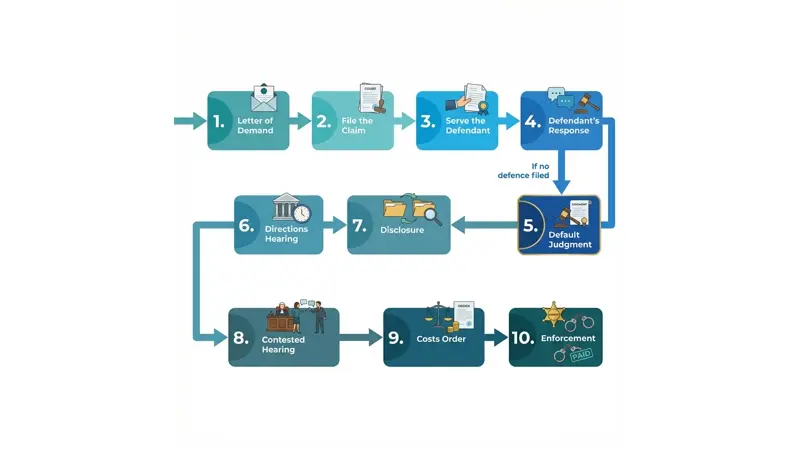
A costs order in your favour is not the same as money in your account. Enforcement proceedings carry their own cost — a reality that aggressive corporate litigants often overlook when assessing litigation risk.
The Streisand Effect: A Practical Warning
The DCS case is the clearest recent Australian example of the Streisand Effect in a defamation context. Before DCS filed its claim, Stefan Fischer’s reviews had been watched by a finite audience of off-road and camping enthusiasts. After the filing:
- Karl Jobst — who had never heard of DCS before the lawsuit — produced a detailed investigative video reaching an audience measured in the millions;
- Lawyers Weekly reported the case as a landmark matter in Australian media law;
- Parliamentary correspondence was initiated by DCS seeking government intervention, which itself became part of the documented record;
- The ITP Renewables test results were cited and discussed across forums, media, and social platforms that would never have encountered Fischer’s original review; and
- DCS’s own financial records, cross-examination transcripts, and operational admissions — including the "Michelle" fiction and the stolen trademark — became part of a permanent public record that will rank in search results for DCS’s brand name indefinitely.
The legal proceedings did not suppress the criticism. They amplified it into a national accountability story and transformed a niche product dispute into a textbook case study in corporate misuse of defamation law.
How to Comment Safely Online: Practical Takeaways
The DCS case, read alongside Mitchell v Jobst and Peros v Nationwide News, yields clear practical guidance for consumers, reviewers, and commentators who wish to express criticism publicly without creating defamation exposure.

Commenting safely online is not about staying silent — it is about expressing genuine opinion on a documented factual foundation and framing it honestly.
-
Anchor every claim to a documented source and cite it immediately. "According to the company’s website as archived on [date]…" is far stronger than a bare assertion. Take screenshots before you publish — as the DCS case shows, companies can request removal of Wayback Machine archives.
-
Label opinion clearly and in the first person. Use phrases such as "in my view," "it appears to me," "my experience was," and "I believe." Never present a personal conclusion as an objective fact. "This is fraud" is a factual claim you must be able to prove. "In my view, this looks like dishonest conduct" is protected opinion.
-
Describe your specific experience — do not generalise universally. "My DCS battery dropped to 60% capacity within 12 months" is your experience. "DCS batteries always fail within 12 months" is a universal factual claim requiring proof.
-
Cite independent corroboration where it exists. A government-backed test, a regulatory finding, a published court judgment, or a professional third-party opinion dramatically strengthens the "proper material" foundation for your honest opinion defence. Jobst’s documentary approach — citing court transcripts, government reports, and on-the-record confirmations — is the model to follow.
-
Do not embellish the sting beyond what your evidence supports. Courts assess whether you expressed your genuine opinion or used dramatic language that exceeds the evidential foundation. Proportionality matters.
-
Include a "proper material statement" at the end of your review. Briefly note what your opinion is based on: "I have formed this view based on my direct experience of [X], the independent testing published by [Y], and the company’s publicly available documentation as at [date]."
-
Do NOT republish content after removing it in response to a concerns notice without specific legal advice. Mitchell v Jobst makes this absolutely clear: reinstating material after removal following a concerns notice is one of the most reliable ways to generate aggravated damages if a claim succeeds.
-
Preserve your evidence before you publish. Screenshot the product specification sheet, marketing claims, warranty terms, and any communications. As the DCS warranty episode demonstrates, product pages and policies can be changed or scrubbed at any time.
-
If you receive a concerns notice, seek legal advice within 14 days. The limitation period is one year from publication under section 10AA of the Limitation of Actions Act 1974 (Qld)16 and it runs regardless of whether you are in correspondence. A genuine offer to make amends under Part 3 of the Defamation Act 2005 (Qld) can resolve a matter at a fraction of the cost of litigation — but the window to make that offer closes when the claim is filed.
-
Understand the Streisand Effect cuts both ways. For individuals who receive a concerns notice over a review, the threat of litigation can sometimes be answered with a well-constructed offer to make amends and a clarification statement. Taking that path — rather than a public fight — protects your position while avoiding the financial asymmetry that favours corporate litigants even when they ultimately lose.
Costs, Recovery, and the Asymmetric Burden
One of the most important realities of Queensland defamation litigation is the asymmetric costs burden that falls first and most heavily on defendants, regardless of outcome. Stefan Fischer incurred legal costs exceeding $100,000 before his case was dismissed — costs he is now pursuing through insolvency proceedings against a company that appears to be deliberately withholding payment despite holding sufficient assets. Even a successful defendant is in the hole before they receive a cent of recovery, and recovery is never guaranteed.
Deep Cycle Systems Pty Ltd v Fischer [2025] QDC 25 will be cited for years as a warning against the weaponisation of defamation law to suppress legitimate consumer criticism. Its lessons are multiple: the jurisdictional bar of section 9 cannot be cured after filing; the serious harm threshold requires a credible causation case that a product’s own failures will undermine; Truth and Honest Opinion defences protect rigorous, evidence-based commentary; and the Streisand Effect is not a metaphor — it is a documented outcome that turns small YouTube channels into national accountability stories.
If you are a business considering issuing a concerns notice, or a consumer who has received one, the financial and reputational stakes are substantial. Contact our litigation team today for a confidential strategic assessment before the limitation period expires.
Disclaimer: This article provides general legal information and does not constitute legal advice. Every defamation matter is unique and subject to strict limitation periods. Contact Bell & Senior Lawyers for advice specific to your circumstances.
Need Legal Advice?
Contact us today to discuss your matter. We'll respond within 24 hours.
Enquiry Sent
Thank you for reaching out. A member of our legal team will contact you shortly.
-
Deep Cycle Systems Pty Ltd v Fischer [2025] QDC 25 (Byrne KC DCJ). ↩︎
-
Lawyers Weekly, ‘Australian YouTuber hit with landmark action alleging defamation’ (25 July 2024) https://www.lawyersweekly.com.au/biglaw/40220-australian-youtuber-hit-with-landmark-action-alleging-defamation . ↩︎
-
Karl Jobst, DCS Batteries and the Truth (YouTube, 2025) (documentary investigation drawing on court transcripts, balance sheets tendered in evidence, archived web captures, government test results, and on-the-record confirmations from Product Review.com.au and Solar Quotes). ↩︎ ↩︎ ↩︎ ↩︎ ↩︎ ↩︎ ↩︎ ↩︎
-
Deep Cycle Systems Pty Ltd v Fischer [2025] QDC 25 (Byrne KC DCJ). ↩︎ ↩︎
-
Defamation Act 2005 (Qld) s 9; https://classic.austlii.edu.au/au/legis/qld/consol_act/da200599/s9.html . ↩︎
-
Deep Cycle Systems Pty Ltd v Fischer (No 2) [2025] QDC 61 (Byrne KC DCJ). ↩︎
-
Jennifer J Freyd, ‘Violations of power, adaptive blindness, and betrayal trauma theory’ (1997) 7 Feminism & Psychology 22; see also https://www.jjfreyd.com/darvo . ↩︎ ↩︎
-
Chambers Bar, ‘DARVO and the English Family Courts: recognising and responding to manipulation’ (February 2024) https://chambers.com/articles/darvo-and-the-english-family-courts-recognising-and-responding-to-manipulation . ↩︎ ↩︎
-
Mitchell v Jobst [2025] QDC 41 (Barlow KC DCJ); Kennedys Law, ‘This is not a game: online falsehoods will cost you’ (January 2026) https://www.kennedyslaw.com/en/thought-leadership/case-review/2025/this-is-not-a-game-online-falsehoods-will-cost-you/ . ↩︎ ↩︎ ↩︎ ↩︎
-
Peros v Nationwide News Pty Ltd & Ors (No 3) [2024] QSC 192; McCullough Robertson, ‘Serious Harm in Australian Defamation Law: Key Insights’ (August 2024) https://mccullough.com.au/2024/08/26/serious-harm-to-reputation-case-law-development-in-queensland/ . ↩︎ ↩︎ ↩︎
-
Defamation Act 2005 (Qld) s 10A, inserted by Defamation (Model Provisions) and Other Legislation Amendment Act 2021 (Qld). ↩︎
-
Defamation Act 2005 (Qld) s 29A. ↩︎
-
Level Twenty Seven Chambers, Media & Defamation Cases https://www.level27chambers.com.au/insights/cases/page/7/?area=media-and-defamation . ↩︎
-
Limitation of Actions Act 1974 (Qld) s 10AA. ↩︎