
Legal Matters: Neighbor Disputes, Guardianship & Enforcing QCAT Decisions
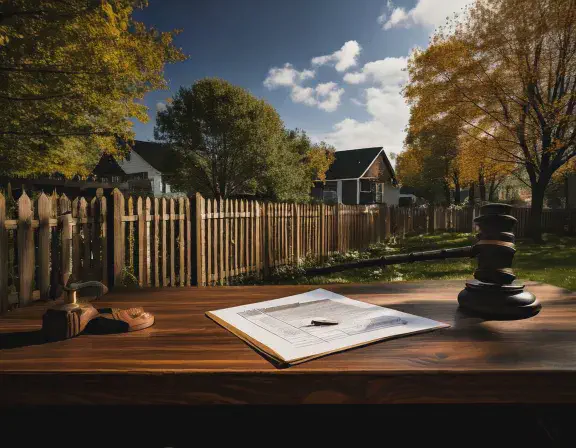
In this episode of Legal Matters on 4CRB, Andrew Bell and Colin Balewski dive deep into Queensland’s civil dispute and estate planning laws. The duo field calls from local Gold Coast residents on a range of contentious topics, from neighbor disputes involving giant screen bamboo to the realities of enforcing QCAT decisions when the losing party ignores the order.
Key Topics
- Understanding QCAT: What the Queensland Civil and Administrative Tribunal does, and why it is primarily designed as a “DIY” legal system.
- Neighbor Tree and Fence Disputes: The actual legal standing behind shaded solar panels, blocked views, and storm-damaged fences.
- Estate Planning Traps: The critical risks of keeping a 50-year-old Will, and why holding only a photocopy is heavily problematic.
- Guardianship and Nursing Homes: Clarifying the misinformation around what happens to an estate when a loved one is placed in a care facility and the state takes over guardianship.
- Enforcing QCAT Judgments: What happens after you win at QCAT, and the sobering reality of Magistrates Court enforcement processes.
Listener FAQ Highlighted In This Episode
- Can I force my neighbor to trim trees that block my view or shade my solar panels in Queensland?
- Can I trim a neighbour’s overhanging branches myself in Queensland?
- Who is liable when a neighbour’s tree damages my fence or property?
- How do I enforce a QCAT decision if the losing party ignores it?
- Is an old Will still valid if I only have a photocopy?
Listen to the full discussion above.
Key Takeaways
- QCAT Does Not Enforce Orders: Winning your case is only half the battle. If the other party refuses to pay, you will need to enforce the order formally through the Magistrates Court.
- No Legal Right to a View: There is no legal right in Queensland to sunlight or views. If a neighbor’s tree is not a hazard and is simply an eyesore or casting a shadow, QCAT will rarely intervene.
- Fire Hazards are a Council Matter: If excessive vegetation genuinely breaches fire management plans, the local Council has the authority to step in.
- Update Your Will: A valid Will relies on locating the original document. If your Will is decades old, it is faster, safer, and cheaper to execute a new one rather than hunting down the original from closed law firms.
- Guardians Must Act in Best Interests: QCAT appointed guardians (such as the Public Trustee) do not just “seize” private estates; they are legally bound to manage funds specifically for the care and benefit of the incapacitated person.
Annotated Transcript
[!CAUTION] Winning at QCAT Is Only Half the Battle QCAT does not enforce its own orders. If the other party simply ignores the judgment, you must separately register it in the Magistrates Court and pursue enforcement yourself. Similarly, a 50-year-old Will held only as a photocopy is legally unenforceable and leaves your estate exposed to intestacy rules.
Speak to our disputes and estate planning team today to protect your legal position before deadlines expire.
QCAT & DIY Representation
QCAT provides a more accessible jurisdiction for everyday disputes, generally excluding legal representation without leave.
📎 See also: QCAT Handbook
Colin Balewski: Good morning to Andrew Bell from Bell and Senior Lawyers. Last week, we started discussing QCAT, but we had so many callers we couldn’t finish the topic. Let’s start with a quick overview: what is QCAT, and what does it mean to our listeners?
Andrew Bell: QCAT stands for the Queensland Civil and Administrative Tribunal. In 2009, it replaced about 22 different smaller tribunals. The goal was to create a more efficient, faster, and easier system for people to deal with. If you have a dispute in Queensland, such as residential tenancy disputes, building defects, Body Corporate arguments, fence and tree disputes, debt recovery up to $25,000, or guardianship matters, QCAT is the place to go.
Colin: And you don’t need a solicitor to represent you, correct?
Andrew: That’s right. The system is set up to help you navigate legal issues and present your case in a straightforward way without a lawyer. In fact, you often have to apply for special permission to even have a lawyer represent you at QCAT.
Caller 1 — Brett | Tree and Fence Disputes
Applying the Neighbourhood Disputes (Dividing Fences and Trees) Act 2011 .
📎 See also: Trees Blocking Views and Solar Panels in QLD | Trimming Overhanging Branches | Tree Damage Liability
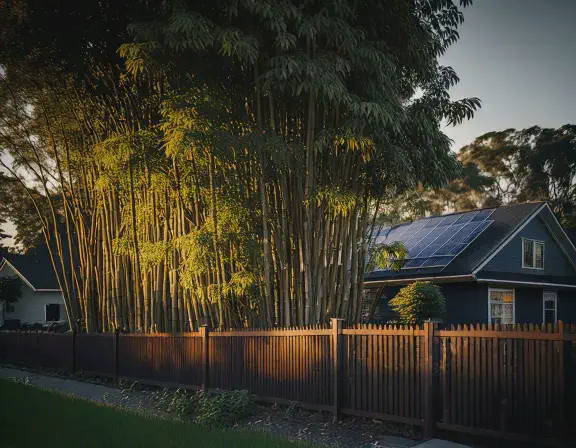
Brett (Caller): My next-door neighbor has a humongous row of bamboo growing in his yard. It’s over 35 meters tall and pressed right up against our fence line. It’s blocking our beautiful Gold Coast view, which detracts from our resale price. It’s also shading my solar panels so they’re in the dark for half the day, and it’s killing the grass in my yard. Do I have any legal standing to demand they hedge it, even though it’s not physically damaging my property?
Andrew: If there is no danger, no fire hazard, and it’s not damaging the fence, you don’t really have legal standing to force them to reduce the height. The law does not guarantee your right to a view or to sunlight. We’d recommend talking to your neighbor and offering to pay an arborist to trim it. Buying them a bottle of scotch and having a friendly chat about how it’s affecting your solar panels might be your best approach.
Brett: What if I classify it as a fire hazard? If a bushfire raced up the mountain, it would set the bamboo alight and blow embers onto my wooden house.
Andrew: Fire management plans in rural areas are under the purview of the local council. They can inspect properties and order that undergrowth or dangerous vegetation be removed for fire safety. You could contact your local council to assess the situation.
Rod (Caller): Years ago, the rule was that if a neighbor’s tree limbs were hanging over your fence, it was your right to cut them down and throw the branches back over to their side. Is that still the case?
Andrew: That law, called “self-abatement,” does still exist, but it is definitely not recommended. The formal recommendation is to apply to QCAT to get an order for the tree to be trimmed. If you take matters into your own hands and damage the tree, or damage their property when throwing the limbs back, you could find yourself in trouble and legally liable. Always talk to the neighbor first.
Colin: What happens if a perfectly healthy tree is knocked over by a nasty storm or a cyclone, and it smashes a neighbor’s fence? Who pays?
Andrew: If the tree was perfectly healthy and a cyclone knocked it down, meaning there was no failure by the owner to maintain the tree, it is considered an Act of God. If it busts the fence, QCAT will generally order both neighbors to share the cost of the repair equally. The tricky part is that the burden of proof is on the tree owner to prove the tree was perfectly healthy before it fell.
Caller 2 — Janine | Lost and Outdated Wills
Applying the Succession Act 1981 .
Janine (Caller): We made our Wills about 54 years ago in Bathurst, New South Wales, through a law firm that I don’t think exists anymore. We only have a copy and I can’t find it. Should we do another one?
Andrew: Yes, I strongly recommend doing a new Will. For a Will to be valid, you need the original document, not a copy. If you want to find the old one, you can contact the Law Society of New South Wales; they track where files go when law firms close.
However, 54 years is a very long time. It is highly likely your circumstances have changed, including who you want as executors and which family members are still around. Creating a new Will automatically revokes the old one, so it is definitely time for an update.
Caller 3 — John | Guardianship and Nursing Homes
Guardianship and Administration Act 2000 considerations.

John (Caller): Can QCAT take your estate away from you? My wife was forced into a nursing home. The hospital told me that if I didn’t put her into care, they would take her estate off her.
Andrew: QCAT can issue what is called a “Guardianship Order.” If a person loses the capacity to make decisions, QCAT can appoint a loved one or the Queensland Public Trustee to manage their estate. The appointed trustee has full legal and financial authority to manage that person’s assets, but they have a strict legal mandate: they must manage the estate only for the benefit of the person being cared for.
This means the state doesn’t just “take” the money. However, the trustee can make decisions in the person’s best interest, which might include legally selling their property to fund their nursing home care.
John: She wasn’t looked after properly at the nursing home and passed away three and a half months later from falls.
Andrew: That is incredibly traumatic, and I am very sorry to hear that. For anyone in a similar situation regarding neglect or potential medical negligence, I highly recommend getting independent legal advice immediately to ensure your loved ones are protected.
QCAT Costs and Enforcing Orders
Procedures under the Queensland Civil and Administrative Tribunal Act 2009 .
📎 See also: Enforcing QCAT Decisions in Queensland
Colin: If I go to QCAT and win my case, could I still be out of pocket?
Andrew: Absolutely. The filing fees for QCAT operate on a sliding scale depending on your claim, usually between $60 and $250. (If you are a pensioner or in financial hardship, you can apply to have this fee waived).
However, if you hire a lawyer to help you, you generally cannot recover those legal costs from the losing party. For example, if you spend $3,000 on legal fees to win a $2,000 dispute, you will be financially worse off.
Colin: What happens if the person you are suing just ignores the QCAT application completely?
Andrew: When you apply to QCAT, you have to formally “serve” the documents to the other party so they are aware of the action. You must then prove to QCAT that they received it. Once served, they have 28 days to file a defence. If they simply ignore it, you can apply for a “Default Judgement.” QCAT will assess your claim on its merits and, without the other side’s input, will likely make a decision in your favor.
Colin: And how do you enforce that decision once you win? I imagine many people win and then give up because they don’t know what to do next.
Andrew: That is a common frustration. QCAT makes the decision, but they do not enforce their own orders. If the losing party ignores the order, you have to register the QCAT decision in the Magistrates Court. You then have to go through court enforcement procedures, which might involve hiring a bailiff or applying to make the person bankrupt. This can take an additional six months and require you to pay upfront enforcement costs, though you can usually recover those costs from the money you eventually collect. You have up to six years to enforce a QCAT decision, so my advice is not to give up.
Colin: Excellent advice, Andrew. Thank you for your time this morning.
Disclaimer: This transcription provides general legal information only; it is not personal legal advice. Everyone’s situation is different, so please seek independent legal advice for your own circumstances.