
How to Protect a Song's Copyright Before Sending It to a Publisher
Copyright
You’ve written a song — a complete set of lyrics, a melody, or both — and you want to send it to a publisher, recording artist, or producer. How do you protect your rights without spending a fortune on registration fees or a lawyer before you even know if the song will go anywhere?
The answer is simpler than most people think, and it starts with understanding how Australian copyright law actually works.
Copyright Is Automatic in Australia
Under the Copyright Act 1968 (Cth) , copyright in an original literary or musical work vests automatically at the moment of creation. You do not need to:
- Register with any government body
- Pay any fees
- Display the © symbol (though doing so is good practice)
The moment you write the lyrics or compose the music, you are the copyright owner — provided you are the original author and the work is original.
The Problem: Proving You Wrote It First
The challenge is not ownership — it’s proof of authorship and timing if a dispute arises. Disputes most commonly occur when:
- A song becomes commercially valuable and someone else claims they wrote it first
- You shared a work-in-progress with someone who later claims they co-wrote it
- A publisher or producer reproduces your work without crediting or paying you
In a dispute, the question before a court or a solicitor is: Can you establish that you created this work, and when?
The Cheapest Way to Create Evidence: The Sealed-Letter Method
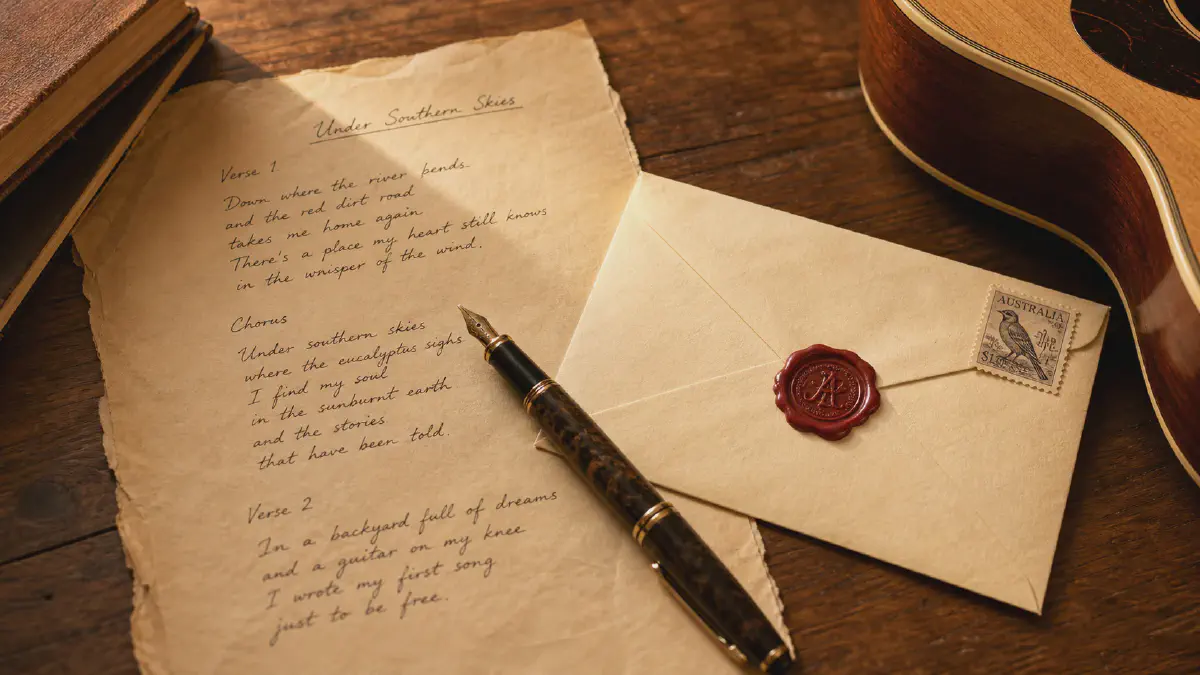
The most cost-effective method to create a dated, independent record of your authorship is the sealed-letter method:
- Print or write out the complete lyrics (and/or musical notation if you have it)
- Sign and date the document
- Seal it in an envelope — do not use tape or staples that could be removed and re-sealed
- Post it to yourself (registered post adds an additional layer of timestamping if you want it, but standard post is sufficient)
- Do not open the envelope — store it in a safe or secure location
- Label the outside with a note describing the contents, but do not open it
If a dispute ever arises, you take the sealed, dated letter to your solicitor. The postmark provides an independent record of when it was mailed, and the intact seal demonstrates it has not been tampered with. Your solicitor can open it in your presence as part of establishing evidence of authorship.
What Happens When You Send Your Work to a Publisher?
Sending your work to a publisher, singer, or producer does not transfer copyright. You retain ownership unless you:
- Assign the copyright in writing (permanently transfer ownership)
- License the copyright (grant permission to use it under specific conditions)
Before signing any agreement with a publisher or label, have a solicitor review the document. Many standard recording or publishing agreements include clauses that assign copyright in your work to the label — which may be appropriate in some contexts, but should be a conscious decision, not an accident.
Related Topics
- Intellectual Property FAQs
- Legal Matters Episode 21 — De Facto Rights, BFAs & Auction Disclosure
- Consumer Law Practice Area
Need Advice on Protecting Your Creative Work?
If you’ve received a publishing or recording agreement, or if someone has used your creative work without permission, our team can help.
📞 (07) 5532 8777 | 🌐 bellsenior.com.au | Contact us
Need Specific Legal Advice?
The answers above are general. For advice tailored to your specific situation, contact our Southport solicitors today.
Enquiry Sent
Thank you. Our team will contact you shortly.