
Legal Matters Ep 23 Separation, Property Pools and Add-Backs
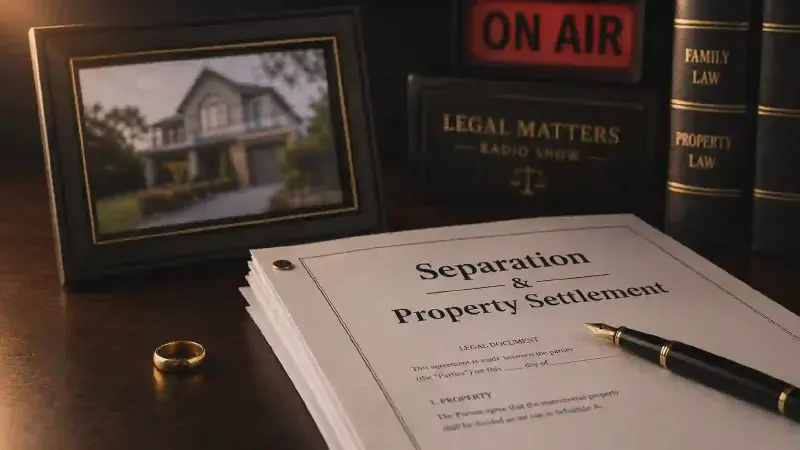
Separation and de facto relationships raise some of the most emotionally charged questions in Australian Family Law, especially once property pools, contribution assessments and recent add-back decisions come into play for everyday Gold Coast families.
Andrew Bell returns to Legal Matters to finish the current Family Law series by explaining how courts now handle separation for married and de facto couples, what goes into the property pool, and how recent case law has changed the way money spent before trial is treated. He then takes calls on enduring powers of attorney, health directives, wills, inheritances and boundary encroachments, showing how family law and succession law intersect in practice.
Key Topics
- Separation and Time Limits: Married couples need 12 months of separation before divorce, then 12 months post-divorce to file a property settlement; de facto couples have two years from separation. See Property Settlement Time Limits After Separation
- The Property Pool: Everything the couple owns — real estate, bank accounts, superannuation, businesses, vehicles, trusts — less liabilities, valued at trial or settlement, not separation. See What Is a Property Pool and How Do Add-Backs Work?
- The Four-Step Process and 2024 Reforms: Existing property, contributions, future needs, and the new requirement to identify existing legal and equitable interests. See How Does the Family Law Property Settlement Process Work?
- Add-Backs After the Full Court Decision: Spent money can no longer be notionally resurrected in the pool; waste and dissipation now affect the contributions analysis instead. See What Is a Property Pool and How Do Add-Backs Work?
- Enduring Powers of Attorney and Health Directives: Who should hold originals versus certified copies, and how nephews and other relatives fit into inheritance expectations. See Who Should Hold My Enduring Power of Attorney and Health Directive?
- Executor Duties and Limitation Periods: Beneficiaries generally have six years from death to bring a claim against an executor. See What If an Executor Does Not Distribute an Estate Properly?
- Protecting Inheritances From a Separated Spouse: Remaining legally married keeps future inheritances exposed to a property settlement claim. See Can My Separated but Undivorced Spouse Claim on My Inheritance?
- Boundary Encroachments and Adverse Possession: Long-unchallenged encroachments can create risk for an executor selling the property later. See Do Boundary Encroachments Matter for My Executor?
Related long form guides
- Gold Coast Property Settlement Timeline & Process
- Mediation vs Court in Queensland Family Law
- Avoiding Probate and Family Provision Claims QLD
- Estate Planning 101: Wills & Powers of Attorney
Listener FAQ Highlighted in This Episode
- How long after divorce do I have to start a property settlement? Married couples generally have 12 months from a final divorce order, while de facto couples have two years from separation before needing the court’s permission to file late. See Property Settlement Time Limits After Separation
- What counts as the property pool, and when is it valued? It includes all assets and liabilities of both parties and is valued at trial or settlement, not at separation, so delay can shift outcomes. See What Is a Property Pool and How Do Add-Backs Work?
- Do courts still add spent money back into the pool? Recent Full Court authority holds that only property existing at the hearing can be included; wasteful spending is now addressed through the contributions analysis instead. See What Is a Property Pool and How Do Add-Backs Work?
- Who should hold my enduring power of attorney and health directive? Attorneys and Queensland Health should have certified copies, while originals stay safely with a solicitor or accountant. See Who Should Hold My Enduring Power of Attorney and Health Directive?
- Can my executor be sued for mishandling an estate? Yes, beneficiaries generally have six years from the date of death to bring a civil claim for breach of executor duty. See What If an Executor Does Not Distribute an Estate Properly?
- Can my separated but still-married son’s spouse claim his inheritance? Yes, while he remains legally married, an inheritance can form part of a future property settlement pool. See Can My Separated but Undivorced Spouse Claim on My Inheritance?
- Do boundary encroachments matter for my estate? Long-standing unchallenged encroachments can create adverse possession risk for a selling executor, so put neighbours on notice and get a survey now. See Do Boundary Encroachments Matter for My Executor?
Key Takeaways
- Know your deadlines. Married couples usually have 12 months after divorce to start property proceedings, de facto couples have two years after separation, and beneficiaries often have six years from death to challenge executor conduct.
- Understand the property pool. It covers all assets and liabilities of both parties, valued at settlement or trial, and recent case law has reshaped how courts deal with money that has already been spent.
- Secure and document joint funds. Recording withdrawals, legal fees and personal expenses creates evidence for later contribution arguments and may deter unilateral dissipation.
- Store originals, rely on certified copies. For wills, enduring powers of attorney and health directives, keep the originals safely with professionals, and use certified copies when dealing with banks, hospitals and care providers.
- Act early on boundary issues. Putting neighbours on notice and obtaining surveys now avoids leaving your executor with a complex encroachment or adverse possession dispute.
Annotated Transcript
📋 This transcript has been lightly edited for clarity. Legal commentary and internal links have been added to assist readers. Caller names are as broadcast.
Segment 1 – Introduction and Family Law Recap
⚖️ Topic: Separation, time limits and property pools Relevant law: Family Law Act 1975 (Cth) Pt VII, Pt VIII
Announcer 4CRB now presents Legal Matters, proudly brought to you by Bell and Senior Lawyers. Call them today for all your legal needs on (07) 5532 8777. This program provides general legal information only. It is not personal legal advice. Everyone’s situation is different, so please seek independent advice for your own circumstances.
Colin Balewski Well, as the promo states, welcome to Legal Matters, and it is a very good morning to Andrew Bell from Bell and Senior Lawyers.
Andrew Bell Great to be back once again, Colin.
Colin We have had some fun over the last couple of weeks, we have learned a lot. We are doing a family law recap this morning — separation, property pools, and recent case law. So, it will be an interesting discussion, but the program does not work without you. It is your program, after all. If you would like a little bit of free legal information this morning, we would love to hear from you. Do not leave it to the end of the program. The number to call is (07) 5520 8888.
We might start with a recap, Andrew, on what we talked about last week.
Andrew Well, last week we took a diversion to talk about wills and why structuring your will is a very personal thing and depends on your situation. And we are back to talking about family law. Where we had left off, I had promised we would talk about some examples and case studies on separation, which we will round out today. Separation is when one or both parties intend to end a relationship, married or de facto. Once you are married, you need 12 months of separation before you can get a divorce. And a property application must be filed within 12 months of a divorce being final. If you are a de facto couple, which means you are genuinely living in a domestic relationship for at least two years, then you have two years from separation to do that property settlement.
And key to that property settlement is the term called the property pool. That is everything that the couple owns — real estate, bank accounts, superannuation, shares, businesses, vehicles, cryptocurrency, trusts — and then liabilities are taken off that. The most important thing to take away about this property pool is that it is valued at the date of the trial or the settlement, not at the date of separation. So a delay can completely shift outcomes, which is why timing becomes a tactical decision.
📎 See also: Legal Matters Ep 19: New E-Bike Laws & Family Law | Legal Matters Ep 20: Property Settlement, Contributions & Will Disputes | Property Settlement Time Limits After Separation

Segment 2 – The Four-Step Property Process and Recent Reforms
⚖️ Topic: Contributions, future needs and add-backs Relevant law: Family Law Act 1975 (Cth) s 79, s 90SM
Colin Balewski Let us start rolling through the mechanics. The actual process the court follows once it gets to that point — can you outline how that works?
Andrew Bell There are four broad steps that the court will take into account. You can decide to agree amongst yourselves about how you are going to separate things, but if you have to go to the court, they will look at four steps. They will look at the existing property. They will look at what the contributions are, so that is financial contributions, how much money you put in to purchase things and where the money came from, but also any non‑financial contributions — were there kids cared for, was one of the partners keeping the household running or taking someone through study. Then they will look at future needs, taking into account age, health and the care of children. And then, the last step is that they will use that to calculate a percentage. They also now have to identify the existing legal and equitable rights and interests in the property.
In 2024, the Family Law Act was amended. The new wording requires the court to explicitly identify those existing rights and interests. That word “existing” turned out to be doing a lot of work, particularly for what we used to call add-backs. The amendments also write family violence, including economic abuse, into how contributions and outcomes are assessed, instead of leaving it purely in case law. Today we are looking at how some of those contribution issues and add-backs work with recent decisions.
📎 See also: How Does the Family Law Property Settlement Process Work? | What Is a Property Pool and How Do Add-Backs Work?
Segment 3 – Case Study: Spent Money and Add-Backs
⚖️ Topic: Dissipation of the pool and add-backs Relevant law: Family Law Act 1975 (Cth) s 79; recent Full Court decisions
AndrewThe first case I want to talk about was decided in July last year. It is a big change from how things used to work. Previously, if one party spent money before a trial — on legal fees, gambling, holidays around the world or buying a new sports car — and effectively distributed joint funds to themselves, the court could notionally add that spent money back into the property pool, treating it as if it still existed. Those were called add-backs. This meant people could not simply burn through the cash and sink the pool before the other party got a chance.
In this case, the parties had been together for just over six years, they had two young children, and they had an asset pool of around $600,000 plus superannuation. They had agreed between themselves to add back roughly $590,000 that had been spent, mostly on legal fees and personal expenses. At trial, the judge declined to add that money back. On appeal, the Full Court held that under the new section 79 wording only property that actually exists at the time of the hearing can be included in the pool. Spent money is gone — it cannot be resurrected on the balance sheet just because it once existed.
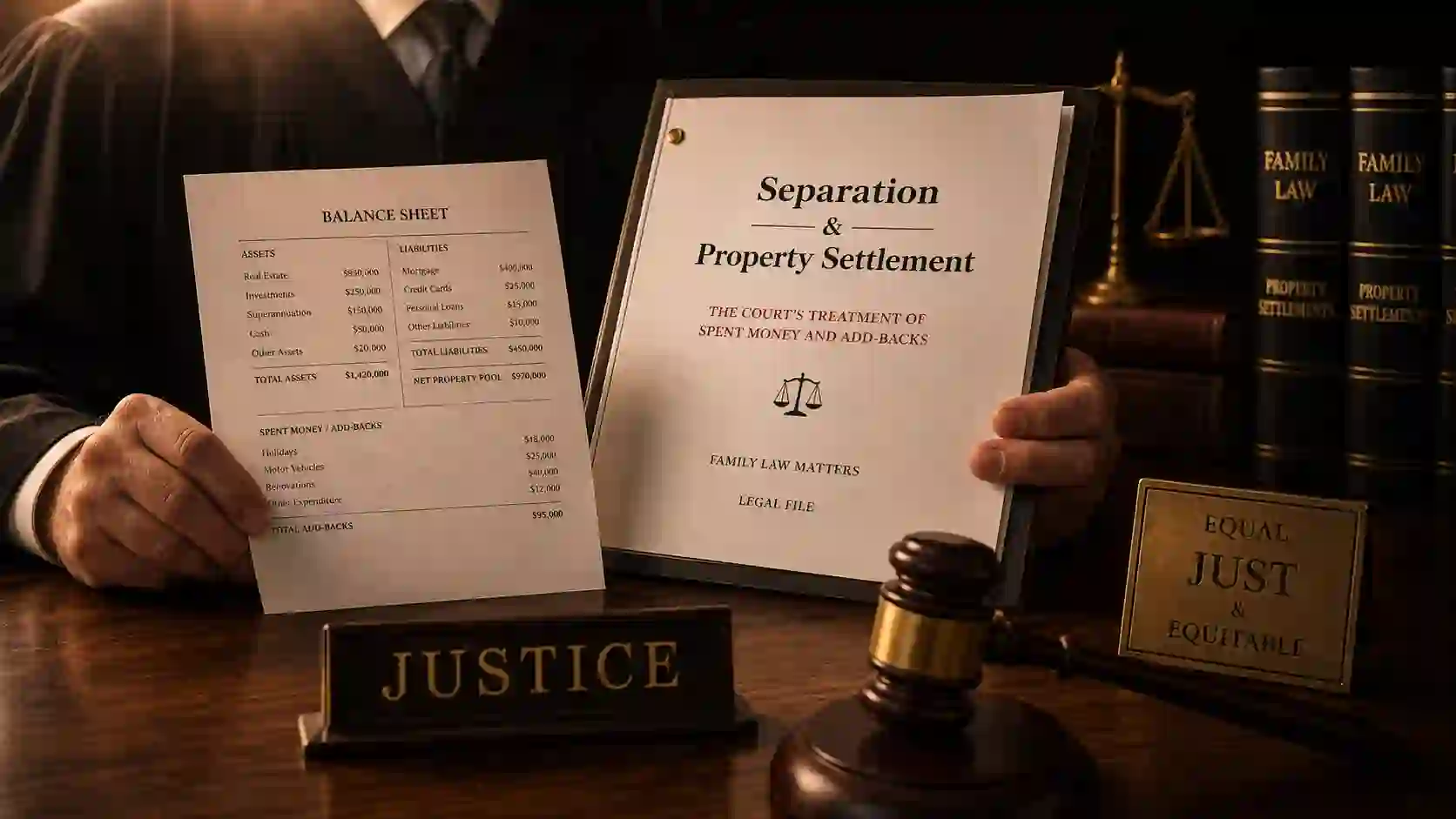
AndrewThe practical effect is that securing your funds if you are separating has become more important. In smaller pools, if cash gets spent and there is only a house and some super left, there is simply less to divide. The person who spent the money may receive a lower percentage, but the total share the other person receives could still be too little to live on if the pool has been depleted.
Colin Balewski So, Andrew, how do you secure it if one person has been in charge of the finances throughout the entire relationship?
Andrew Ultimately the best advice is do not go adversarial as your first step. Talk about things and try to come up with a preliminary agreement on what is happening with the assets rather than just walking away. Not every relationship ends nicely or with good communication, but if you can agree to freeze joint accounts, move funds into a joint trust, or agree that certain sale proceeds are not to be touched until a settlement is reached, it helps. And if you cannot, you should get advice before you walk away, so that you do not end up in a position where the court says, “You did not contribute much; you can have what is left,” but what is left is not enough to support you.
📎 See also: What Is a Property Pool and How Do Add-Backs Work? | Property Settlement Time Limits After Separation
Segment 4 – Caller: John – EPOAs, Health Directives and Nephews
⚖️ Topic: Enduring powers of attorney, health directives and family provision standing Relevant law: Powers of Attorney Act 1998 (Qld) ; Succession Act 1981 (Qld)
Colin Balewski We have our first caller. It is a very good morning to John. John, ask your question of Andrew.
John (caller) Good morning Andrew, how are you?
AndrewI am good thank you John, how are you?
John Great. Now, I just want to know, I have had an enduring power of attorney done, and a health directive. Who should hold a copy of my health directive?
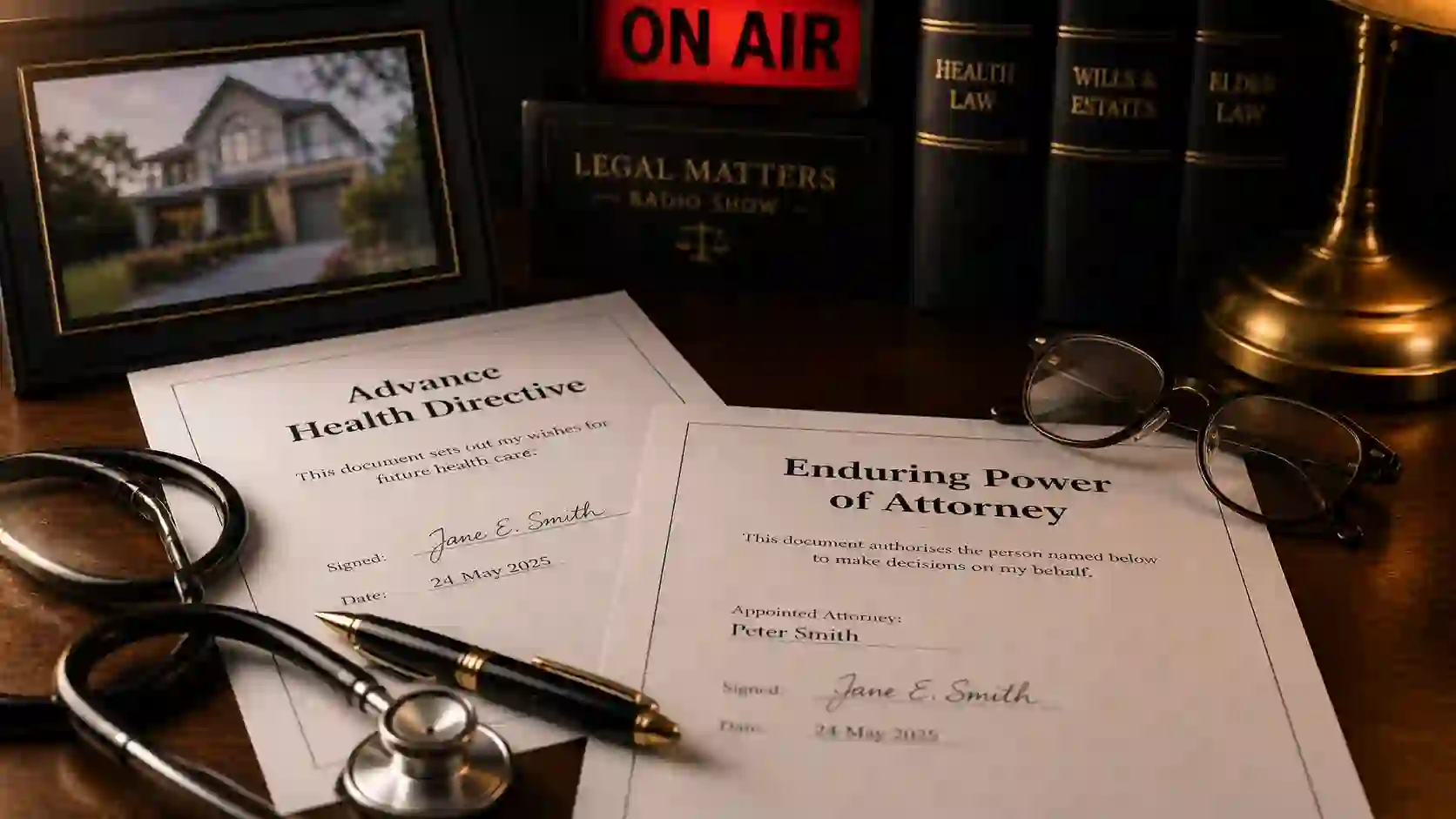
Andrew The health directive should be added to your Queensland Health record so they can help make any decisions, and a copy should be held by your attorneys. For your enduring power of attorney, the original document is the one that holds all the power, but I would recommend that you get a certified copy and you have a copy, and your attorneys that you have nominated have a copy, and that the original is held in a safe location — your accountant or your lawyer. If someone later questions whether the copy you present is legitimate, you can go and get the original. You really do not want to lose or damage that original because it is the one that actually has the legal authority.
John When I was drawing up my enduring power of attorney, my nephew was going to be acting as one of my attorneys, but he wanted a cut of my estate, so I declined his offer because I have left my entire estate to my daughter. Can he have a claim on anything?
Andrew He cannot have a claim unless he would ordinarily expect to inherit under your will. If you are financially supporting him or have in the past, he may think he has an entitlement, but if he does not, there is nothing automatic. He does not have automatic standing as a nephew under the Queensland legislation to inherit. So, it is unlikely he could challenge your decision to leave your estate to your daughter.
John Yes, I have not assisted him in any way, only emotionally when his father passed.
Andrew The test is whether someone would ordinarily expect to inherit. Normally that is a spouse, child, or someone you are financially supporting. If that is not the case, nephews generally do not have that expectation.
📎 See also: Who Should Hold My Enduring Power of Attorney and Health Directive? | Family Provision Claims QLD
Segment 5 – Certified Copies and Losing Originals
⚖️ Topic: Certified copies vs originals Relevant law: Oaths Act 1867 (Qld) ; probate practice
Colin Balewski On the back of that phone call, Andrew, certified copy. Let us make that completely clear. What is the definition?
Andrew Bell A certified copy is a copy of a document that someone authorised under the Oaths Act has said is a true and correct copy of another document. They sight the original and compare it with the copy, then write on the copy words like “I have sighted the original and this is a true and correct copy.” There are free JP services available, often at supermarkets, that can do this. Take the photocopy, bring the original, ask them to stamp it, and you have that certified copy.
Most organisations will accept certified copies instead of originals. But for a few documents — wills and enduring powers of attorney in particular — the original is still crucial. If you send a will to the Supreme Court for probate, they want the original. If you are transferring a house using an enduring power of attorney, the bank may insist on seeing the original. If that original gets damaged in your bag or lost in a coffee spill, you may have to redo the document.
📎 See also: Probate Process QLD | Who Should Hold My Enduring Power of Attorney and Health Directive?
Segment 6 – Caller: Amy – Executor Duties and Six-Year Limit
⚖️ Topic: Misdistribution of estates and limitation periods Relevant law: Succession Act 1981 (Qld) Pt 4; limitation periods
Colin Balewski It is now a very good morning to Amy. Amy, you are there, ask your question of Andrew.
Amy (caller) Yes, it is about my husband’s will. He died in 2020. He was an ex‑policeman. My ex son‑in‑law had his will. I know I should have got the money out of Maurice’s super.
Andrew Bell Superannuation is usually outside of the will. It depends on the death benefit nomination he made. Have you seen a copy of the will?
Amy Yes, I have. I have got a copy of the will.
Andrew Are you concerned that it has not been given out properly?
Amy It has not been given out properly, I know. I was the beneficiary.
Andrew In Queensland, you generally have six years from the date of death to bring a claim against the executor if they have not done their job properly. We are getting very close to that limit in your case. I would urgently suggest you seek paid legal advice and get the probate information from the Supreme Court. If there is a problem, the executor can be personally liable, but you need to act before the limitation period expires.
Amy Could I get the police to charge him?
Andrew No. The police will say it is a civil matter. This is about executor duties, not a criminal offence. The remedy is a civil claim against the executor, not police involvement.
📎 See also: What If an Executor Does Not Distribute an Estate Properly? | Does Superannuation Form Part of My Estate?
Segment 7 – Caller: Trish – Protecting Inheritances From a Separated Spouse
⚖️ Topic: Separation, divorce and future inheritances Relevant law: Family Law Act 1975 (Cth) Pt VIII, Pt VIIIAB
Colin Balewski We are going to move now to Trish. Trish, ask your question of Andrew.
Trish (caller) Yes, thank you. My son left his wife at the beginning of 2024 owing to her being involved with drugs, alcohol and gambling. It left him with nothing. He came to live with me for 12 months and now he is renting with other family. My question is that he is actually afraid to file for a divorce based on the company that she keeps. If my husband or I pass away, is there any time frame within which she could possibly claim a portion of inheritance that we leave to him?
Andrew Bell They are separated but not divorced. They are still legally married. There is a 12‑month window after a divorce where either party can seek a property settlement. It is whatever is in their possession at the date of that property settlement application that is divided up. If he were to inherit, say, a million dollars while still married, that million could be part of the property pool if she later brings a claim. I would advise that he gets divorced, even if he needs to notify the police and, if anything bad happens, apply for a domestic violence order. A divorce starts the clock. Twelve months after the divorce, if no property settlement claim is made, she would need the court’s permission to bring a late claim, which is much harder.
Trish It is not really his assets, he has not got anything and neither has she, but it is more about my husband’s and my assets if we pass away.
Andrew Bell If they are legally his under your wills, then those assets are his property, and they can be divided in a property settlement. So if you are concerned about protecting those assets from her, encouraging him to divorce sooner rather than later is sensible.
📎 See also: Can My Separated but Undivorced Spouse Claim on My Inheritance? | Property Settlement Time Limits After Separation
Segment 8 – Caller: Bob – Boundary Encroachments and Adverse Possession
⚖️ Topic: Encroachments and adverse possession risk Relevant law: Land Title Act 1994 (Qld) ; limitation and adverse possession principles
Colin Balewski We have another caller. It is a very good morning to Bob. Bob, ask your question of Andrew.
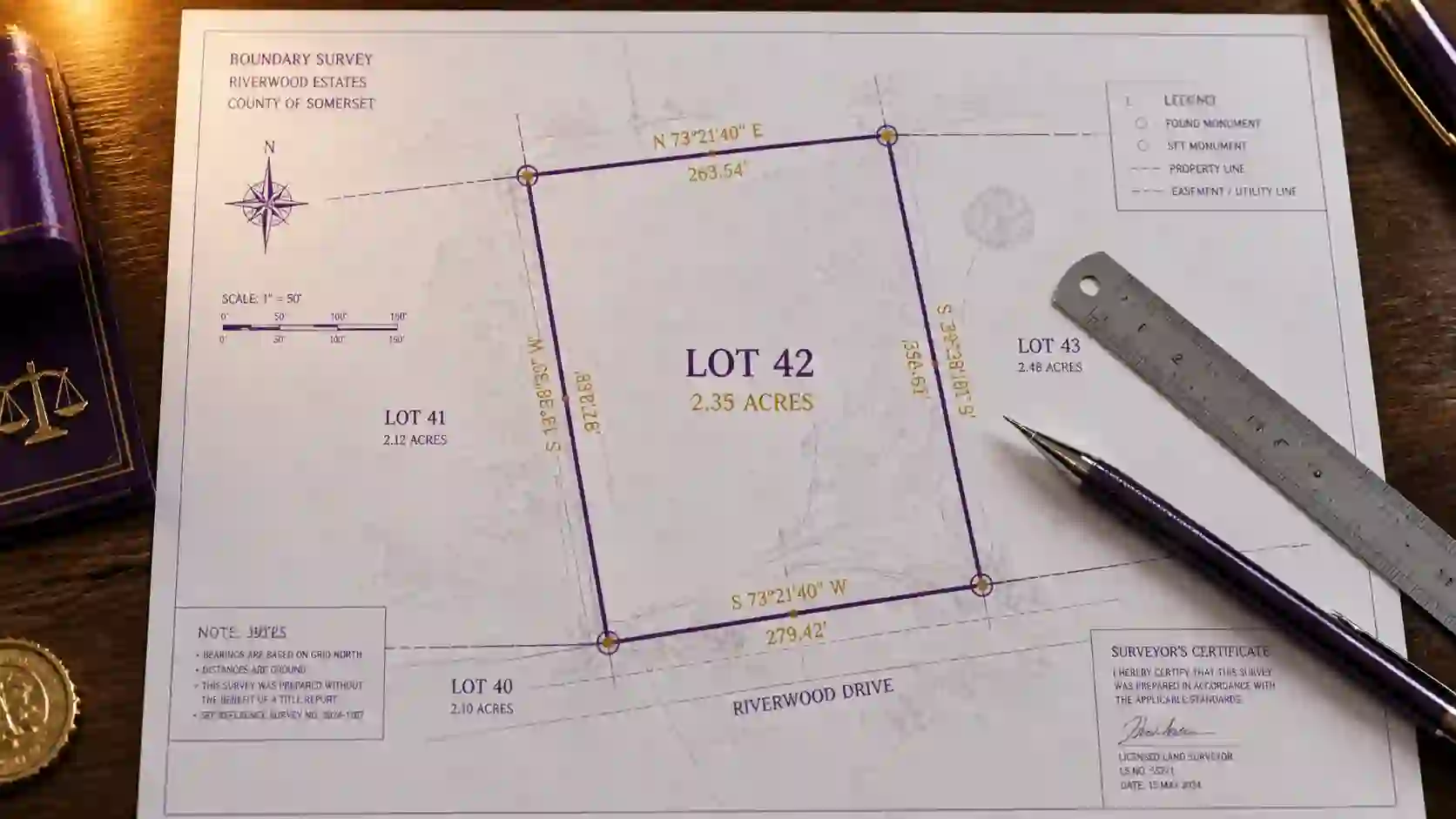
Bob (caller) Andrew, I live on acreage, and my neighbour’s driveway and his underground services easement is right against our common boundary. I suspect he has encroached. I am in my late 80s, and for the sake of harmony I have done nothing about it. My concern is, when my executor sells the property after my passing, is there going to be a problem because she is aware of it?
Andrew Bell Potentially, yes. It depends how long they have been encroaching and how they have treated that area. In many cases, if someone has occupied and used part of another person’s land as if it is their own for a very long period, they may seek adverse possession, which is recognition of ownership of that strip. To deal with this properly, you would start by getting a surveyor’s report to confirm the boundary. If there is encroachment, you would write to the neighbour putting them on notice that you believe they are encroaching and asking them to rectify it. That notice and the survey can then be kept with your title and estate documents so your executor has clear evidence and is not taken by surprise.
Bob How would they rightfully claim that? Would they get an easement?
Andrew Bell They would usually apply to the court and argue they have treated the land as their own, but if you have put them on notice and can show you have not consented, that makes it much harder for them. In any case, I would be putting them on notice sooner rather than later.
📎 See also: Do Boundary Encroachments Matter for My Executor? | What If an Executor Does Not Distribute an Estate Properly?
Segment 9 – Closing Summary
Colin Balewski Well, that went very quickly. Thank you to all of our callers this morning — John, Amy, Trish and Bob. Your questions add to the show and to the information we provide.
Andrew Bell Thank you, Colin. As we have said across this series, separation principles are broadly consistent whether you are married or in a de facto relationship. The key is understanding what goes into the property pool, how contributions and future needs are assessed, and what the time limits are for property settlements and estate claims. If listeners can keep those principles in mind and seek advice early, the outcomes are usually less stressful.
Colin Balewski And you can hear Legal Matters every Tuesday morning at 9am. Andrew, thank you very much again for your time this morning.
Andrew Bell Thank you, Colin. Talk to you next week.
Announcer You have been listening to Legal Matters, proudly brought to you by our trusted sponsor Bell and Senior Lawyers. Call them today for all your legal needs on (07) 5532 8777. A copy of this and past programs and all relevant resources will be available for you to replay or download on bellsenior.com.au and 4crb.com.
Disclaimer: This is an edited and annotated transcript of the live radio broadcast. Legal commentary and links to legislation and FAQs have been added for educational purposes and do not constitute legal advice. To hear the full unedited version, please listen to the audio file provided at the top of the page. This transcript provides general legal information only. It is not personal legal advice. Everyone’s situation is different, so please seek independent legal advice for your own circumstances by contacting Bell Senior Lawyers on (07) 5532 8777.
Related Episodes
- Legal Matters Ep 19: New E-Bike Laws & Family Law
- Legal Matters Ep 20: Property Settlement, Contributions & Will Disputes
- Legal Matters Ep 21: De Facto, Married Property
- Legal Matters Ep 4: Blended Families
- Legal Matters Ep 3: Wills and Estates
- Legal Matters Ep 7: QCAT and Disputes
Footnotes
- Family Law Act 1975 (Cth) ss 4AA, 79, 90SM, 90G–90UJ. legislation.gov.au
- Succession Act 1981 (Qld) Pt 4 and limitation periods for estate claims. legislation.qld.gov.au
- Powers of Attorney Act 1998 (Qld); Oaths Act 1867 (Qld) (certification of documents). Powers of Attorney Act | Oaths Act
- Land Title Act 1994 (Qld) and related adverse possession principles. legislation.qld.gov.au
- Advance health directive process and forms (Queensland Government). Advance Health Directive Info | AHD Forms