
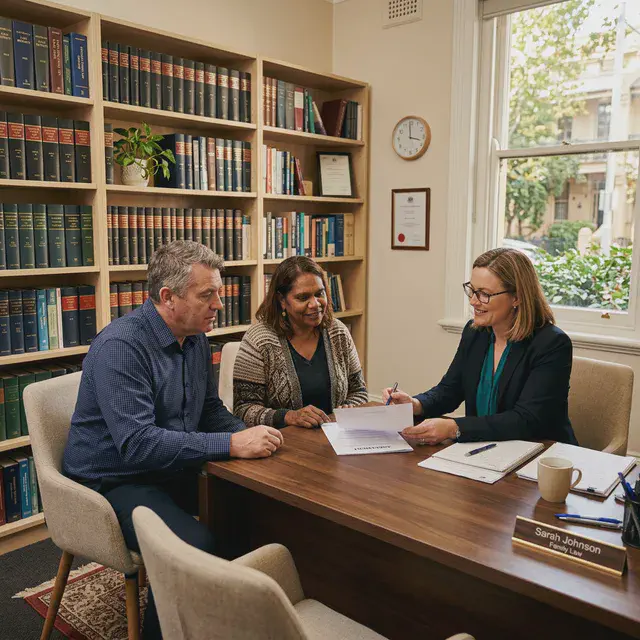
Andrew Bell joins Colin Balewski and Robyn Hyland on 4CRB to discuss the unique legal challenges facing blended families: particularly when it comes to Wills, property ownership, superannuation, and protecting the interests of children from previous relationships.
Key Topics
- What is a Blended Family (Legally)? The Gold Coast has a high proportion of second marriages and de facto couples. Understanding how Queensland law treats step-children (including their right to contest a Will) is critical for any blended family.
- Marriage, Divorce and Your Will: Under Queensland’s Succession Act, getting married or divorced can automatically revoke your existing Will. If you don’t update it, your estate may be distributed under intestacy rules: not your wishes.
- Joint Tenants vs Tenants in Common: How property is titled has a profound effect on who receives your share when you die. Joint Tenancy bypasses the Will entirely. Tenants in Common allows you to leave your specific share to your chosen beneficiaries.
- The Risk of Sideways Inheritance: Leaving your estate to a surviving partner is a natural instinct, but without the right structures, your assets can ultimately flow to your partner’s children instead of yours. Mutual Wills and Testamentary Trusts can prevent this.
- Testamentary Discretionary Trusts: A powerful estate planning tool that provides income to a surviving partner during their lifetime, while preserving the capital for designated beneficiaries (including tax advantages for minor grandchildren).
- Superannuation and Life Insurance: These assets sit entirely outside your Will and require separate Binding Death Benefit Nominations: which can expire and must be refreshed.
Listener FAQ Highlighted In This Episode
Can step-children contest my Will? Yes. Step-children in Queensland have legal standing to make a Family Provision claim against an estate, provided their step-parent relationship remains legally intact. Learn more about who can challenge a Will in QLD .
What is ‘sideways inheritance’ and how do I prevent it? Sideways inheritance is when your assets ultimately pass to your partner’s children instead of your own. Testamentary Trusts and Mutual Wills can protect against this risk. Read our FAQ on blended family Will risks .
Does my superannuation go to my estate when I die? No: super sits outside your Will entirely. Without a Binding Death Benefit Nomination, the super trustee decides who gets it. Read our FAQ on superannuation and inheritance .
What is a Testamentary Discretionary Trust? A trust that activates upon death and allows a surviving partner to use assets without owning them, protecting capital for your intended beneficiaries. Read our FAQ on Testamentary Trusts .
Listen to the full discussion above.
Key Takeaways
Andrew Bell’s 5 Tips for Blended Families:
- Testamentary Trusts: Lock in your capital for your children while providing income to your surviving partner.
- Binding Death Benefit Nominations: Ensure your super goes exactly where you intend. Refresh these every three years.
- Property Title Review: Check whether you hold your home as Joint Tenants or Tenants in Common. The answer changes everything.
- Binding Financial Agreements: Consider these at the start of a new relationship to clearly quarantine each party’s pre-existing assets.
- Have the Conversation: Talk openly with your partner and children about your intentions so there are no surprises later.
Listen to the full discussion above.
[!WARNING] Blended Families Face the Highest Risk of Sideways Inheritance Without a Testamentary Discretionary Trust or Mutual Wills, your assets can legally flow to your partner’s children after your death, bypassing your own. Superannuation Binding Death Benefit Nominations expire every three years and must be actively refreshed.
Contact our estate planning lawyers today to protect your children’s inheritance and ensure your wishes are legally enforceable.
Transcript
[Colin] Welcome to Legal Matters. It’s a very good morning to Andrew Bell.
[Andrew] Good morning again, Colin. Great to be back.
[Colin] This is a talkback programme this morning. We’d love to hear from you if you’ve got any legal questions. We are going to be talking about blended families and Wills this morning. Andrew, to start with, what exactly is a “blended family” from a legal perspective?
[Andrew] The term is used by lots of different people to mean different things, but it really matters here on the Gold Coast because we have such a high proportion of second marriages and de facto couples. We find that people think their family situation is normal and simple until something goes wrong: someone passes away, there’s a divorce, or people need to borrow money.
In Queensland, a blended family is an arrangement where one or both partners have children from a previous relationship. This includes married and de facto couples. One of the most important things to understand is the status of step-children.
[Andrew] In Queensland, a step-child has a specific legal standing that allows them to contest a Will just like a biological child. However, there is a catch: the “step-child” status only exists as long as there is a marriage or de facto relationship in place. If you divorce the biological parent, or if the biological parent dies and you remarry, that legal link for the step-child could be severed. This creates a very narrow window for step-children to make claims against estates.
[Colin] And there’s the key issue right there. When people form a blended family, perhaps moving in together or remarrying, what is the first legal issue they should be thinking about?
[Andrew] Where are you going to live and who owns the house? Often with blended families, people come in with money they wouldn’t have had in their 20s. How is the house getting paid for? Who is on the title? If you’re going to have a Will, what is the expectation around who would inherit that property?
We’ve mentioned before that two years is a de facto relationship, but if you’re already commingling funds, Wills or Binding Financial Agreements may be relevant before that two-year window even comes up.
[Colin] If someone remarries but doesn’t update their Will, what happens to their estate?
[Andrew] One thing people don’t realise in Queensland under the Succession Act is that if you get married or get divorced, it revokes your Will, unless that Will was specifically drafted “in contemplation” of the marriage. If you had a Will leaving everything to your kids from your first marriage and then you marry a new partner without updating it, that legal Will is likely cancelled. You’d be considered “intestate,” which we covered in previous weeks. That might give inadequate amounts to your new spouse or exclude your children entirely.
[Colin] You can understand that this is just easy to overlook. You go into a relationship and don’t think about mortality. But the issue is: if your partner survives you, it may be that they look after their own kids more than they look after yours, or at all.
[Andrew] That is the bigger issue. Everyone wants their kids looked after. Often partners have discussions about what’s going to happen, they pass their estate to the other partner, and then things change. People get upset because they don’t feel they were adequately provided for. When you own a house, there are two ways to hold title: Joint Tenants and Tenants in Common. Joint Tenants vs Tenants in Common is the traditional way married couples own a house: if one dies, it automatically passes to the other. But if you want to look after your kids and they want to look after their kids, you may want “Tenants in Common.” Then you can set a specific share for each party, and specify what happens with your share in your Will. That might include a “Life Interest,” where the surviving partner lives there until they pass, but then the house is sold and distributed according to each party’s original wishes.
[Colin] Is it common for children from earlier relationships to challenge a Will?
[Andrew] It is becoming increasingly common, particularly with Gold Coast houses being worth so much. The normal rules are that they have nine months to make a claim after the person dies. The court doesn’t look at “fairness”; they look at the actual needs of the parties.
[Colin] What steps can parents take to make sure their children from previous relationships are protected?
[Andrew] Understanding your assets. Superannuation is a giant red flag. Most people don’t realise that by default, your super is not covered by your Will. It’s a separate body of money. You need to put in a Binding Death Benefit Nomination with the super fund. These can expire, so you need calendar reminders to refresh them. Similarly with life insurance.
[Colin] Some people assume everything will simply pass to the new partner first. What are the risks of “sideways inheritance”?
[Andrew] It’s a massive risk. Unless you have “Mutual Wills” (which is a legal commitment between both parties to have the same beneficiaries regardless of who passes first) your partner is free to change their Will after you die. They might have a falling out with your kids, they might remarry, or someone might convince them to leave the money to charity. There is also “asset depletion.” If your surviving spouse needs expensive aged care, they may use the assets you intended for your children to support themselves. Read more in our FAQ on blended family Will risks .
[Caller Lorraine] Good morning. I want to change my Enduring Power of Attorney: take one off and include someone else. Does that person have to come to the solicitor’s office with me?
[Andrew] To change it, you typically revoke the old one and create a new one. The lawyer would normally see you one-on-one to make sure you aren’t being influenced. Once you’ve signed it, the attorney needs to sign their acceptance. They don’t need to be there at the same time: we can courier documents to them if they are in another state. For more on EPOAs, see our Enduring Power of Attorney FAQ .
[Colin] Andrew, are there legal tools like Trusts that can help balance providing for a partner while protecting children?
[Andrew] Yes: a Testamentary Discretionary Trust, or TDT. It’s a trust triggered when you die. It allows your spouse to use the assets or income during their lifetime, but they don’t own the assets. The Trustee controls them. When the spouse passes, the assets are distributed to the family members you specified. This has two major benefits: asset protection (if the spouse is sued or goes bankrupt) and significant tax savings. Read more about Testamentary Discretionary Trusts .
[Andrew] For example, in a normal trust, money given to a minor is taxed at a high rate. In a TDT, children under 18 can receive income at a full adult tax-free threshold of about $18,000. You could use this to pay for grandchildren’s school fees with pre-tax dollars, it’s a remarkable planning tool.
[Caller John] The only way around everything is to cash it in before you have your last breath. How long have you got before your last breath to make sure everything is in line?
[Andrew] As long as you have capacity, you can enter these arrangements any time up until death. You don’t need to cash things in; in fact, cashing in could trigger Capital Gains Tax. Assets like the family home have a two-year grace period for preferential tax treatment for beneficiaries. Usually, the advice is not to sell before you die, but to have protective structures in place well in advance.
Disclaimer: This is an edited transcript of the live radio broadcast. To hear the full unedited version, or to listen to callers’ questions, please listen to the audio file provided at the top of the page.