
Wills, Digital Statutory Declarations and Census Questions: Your Legal Questions Answered

When capacity, estate planning and property title records no longer match a family’s circumstances, a quick form or informal change can make the problem worse. In this episode of Legal Matters, Andrew Bell and Colin Balewski discuss digital Commonwealth statutory declarations, mirror wills and dementia, Census obligations and privacy, smart-meter concerns, SMSF title discrepancies, and the support available to an elderly estate administrator.
The programme began with a brief return to drone rules from the previous week, then moved through a broad set of practical caller questions. The common thread was the importance of identifying the correct legal document, decision-maker and process before acting.
Key Topics
- Commonwealth statutory declarations through myGov, and the distinction between Commonwealth declarations and Queensland documents with different witnessing requirements.
- Mirror wills, advanced dementia, financial attorneys and testamentary capacity.
- Census obligations, privacy concerns and the danger of relying on pseudo-legal claims.
- Smart meters, electricity retailers, meter providers and the consequences of disconnecting from the grid.
- Property held for a self-managed super fund where the registered title may not record the intended trustee capacity.
- Practical assistance for an elderly person administering an intestate estate, including where relatives live overseas.
Listener FAQ Highlighted in This Episode
Can a mirror will be changed if one spouse has advanced dementia?
Potentially, but the answer depends on the terms of the documents and whether the person still has testamentary capacity. A person who lacks capacity cannot simply sign a new will because another person, including an attorney, considers the change sensible. In appropriate cases, the Supreme Court may be asked to authorise a statutory will, but that is a specialised process and should not be attempted without advice.
Can I use myGov for a statutory declaration?
The discussion concerned Commonwealth statutory declarations. The electronic myGov process may provide an approved way to make a Commonwealth declaration without attending before a justice of the peace or lawyer. It is important to confirm that the recipient accepts that form and that it is a Commonwealth declaration, because Queensland declarations, affidavits and other documents may have different witnessing requirements.
What should an elderly estate administrator do if the work becomes too difficult?
An executor or administrator does not have to complete every administrative task personally. A solicitor can assist with collecting assets, obtaining a grant where required, communicating with beneficiaries and arranging distribution, while the executor or administrator remains involved in key decisions. The estate circumstances should be considered before a person renounces a role or seeks to have somebody else appointed.
Key Takeaways
- Digital identity processes can simplify some Commonwealth documents, but they do not remove the need to check the correct form, legislation and recipient requirements.
- Capacity concerns should be addressed early. A will-maker who still has capacity may be able to review arrangements, while a person who has lost capacity cannot simply have a will changed by an attorney.
- Census concerns should be examined through Australian Bureau of Statistics information and the governing legislation, not internet theories about bills of exchange, householder labels or supposed exemptions.
- A smart-meter issue is often a practical energy-market question involving a retailer and meter provider, not simply a dispute with the network business.
- Where SMSF documents and registered title do not align, obtain integrated legal and accounting advice before asking a registry to record a transfer or correction.
- Executors and administrators can obtain professional help. Renouncing a role or seeking a replacement can have procedural consequences and should be considered carefully.
Annotated Transcript
Drone rules follow the aircraft, not the retail receipt
⚖️ Topic: Recreational and professional drone operation
Relevant law: Civil Aviation Safety Regulations 1998 (Cth)
Colin: Following last week’s discussion, listeners had raised the view that a drone bought in a shop could simply be flown anywhere.
Andrew: Buying a drone over the counter does not mean it can be flown wherever the owner wishes. Rules can depend on matters such as the aircraft’s weight, where it is flown and whether it is used professionally. Owners should read the material supplied with the drone and consult Civil Aviation Safety Authority guidance rather than assume that retail availability creates unrestricted permission.
📎 See also: Drones, Rental Cars and Parenting Relocation: Your Legal Questions Answered
Digital Commonwealth statutory declarations through myGov
⚖️ Topic: Electronic Commonwealth statutory declarations
Relevant law: Statutory Declarations Act 1959 (Cth)
Colin: Listeners may sometimes be asked for a Commonwealth statutory declaration, for example about an absence, an event or a circumstance. Could this now be completed online?
Andrew: Andrew explained that the myGov service can provide a digital process for a Commonwealth statutory declaration. The secure login is used as part of the identity-verification process, removing the need in that setting to take the declaration to a justice of the peace or lawyer for witnessing.
Mirror wills, dementia and testamentary capacity
⚖️ Topic: Changing wills where a spouse has advanced dementia
Relevant law: Succession Act 1981 (Qld)

Pat: Pat and her husband had made wills four years earlier. Her husband now had advanced dementia, and she was concerned that leaving her estate to him first may no longer suit their circumstances. Their children held powers of attorney.
Andrew: Andrew noted that the first task is to obtain and review the actual wills. Couples commonly leave assets to each other and then to children or other beneficiaries if the other spouse does not survive. A mirror-will arrangement may add complexity because it can involve an agreement intended to limit later changes.
Andrew: If Pat’s husband no longer has testamentary capacity, an attorney cannot simply make or alter his will for him. Depending on the facts, a Supreme Court application for a statutory will may be necessary. Andrew also noted that the practical outcome should be considered carefully, particularly where the children are the ultimate beneficiaries and already hold financial authority.
Census obligations, privacy and pseudo-legal claims
⚖️ Topic: Census completion and misinformation about purported exemptions
Relevant law: Census and Statistics Act 1905 (Cth)
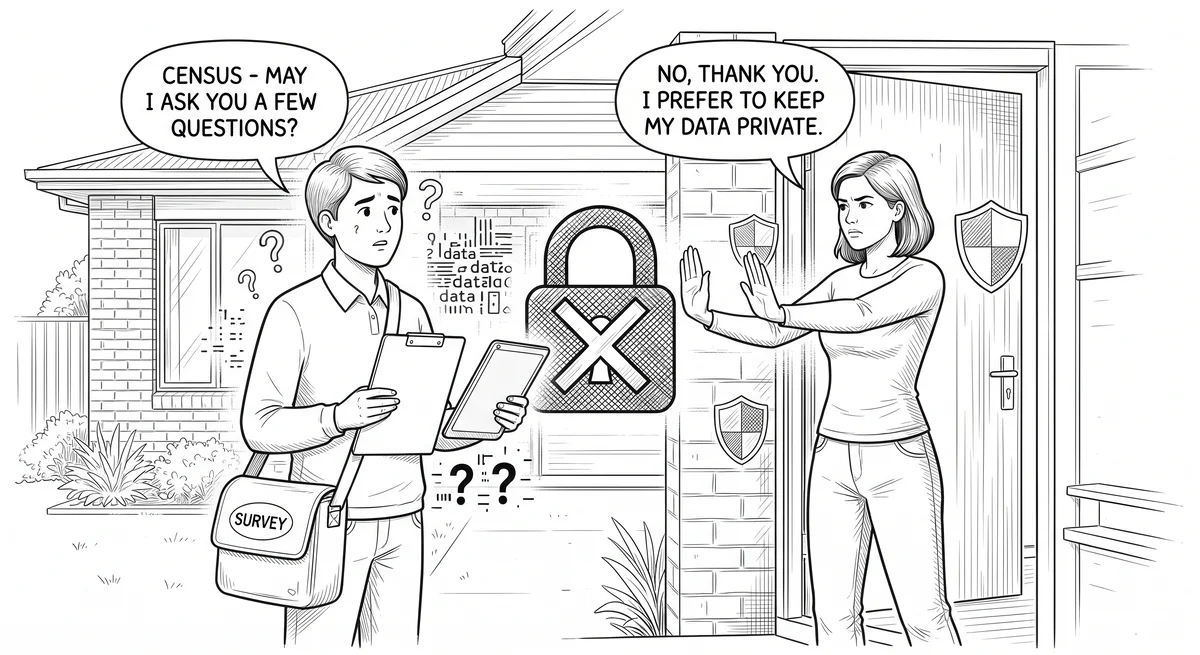
George: George had heard that people could refuse to complete the Census, return any fine with a bill of exchange, or argue that a form addressed to the householder did not apply to them.
Andrew: Andrew explained that the Census is compulsory under Commonwealth law for people in Australia on Census night, subject to the statutory framework. He described the bill-of-exchange suggestion and similar arguments as pseudo-law, and advised listeners to rely instead on Australian Bureau of Statistics information and the legislation.
Colin and Andrew: The discussion acknowledged genuine privacy concerns. Andrew observed that Census information is used in planning services and infrastructure, while also encouraging people to be cautious about giving unnecessary personal information to unrelated online forms, competitions and retailers.
📎 See also: Administrative Law | Administrative Law Part 2
Smart meters and going off-grid
⚖️ Topic: Metering arrangements in the contestable electricity market
Relevant law: Queensland electricity and national energy regulatory framework
Jeff: Jeff had received notice that an electricity supplier intended to replace the meter at his home with a smart meter. He asked whether he could refuse it, and whether going completely off-grid would change the position.
Andrew: Andrew described the practical distinction between the network business, the electricity retailer and the separate parties who may provide metering and metering-data services. He said that a customer can ask the relevant meter provider about their circumstances, but a legal right to prevent installation may be limited and refusal may affect the availability of supply.
Andrew: For a home that is completely disconnected from the electricity network, Andrew said the practical position differs from a home that remains connected. He emphasised that any off-grid arrangement must comply with applicable electrical standards and should be planned carefully.
SMSF property title discrepancies and the difference between rectification and transfer
⚖️ Topic: Property title held in personal names rather than apparent trustee capacity
Relevant law: Land Title Act 1994 (Qld) and superannuation law
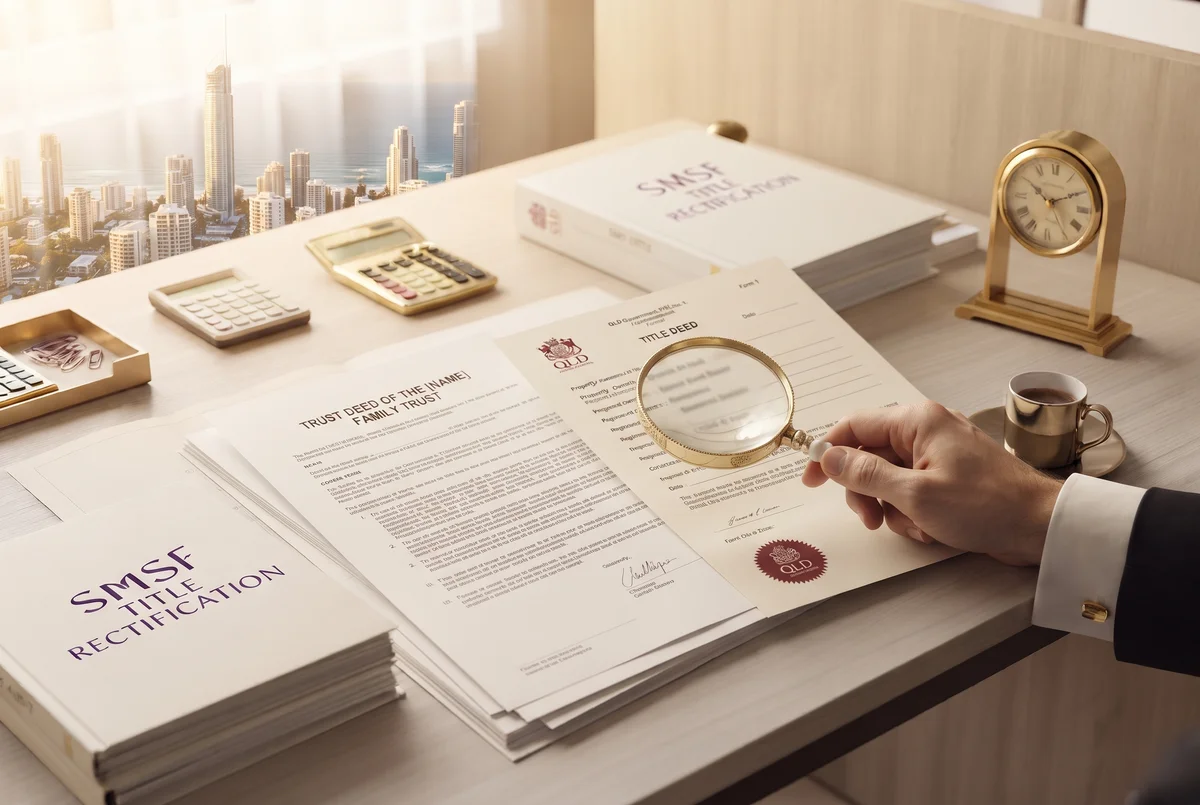
Loralai: Loralai described a factory purchased in connection with a self-managed super fund. After the fund’s assets were divided between ageing business partners, a title search suggested that the property had been registered in four individuals’ private names rather than identifying them as trustees.
Andrew: Andrew advised that the original title and transaction documents require careful review. The issue may be a registration error capable of rectification, or it may be treated as a transfer. The difference matters because a transaction, rather than a correction, may carry capital-gains-tax and other consequences.
Andrew: He recommended preparing the evidence carefully and obtaining specialist legal and accounting advice before approaching the Titles Registry. Documentation might include the original purchase material, fund records and statements from affected parties, but the correct approach depends on the facts.
Estate administration, overseas assistance and professional support
⚖️ Topic: Support for an elderly person administering an intestate estate
Relevant law: Succession Act 1981 (Qld)
William: William, who described himself as elderly, was involved in an estate where the deceased had not left a will and a Coronial decision was awaited. He asked whether the role could be transferred to an overseas family member.
Andrew: Andrew noted that an intestate estate does not have an executor appointed by a will. The person entitled to administer the estate may need a grant of letters of administration, and a replacement appointment depends on the applicable procedure and the persons with the necessary interest. An overseas resident may face practical difficulties with Australian court processes and estate administration.
Andrew: He recommended that an elderly administrator consider appointing a solicitor to undertake the administrative work while the administrator supervises decisions. Legal expenses properly incurred in administering an estate can generally be paid from estate assets, subject to the estate and the work undertaken.
This page provides general legal information only; it is not personal legal advice. Everyone’s situation is different, so please seek independent legal advice for your own circumstances.
Related Episodes
- Drones, Rental Cars and Parenting Relocation: Your Legal Questions Answered
- Administrative Law
- Administrative Law Part 2
- Wills, Probate and Family Provision Claims
- Off-the-Plan Property and Probate
Full Broadcast Transcript
The following is the full 4CRB broadcast transcript for 25 August 2026. It has been lightly edited for punctuation and readability. It is provided as a record of the programme and remains general legal information only, not personal legal advice.
Read the complete transcript of Legal Matters, 25 August 2026
00:00 - Programme introduction
Narrator: 4CRB now presents Legal Matters, proudly brought to you by Bell and Senior Lawyers. Call them today for all your legal needs on 07 5532 8777. This program provides general legal information only. It is not personal legal advice. Everyone’s situation is different, so please seek independent advice for your own circumstances.
00:25 - Welcome and drone-law follow-up
Colin Balewski: And a very good morning to Andrew Bell from our brand new sponsors, Bell and Senior Lawyers. Andrew, good morning to you.
Andrew Bell: Thanks for having me back, Colin.
Colin: We had a very interesting discussion last week. We went all over the board. We discussed drones, we discussed family law in the end, and we had some great phone calls as well. The drone discussion, or drone law, has generated a fair bit of discussion here and among my friends and family. I believe you had some commentary as well?
Andrew: I had a listener call and tell me how I was wrong, and how you can fly them anywhere you feel like. If you can buy it from JB Hi-Fi, then go for it, not sponsored. But that is not the case at all. There are a lot of rules around the weights, when you can do it and whether you are doing it in a professional capacity. I have updated the website with some more that we did not cover on the show. Just because you can buy drones off the shelf does not mean you can fly them anywhere.
Colin: I had a friend tell me the same thing. He bought one at JB Hi-Fi, was too excited about getting it in the air, and there was a lot of documentation in the box that did not get read. One part was the rules and regulations about why, where and how you can fly this object, and where to find further information. It pays to read the content in the box.
Andrew: It does, and then you will avoid a fine in the mail.
01:50 - Digital statutory declarations
Colin: We had a discussion off air about everything from AI-generated music through to the topics for today. One of the useful points was something available on the myGov website. I thought I would ask you to give us more detail.
Andrew: If you are asked for a Commonwealth statutory declaration, or a stat dec, this is a sworn statement that something did or did not happen. You might use one to attest to where you were or what you were doing. Some people require them for long absences, bereavement leave or other matters.
Since COVID, if you go to the myGov website or search Google for “Statutory Declaration myGov”, it will take you to a page where you can log in with the same identity you use for tax matters. You can fill in a statutory declaration and submit it. You do not need to take it to a justice of the peace or a lawyer.
Colin: So you do not need a proper person to certify this document?
Andrew: No, because the certification really means that your identity has been checked and that the person has made the statement saying it is true. It is not the job of the justice of the peace to ask whether it is true. This is not the position for state statutory declarations yet, but for Commonwealth statutory declarations you can log in to myGov. It knows your secure login, verifies that it was you, and you can print it out at the other end.
03:26 - Listener calls
Colin: That is an interesting piece of information. I am sure it will save people effort, time, worry and concern. This is a talkback program and we would love to hear from you this morning. 07 5520 8888 is the number. Any legal topic is on the table for you to ask Andrew Bell from Bell and Senior Lawyers.
04:05 - Pat: Mirror wills and a spouse with dementia
Pat: My husband and I made a will four years ago and, unfortunately, he has been diagnosed with advanced dementia. The will is that if he dies, I get everything, and if I die, he gets everything. But I cannot possibly leave it to him because he is not capable of any financial decision. Should I see a lawyer and have a new will made out?
Andrew: Do you have alternatives in your will to him now? Normally couples would give to each other, and then to their children or others if the other person did not survive them. Is that how yours is written?
Pat: I am not sure. I only know that it was explained as a mirror will.
Andrew: If it is a mirror will, that is more difficult, because a mirror will is one where both sides agree that they will not change the will once it is in place. This is often used to protect children from multiple relationships, for example. If he has advanced dementia, does he have a power of attorney set up?
Pat: Yes. My children, my daughter and my son, have it. I had power of attorney and about 12 months ago they said that if anything happened to me, I would be in limbo, so they have it.
Andrew: If he does not have capacity now, his financial matters would be handled by his attorney for financial matters, which would be your children. He needs to be supported if you pass as well. They would be looking after the estate until he passes, in which case it would go to whoever is next in line to benefit.
The problem is that if you already have mirror wills and want to revoke a mirror will while he does not have capacity, it is potentially a Supreme Court action to have the court step in and write the will he would have written if he had known this would happen. It is a tricky process and needs specialist advice. However, if your children are ultimately going to inherit and are already attorneys for him, you need to consider whether there would be any meaningful difference if your estate passed to him, and whether that difference makes this path worthwhile.
Pat: I see. Thank you. That is very helpful.
Andrew: Good luck, Pat.
07:04 - George: Census obligations and bills of exchange
Colin: We are moving on to George. Good morning, George. Ask your question of Andrew.
George: I have a question regarding the Census that has come online. I was talking to neighbours and quite a few people in our area who are refusing to do it and saying that you do not have to. I know you can be fined. Someone told me that if you receive a fine for not sending the Census form, you can return the fine with a bill of exchange and that will get you out of it. Can you clarify that?
Andrew: The Census is compulsory. They ask for names and addresses, although they say that information will be pulled out to de-identify the data. My theory is that the reason they ask is to validate that people have completed it against electoral-roll records.
Around every election, I receive inquiries from people who have fines, including people who were living overseas and could not vote. The government is getting more rigorous about making sure people vote. The Commonwealth Government administers the Census as well. The fine is $364 a day as a maximum, up to $3,640, so it is not something to ignore.
A bill of exchange sounds like an American concept that is circulating but is not in legal force here in Australia. You may not complete it, and they may ask you to do a declaration where you can say you were not there or you completed it at another location. But if you do that and it is found to be incorrect, you have committed a worse offence. I would not advise providing false information to avoid completing it.
George: I also heard that receiving a Census form is only a request and is not legal. In order for a fine to apply, someone said they have to get a directive issued by a court.
Andrew: Unfortunately, this sounds like pseudo-law. The government has the Census Act. You can look at it. It binds all Australian citizens and people resident in the country on Census day to complete it. It does not require special registration or special names. The advice you have been given will not get you out of a fine. The Australian Bureau of Statistics website has FAQs about the compulsory nature of the Census, the relevant powers and what happens if you do not complete it, including a link to the Act. I suggest you look at that and inform yourself.
George: I also heard that it is not addressed to me, it is addressed to the householder.
Andrew: It is addressed to the householder because they do not know who will be there on that particular day. If you were camping, you are supposed to complete it at the campsite. Every person in Australia on Census night is expected to do it.
George: Right. Thanks for your help.
Andrew: Thank you, George.
10:58 - Census privacy discussion
Colin: We have heard from listeners and people interacting with the station about the Census. They value their privacy and do not want to give information out. They are asked who they work for, how long they work, whether they are an employee or casual. Once the government has a name, address and employer, people feel that a lot of privacy drifts away.
Andrew: That is a concern, but you have to think that the government probably already has a lot of this information. If you do a tax return every year, it is probably going in. If you have a Medicare card or are treated at a public hospital, they probably have information. If you are an employee, pay tax and have a super account, they know how much you earn and how much tax you paid. Registered vehicles and pensions also involve information.
In a past life as a data scientist compiling large data sets, I saw how much information is available. People freely give it away when entering competitions and raffles, and data leaks can also reveal information. The government makes efforts to ensure privacy. I have not heard of a Census data leak. If one occurred, it would affect all of us.
I understand privacy concerns, but there is data value in the Census. Medical trials, cancer-hotspot research, and planning the next hospital or road can use de-identified information. Hospitals can take 15 years to get up and running properly, so planning depends on knowing how populations are changing.
People should be careful with data because it can be used against them in different ways, including online pricing, medical insurance and other matters. It is right to be sceptical. At the same time, the government needs to plan services and avoid wasting money, and needs information about its people. People also want to protect individual rights. I think the Census is probably one to complete. For unrelated online forms, I give as little information about myself as possible where it has nothing to do with why I bought a pair of shoes. If someone is prepared to wear a fine and stand on principle for $3,600, that is a personal choice.
11:58 - Jeff: Smart meters and disconnecting from the grid
Colin: We are moving on to Jeff. Good morning, Jeff. Ask your question of Andrew.
Jeff: We received an email saying the electrical suppliers are going to change our house to a smart meter. I do not wish to get a smart meter because it is always in their favour. I refused it a year ago, and now they have come back saying they are putting one on our house. Can I refuse them?
Andrew: This is a subject I know well. I was involved in rolling this out from the electricity-provider side and wrote algorithms to calculate people’s bills.
Australia moved from having Energex in South East Queensland as the main provider to a contestable electricity market. While the poles and wires are still run by Energy Queensland, which owns Energex, the meters are no longer owned by Energex. If you go to an electricity retailer, they place a margin on top for their role in calculating bills. There is also a meter data provider and a meter provider in the mix, which are neither the poles-and-wires company nor the electricity retailer.
Those people may be directed that if a new meter is required, they are obliged to work out the cheapest one and install it. You may deal with them and ask them to change their mind. However, it is not Energex and it is not necessarily the people you pay who are responsible for maintaining the meter or its data. I am not aware of anything in the Act that lets you object to them installing it. You may be denied electricity if it does not change. If you can work out who the meter provider is, you can write to them and ask. They may accept your request, but I am not aware of a legal right to prevent a smart meter going in. If you change retailer, they may change your meter again. I have had five meters in eight years. It is ridiculous.
Jeff: If we went off-grid with solar panels and batteries, there is no need for them to come on, is that correct?
Andrew: If you went completely off-grid, they might come to remove the existing meter. Unlike water, where you have to pay a water surcharge, if you go off-grid for electricity my understanding is that you are not obliged to pay fees or daily connection fees if you are completely disconnected from your network metering identifier point. If you go completely off-grid, support your batteries with a generator and comply with electrical standards, they would not have to come onto your property.
Jeff: Not a problem. Thanks, Andrew.
Andrew: Good luck.
15:42 - Programme return and ethics topic deferred
Colin: We had an ad and a song. We are back talking Legal Matters with Andrew Bell from Bell and Senior Lawyers. If you would like to call and ask a question, the number is 07 5520 8888. We are in the final ten minutes, so please do not leave calls too late. The topic of the day was ethics, so we had not even got to that topic, had we?
Andrew: No, we had not, and it looks like we have another caller. We may need to save this for the future and tease it at the end of the episode.
20:14 - Loralai: SMSF property title error
Colin: Loralai is on the phone. Hello, Loralai. Ask your question of Andrew.
Loralai: In 2002, my husband and his partner, who is his cousin, set up a superannuation fund. It was in the four names of the two cousins and two wives. Soon after, a factory property was purchased and put into the super fund. For the next 20 years, the super fund paid all land tax and everything required on the building, and it was documented in the super fund.
About four years ago, because of the partners’ ageing, it was decided to divide the super fund. The fund had the building and shares. The shares were liquidated and the value of the buildings was determined, so it was split evenly. My husband took the buildings and the cash went to the other partner.
When we went to change the titles so that they were just in our names, a title search showed that the property was in the four private names. It did not say they were trustees of the super fund. We want to change the title of the factory property. On advice, we have not approached the Titles Office because there is concern that if we ask to change the title from the four personal names to two names as trustees for the super fund, the Titles Office may charge capital gains tax from 2002 to 2026.
Andrew: I will have to cut you off there. This requires specialist advice. I would do a title search and look at the original information. It could have been recorded incorrectly by the Titles Office when it was originally done, or you may require statutory declarations from the people whose names are on it saying it was held as trustee and incorrectly lodged.
I would get specialist advice and prepare the pack. If you want to look online, the Land Titles Office has an excellent publication, the Land Titles Practice Manual, and there is a section about incorrectly registered title that may help you prepare. You are correct that if they see it as a transfer rather than a rectification, because property in a self-managed super fund needs to be registered in the names of all members of the board who are also trustees and members, it could have consequences.
It is regular for those people to be added and removed, and that is not necessarily a transfer because it is still part of the one block. However, if it has gone from private names into a super fund, it would normally be considered a capital-gains-tax event. I would also obtain financial or tax advice from an accountant because a lawyer cannot give you tax advice. Look at the original documents, obtain statements and other supporting documentation showing it was incorrect on title, and ask for rectification. I think you should obtain specific personalised advice on this one.
Loralai: Thank you very much. I appreciate it.
Andrew: Good on you, Loralai.
24:37 - William: Intestate estate and an overseas family member
Colin: We have one more caller. Good morning, William. Ask your question of Andrew.
William: We are executors of an intestate will and are waiting on the Coroner to pass a reading before we can execute the will as best we can. I am considerably old. Can I transfer that trusteeship to another member of my family who lives overseas to execute the will when the Coroner makes a decision?
Andrew: It would depend on the terms of the will if there are other executors. Otherwise, if you gave up your position as executor and there were no other names, someone would have to apply to the court to be appointed as executor. However, there is no reason that they cannot assist you, and no reason you cannot get independent legal advice to help you do things while you supervise what is happening with distribution of funds in your role as executor.
William: Can that apply to an overseas resident?
Andrew: An overseas resident can, but they will find it difficult if they need to lodge anything in Australian courts. It would be easier if they assisted you while you used a lawyer or did what needs to be done in Australia yourself, rather than requiring them to apply. The court can appoint anyone with a valid interest, but they need to petition the court to be appointed as executor.
Colin: Can William appoint a solicitor, or have a solicitor assist him so it is not as stressful?
Andrew: Absolutely. That would be my recommendation. He can appoint a law firm, they can do the running around, explain what needs to be done, and he can sign it off. He could also ask another person or other beneficiaries to check the advice before action is taken. The actual work can be done by a lawyer and those funds can be paid by the estate.
Colin: Does that help you, William?
William: Yes, it does. Thank you very much.
27:06 - Close
Colin: We are backing up on local news. Thank you to all the callers. We did not get to the main topic today, but we will save that until next week. Andrew, thank you for your time.
Andrew: Thank you, Colin.
Narrator: You have been listening to Legal Matters, proudly brought to you by our trusted sponsor, Bell and Senior Lawyers. Call them today for all your legal needs on 07 5532 8777. A copy of this and past programs and relevant resources will be available to replay or download on bellsenior.com.au and 4crb.com.