
Can QCAT solve my dividing fence dispute in Queensland?
Fences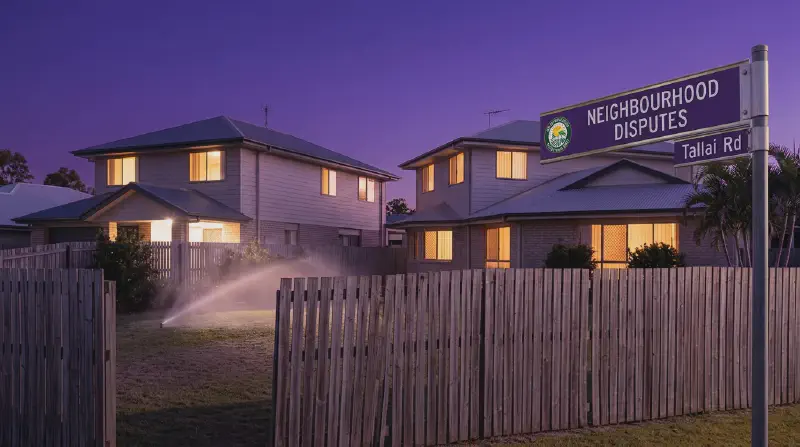
When a dividing fence falls into disrepair, or is damaged completely by a storm or falling tree, the question of who pays often turns neighbours into adversaries.
Ideally, you and your neighbour will agree to share the costs. Under the Neighbourhood Disputes (Dividing Fences and Trees) Act 2011, neighbours must ordinarily contribute equally to a “sufficient dividing fence”. However, if an agreement simply cannot be reached, the Queensland Civil and Administrative Tribunal (QCAT) is the appropriate legal venue to force a resolution.
The First Step: Notice to Contribute (Form 2)
Before applying to QCAT, you must follow the correct preliminary steps. The most important is issuing a formal Form 2 Notice to Contribute 1. This is a written form given to your neighbour outlining:
- The repairs or replacement you propose.
- The estimated cost (supported by at least one written quote, though two is recommended).
- The proportion of the cost you are asking them to pay.
You must give your neighbour a reasonable time, at least one month, to respond or agree. Generally, do not commence any fencing work without their agreement or a QCAT order, or you may lose your right to recover their portion of the cost. If the work is urgent (e.g., for safety), a different procedure applies under the Act.
Applying to QCAT
If a month passes and your neighbour has not agreed, or if they formally dispute the proposal, you can file an application with QCAT to resolve the fencing dispute 2.
On the Gold Coast, you can formally lodge your QCAT dispute application at the registry office located in the Southport Magistrates Court.
When filing, you will need to provide:
- A copy of the Notice to Contribute you gave to the neighbour.
- The written quotes you obtained.
- Photographs of the current state of the fence.
- Any evidence of correspondence between you and the neighbour.
QCAT is designed as an accessible venue, but for commercial building disputes or complex tree root damage involving structural engineering, legal advice and representation are common and often granted.
What QCAT Can Order
A QCAT member has broad powers to resolve your dividing fence dispute. After hearing both sides, they can legally order 3:
- What works must be carried out to repair or rebuild the fence.
- Using what materials and on what boundary line.
- The proportion of the cost each neighbour must pay (generally be 50/50 for a standard fence unless one party was negligent or caused the damage).
- That a party pay compensation if they destroyed the existing fence.
It’s common for QCAT to direct the parties to attend a mediation session before a formal hearing. Mediation allows a professional dispute-resolution officer to help you and your neighbour reach a compromise without a member imposing an outcome.
Dealing with Fast Responses
If you are the one being sued in QCAT by a neighbour over a fence, pay close attention to the time limits. Once you are formally served with a QCAT application, you must act. If no agreement is reached or a response isn’t filed, the matter may proceed to a hearing where an order is made in your absence. Don’t ignore a QCAT notice.
Related Topics
- Who pays if a neighbour’s tree falls on my property?
- What is QCAT and how do I apply on the Gold Coast?
- The Southport Courthouse Guide
- Legal & Government Contact Directory
📞 (07) 5532 8777 | 🌐 bellsenior.com.au | Contact us
Need Specific Legal Advice?
The answers above are general. For advice tailored to your specific situation, contact our Southport solicitors today.
Enquiry Sent
Thank you. Our team will contact you shortly.