
Legal Matters Ep 16: Technology Law Part 1 — Internet Origins, Online Liability & Your Legal Questions

General Information Only
This programme provides general legal information only. It is not personal legal advice. Everyone’s situation is different. Please seek independent legal advice for your own circumstances. Call Bell & Senior Lawyers on (07) 5532 8777 or visit bellsenior.com.au .
Andrew Bell joins Colin Balewski on 4CRB for the first instalment of a two-part series on technology law — tracing the legal foundations of the internet from the earliest American court decisions through to the laws that govern Australian platforms today. The programme also fields a rich set of live caller questions spanning online auction disputes, will-witnessing technicalities, dementia and legal capacity, and a concerning case of suspected will tampering.
Key Topics
- Technology Law — The Big Picture: What technology law actually covers and why it is one of the most rapidly evolving areas of Australian law.
- Andrew Bell’s Technology Background: Andrew’s dual career as a large-scale computer systems designer and solicitor, his role on the Queensland Law Society’s Privacy, Data, Technology and IP Law Committee, his position on the Australian Computer Society’s AI Committee, and his current PhD in cybersecurity law.
- The Internet’s Legal Origins: The 1991 Cubby v CompuServe decision (the “library” model) and the 1995 Stratton Oakmont v Prodigy decision (the “publisher” model), and the impossible paradox they created for online platforms.
- Section 230 of the Communications Decency Act 1996 (US): How US Congress resolved the CompuServe/Prodigy paradox — and why Andrew argues Facebook, Twitter, and YouTube could not have existed without it.
- The Digital Millennium Copyright Act 1998 (US): How s 512 introduced the “notice and takedown” system for copyright-infringing content.
- Australia’s Safe Harbour Provisions: How the 2004 Australia–United States Free Trade Agreement required Australia to incorporate DMCA-style provisions — but only for carriage service providers, leaving the status of large online platforms in a legal grey area.
- Caller Tracy — Online Auction Car Dispute: Buying a car online listed as a top-of-the-range model that turned out to be a lower variant, and the practical limits of “as is, where is” auction conditions.
- Caller Joanne — Different Pens on a Will: A self-drafted Will where the two witnesses used different-coloured pens, the testator now has dementia, and whether the Will is still valid.
- Caller John — Dementia and Legal Capacity: Who has the authority to diagnose dementia, and how does a legal capacity assessment differ from a medical one?
- Caller Debbie — Suspected Will Tampering: A terminally ill woman’s niece allegedly obtained a blank-signed Will with the intention of filling in the contents herself, leaving the entire estate to herself.
Listener FAQ Highlighted In This Episode
- Can I challenge a Will signed by someone with dementia?
- What are the witnessing requirements for a valid Will in Queensland?
- What are my rights when buying at an auction in Queensland?
- What is undue influence and can it invalidate a Will?
- How does Australia’s safe harbour law protect online platforms?
Listen to the full discussion above.
Key Takeaways
- Technology law is broad and still evolving. From data privacy and cyber security to AI liability and online defamation, technology law affects every Queensland business and individual who uses the internet. The rules are not settled and are developing rapidly.
- The foundational cases matter. The 1991 Cubby v CompuServe and 1995 Stratton Oakmont v Prodigy decisions created an impossible paradox for online platforms. The US resolved this with s 230 of the Communications Decency Act 1996. Australia has not enacted an equivalent.
- Australia’s safe harbour provisions are narrow. Safe harbour protections under Part V, Division 2AA of the Copyright Act 1968 (Cth) apply to telcos and ISPs — not to large social media platforms and general websites. If you operate a platform where users post content, seek legal advice about your exposure.
- Buying at auction is "as is, where is." Auction houses disclaim liability for descriptions where buyers have had a reasonable opportunity to inspect before bidding. Always inspect in person, read the terms and conditions carefully, and verify vehicle specifications against the roadworthy certificate.
- Will witnessing formalities are more important than they appear. Minor technical irregularities — different pen colours, missing staples, or any doubt about whether witnesses were physically present — can attract scrutiny at probate or become grounds for challenge. Have your Will professionally drafted by a solicitor.
- Dementia does not automatically invalidate an existing Will. A Will signed before a diagnosis, when the testator had capacity under the Banks v Goodfellow test, remains valid. But once dementia is diagnosed, executing a fresh Will becomes extremely difficult to defend. Obtain supporting letters from witnesses and medical professionals while memories are fresh.
- Capacity is decision-specific and time-specific. Legal capacity is not a diagnosis — it is a snapshot assessment at the time a specific document is signed. For Enduring Powers of Attorney, a written medical opinion from a geriatrician remains the most reliable evidence a court will accept.
- A blank-signed Will filled in afterwards is not valid — and may be criminal. Under the Succession Act 1981 (Qld) , a Will must be complete before it is executed. Completing a blank-signed Will with intent to benefit oneself may constitute forgery of a testamentary instrument under s 488 of the Criminal Code Act 1899 (Qld) , carrying a maximum penalty of 14 years imprisonment.
- If you suspect Will fraud or undue influence, act before probate is granted. The window to contest a probated Will in Queensland is approximately six months from the date of the grant. Obtain legal representation immediately.
Next Week on Legal Matters
Andrew Bell and Colin Balewski continue the technology law discussion on Tuesday, 9 June 2026 at 9:00 AM on 4CRB. Topics will include SaaS contract pitfalls, cyber breach reporting obligations under the Cyber Security Act 2024 (Cth) , developer intellectual property rights, and the emerging legal questions around artificial intelligence — including who owns the copyright in AI-generated content and how to manage digital assets in your Will. Tune in or listen to past episodes at bellsenior.com.au .
Annotated Transcript
Technology Law — Setting the Scene
📢 Topic: What is technology law and why does it matter for Queensland residents and businesses? Relevant law: Legal Profession Uniform Law Application Act 2021 (QLD) — governing the use of terminology like specialist
[Colin] Andrew, you have a background in technology as well as law. Can you set the scene?
[Andrew] Absolutely. To give a sense to those who may not know — I cannot describe myself as having a specialisation in this area, because there are strict rules under the Legal Profession Uniform Law governing the use of that term — but I spent a large part of my career designing large, complex computer systems before I became a solicitor, and I am still developing software right now. I sit on the Queensland Law Society’s Privacy, Data, Technology and Intellectual Property Law Committee, and on the Australian Computer Society’s Committee for Artificial Intelligence, and I am doing a PhD in cybersecurity law.
Technology law is a whole suite of things: what happens if you get hacked, how you can responsibly use AI, what protections exist over software and content you put online. One of the great advantages of computers is that they can automate and help lots of people very quickly. At the same time, when something goes wrong, it can go wrong for a lot of people very quickly. It is a very emerging area of law and it is not particularly settled.
The Internet’s Legal History: From CompuServe to Section 230
📢 Topic: How did courts determine who is liable for what users post online? The foundational cases. Relevant law: Communications Decency Act 1996 (US) s 230; Digital Millennium Copyright Act 1998 (US) s 512
[Andrew] When the internet first emerged, you had to dial up to individual computers. Banks had dial-up modems. Companies like CompuServe, Prodigy, and AOL effectively launched their own curated mini-internets in the United States. AOL was famously mailing floppy disks — and later CDs — to anyone who would take one.
What happened when users started posting content that was potentially defamatory? Two foundational cases emerged in America in the early 1990s that created a serious legal paradox.
The Library Model: Cubby, Inc v CompuServe, Inc (1991)
In Cubby, Inc v CompuServe, Inc, 776 F Supp 135 (SDNY, 1991),1 a New York federal court considered a claim against CompuServe for defamatory content posted in a user-run forum called “Rumorville.” CompuServe had no editorial control over that forum — it was operated independently. The court held that CompuServe was analogous to a library or bookstore: a passive distributor of information rather than a publisher. Just as a library is not liable for the content of every book on its shelves, CompuServe was not liable for the defamatory posts of its users.
The Publisher Model: Stratton Oakmont, Inc v Prodigy Services Co (1995)
Then, in 1995, the opposite result was reached in Stratton Oakmont, Inc v Prodigy Services Co, 23 Media L Rep 1794 (NY Sup Ct, 1995).2 Prodigy had marketed itself as a Christian, family-friendly platform. It had community guidelines, content filters, and blocked parts of the internet it disagreed with. When an anonymous user posted defamatory content about a stockbroking firm on Prodigy’s financial message boards, the court found that because Prodigy exercised editorial control, it was no longer a passive distributor. It was more like a newspaper. And newspapers, as publishers, are responsible for what they publish. Prodigy was held liable.
[Andrew] So now we had two conflicting rules: do nothing and you are safe; try to moderate your platform and do the right thing, and you are liable. The industry found this impossible to operate on. Knowing American politics, there would have been significant lobbying behind the scenes.
Section 230 of the Communications Decency Act 1996 (US)
Eventually, the United States Congress resolved the paradox by enacting the Communications Decency Act 1996 (US), 47 USC § 230.3 Section 230 declared, in plain terms, that no online platform would be treated as the publisher or speaker of third-party content. They sided firmly with the library model. I would argue that Facebook, Twitter, and YouTube — none of which yet existed — could not have come into existence without that single piece of legislation. It gave platforms the freedom to operate at scale without facing liability for every user’s post.
The Digital Millennium Copyright Act 1998 (US) and the Notice-and-Takedown System
Two years later, the United States enacted the Digital Millennium Copyright Act 1998 (US) (DMCA).4 Section 512 is the provision most relevant to Australian users and businesses. It provides that if a user uploads content that infringes someone’s copyright, the platform hosting it will not be liable — provided it complies with a formal notice of takedown when one is received. You may have seen “DMCA” referenced on Facebook posts or YouTube videos: this is the mechanism by which the copyright owner can report infringing content. If the platform receives a valid takedown notice and does not act, it can then be held liable. But the system allows platforms to host vast amounts of user-generated content without pre-screening every upload.
[Colin] We have a real-world example here at 4CRB. We invite local not-for-profit organisations to post their community events on our website. If someone uploads a copyrighted photograph, who is in trouble?
[Andrew] Potentially 4CRB. If you comply with a DMCA-style takedown notice you may be able to limit that liability, but once you are exercising any editorial control over the site, your exposure increases. It is a live issue that has affected us before and we had to make some apologies and sort ourselves out.
📎 See also: Online Defamation in Queensland | Technology Law Practice Area
Australia’s Safe Harbour Framework
📢 Topic: Did Australia adopt the same protections for online platforms as the United States? Relevant law: Copyright Act 1968 (Cth) Part V, Division 2AA — safe harbour provisions for carriage service providers
[Colin] Has Australia followed the American example, or have we had to develop our own approach?
[Andrew] Partially. You may recall that the Australia–United States Free Trade Agreement was signed in 2004 under the Howard Government.5 One of the requirements of that agreement was that Australia incorporate elements of the American DMCA into domestic law. We did — but we did not incorporate them completely, which is a significant limitation.
Australia has safe harbour provisions in Part V, Division 2AA of the Copyright Act 1968 (Cth) , broadly modelled on the US system. However, the Australian provisions explicitly apply only to what is defined as a carriage service provider — that is, telcos (such as Telstra and Optus) and internet service providers (the companies that connect you to the internet). The safe harbours do not explicitly cover the large platforms: Facebook, YouTube, Google, and similar services.
This means that the position of major online platforms under Australian copyright and defamation law is not completely settled — and it has real implications for any Australian business or individual who uses those platforms to host user-generated content.
Operating a Website or Online Platform?
If your business operates a website, community forum, or social media page where users can post content, you may have legal exposure for that content — particularly once you are put on notice that the content is defamatory or infringes copyright. Australian law does not offer the same broad protections as the United States’ Section 230. Seek legal advice before your platform goes live.
Contact Bell & Senior Lawyers — (07) 5532 8777.
📎 Relevant legislation: Copyright Act 1968 (Cth) Part V, Division 2AA — limitation on remedies against carriage service providers See also: Online Defamation FAQ (QLD) | Technology Law Practice Area
Caller Questions
Caller 1 — Tracy | Online Car Auction Dispute
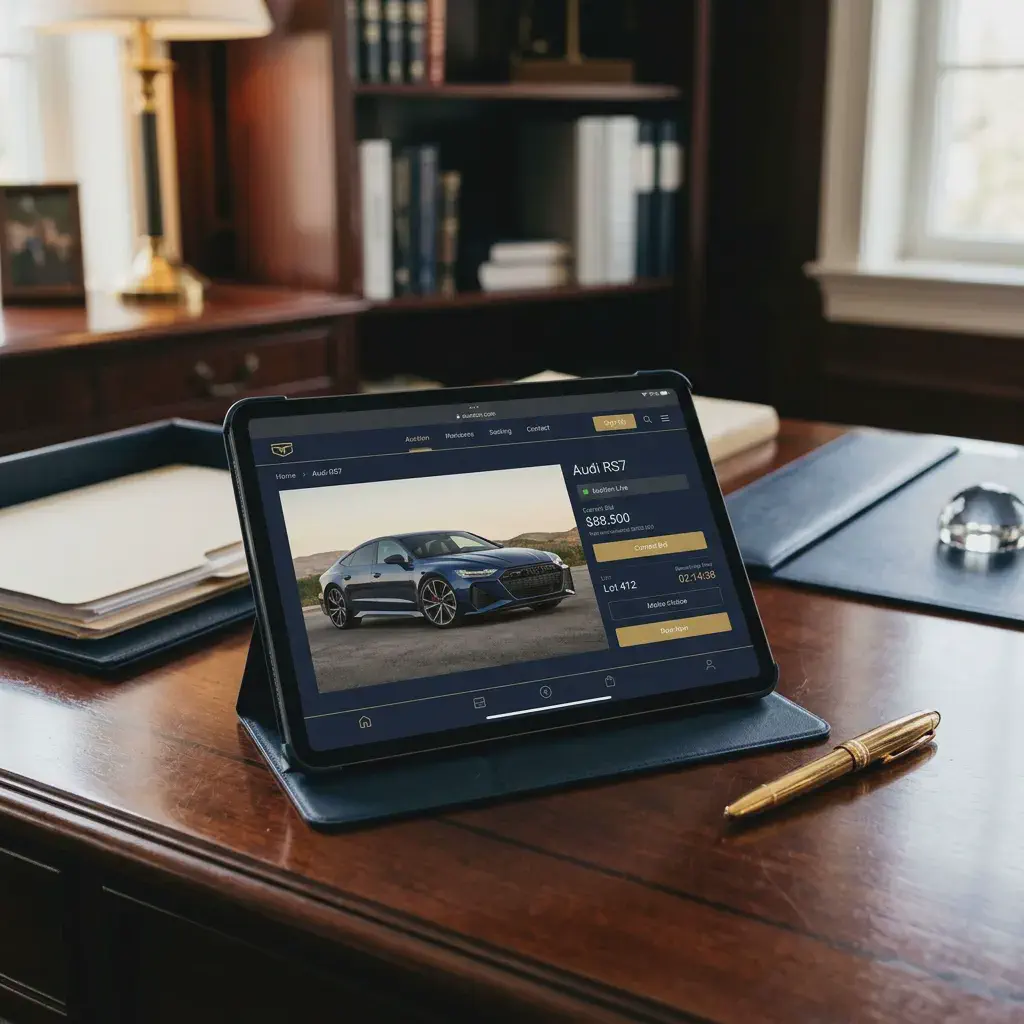
⚖️ Topic: Car purchased at online auction described as top-of-range variant; delivered vehicle was a lower model. Roadworthy certificate confirmed lower variant. No photos of the missing feature (sunroof) were included in the listing. Relevant law: Competition and Consumer Act 2010 (Cth) Sch 2 (Australian Consumer Law — consumer guarantees and auction exemptions)
[Colin] We’ve got our very first caller this morning. Good morning to Tracy.
[Tracy] This is a done deal already — it’s completed. But I purchased a car at online auction and the model they quoted isn’t what they sold me. I won the auction, paid for it, picked it up, then went to look for my sunroof and it wasn’t there. When I got home, I looked at the receipt, which said it was top of the range — but the roadworthy said it was one model down. It had some features of the top-of-range, but not all.
[Andrew] Was the sunroof visible in the photos?
[Tracy] They didn’t have any photos of the sunroof area. That’s why I didn’t pick up on it. And because I didn’t go to the auction to check it out first, it didn’t register.
[Andrew] So unfortunately, if you buy at auction, it is generally “as is, where is” — the auctioneer takes no liability for descriptions, provided they have given you the opportunity to inspect beforehand. If it was through Pickles or one of the large auction groups, they typically allow a number of days where you can go in and physically inspect the vehicle. Whether you did or didn’t take them up on that opportunity, if it was available, your ability to seek a remedy is quite limited. I would strongly suggest you look at their terms and conditions. Have you asked them whether they would take it back and re-auction it?
[Tracy] Yes, they would — but they wouldn’t pay the expenses of getting it back there.
[Andrew] Well, it is what you have got to decide — whether that is worth it to you. But I think that is fairly generous of them, because I do not think they are strictly obligated to offer it. Auctions are a special category of sale: similar rules apply to property auctions, where you receive disclosure material beforehand and then take it “as is” once your bid is accepted and the hammer falls.
What the Law Says
Under the Competition and Consumer Act 2010 (Cth) Sch 2 — the Australian Consumer Law (ACL) — consumer guarantees apply broadly to most retail sales. However, s 64A of the ACL provides that those guarantees can be excluded or modified in auction sales of second-hand goods conducted by a genuine auctioneer who is not the manufacturer of the goods.6 More relevantly, auction houses routinely incorporate express “as is, where is” conditions in their terms, and courts have consistently upheld those terms where the buyer has been given a reasonable pre-auction inspection opportunity.
If the listing had positively and unambiguously warranted the vehicle as a specific top-of-range model and that representation was false, a stronger argument might arise under s 18 of the ACL (misleading or deceptive conduct in trade or commerce). However, where photographs of the exterior were provided, a physical inspection window was available, and the specific missing feature was not depicted or expressly warranted, that case becomes significantly harder to sustain.
Tracy’s situation — where she accepted the auction house’s offer to re-list the vehicle — represents a practically sensible outcome, and likely reflects the full extent of the available remedy in the circumstances.
📎 Relevant legislation: Competition and Consumer Act 2010 (Cth) Sch 2 — s 18 (misleading conduct); s 56 (guarantee as to correspondence with description); s 64A (modification of guarantees at auction) See also: Online Shopping Refund Rights QLD | Consumer Law Practice Area
Caller 2 — Joanne | Will Witnessing — Different Coloured Pens
⚖️ Topic: Self-drafted Will re-typed from a deceased parent’s Will. Two witnesses signed — one in black pen, one in blue pen. Testator has since been diagnosed with dementia and cannot sign a new Will. Relevant law: Succession Act 1981 (Qld) s 10 — formal requirements for execution of a valid Will
[Colin] We have Joanne on the line.
[Joanne] You’re probably going to tell me off for doing this, but…
[Andrew] That’s not a nice way to start the conversation, Joanne. If everyone did everything perfectly, I wouldn’t have a job.
[Joanne] I retyped my mother’s Will and got her GP to sign as a witness, and the nurse. Then I found out the doctor signed it in black pen and she signed it in blue pen. Is that a problem?
[Andrew] It is potentially a problem. In Queensland, anyone can draft a Will, and you need two adults who are not beneficiaries under the Will to sign as witnesses, all present together in the same room when the Will is signed. Typically everyone uses the same pen — so there is no question whether they were genuinely all present at the same moment. If different pens were used, the Registrar may raise the issue when you apply for probate. You may need to provide an affidavit or statutory declaration from the GP or the nurse confirming they were in the same room. Using different pens is not technically unlawful, but it can appear suspicious if someone decides to dispute the Will.
[Joanne] Should I get the GP to do that now, or wait?
[Andrew] Is your mother still with us?
[Joanne] Yes — but she has dementia now.
[Andrew] Ah. In that case she cannot sign a fresh Will. I would ask the doctor to write a letter now, while the memory is fresh and while the doctor is still available, confirming the circumstances and who was present when the Will was signed. Keep that letter with the Will. When you eventually have to submit the Will for probate, include it as supporting evidence. That is the best protection you can get at this point.
What the Law Says — Will Execution Formalities
Under s 10 of the Succession Act 1981 (Qld) , a Will is formally valid if it is in writing, signed at the foot by the testator (or by another in the testator’s presence and at the testator’s direction), and that signature is made or acknowledged in the simultaneous presence of at least two witnesses who each then sign in the testator’s presence.7 There is no statutory requirement for a particular pen colour. However, the simultaneous presence of all parties is the key legal requirement, and different pen colours can give rise to a factual inference that witnesses did not all attend at precisely the same time.
On dementia and re-execution: a diagnosis of dementia does not automatically invalidate a Will signed while the testator still had capacity. Testamentary capacity is assessed at the date of execution, not the date of death. Under the common law test in Banks v Goodfellow (1870) LR 5 QB 549,8 a testator has capacity if they understand (1) the nature and effect of making a Will; (2) the extent of the property they are disposing of; and (3) the claims of those who might reasonably expect to benefit. A Will made before a dementia diagnosis — when the testator demonstrably had capacity — remains valid. However, once dementia has been diagnosed, executing a fresh Will becomes extremely difficult to defend against challenge.
Have You Self-Drafted a Will?
Self-drafted and "kit" Wills frequently contain technical deficiencies that only become apparent during probate — by which point it is too late to correct them. A Queensland solicitor can review and professionally re-execute your Will at a reasonable cost. Contact Bell & Senior Lawyers on (07) 5532 8777.
📎 Relevant legislation: Succession Act 1981 (Qld) s 10 — execution of Wills See also: Will Witnessing Requirements FAQ | Will Kits vs Solicitor-Drafted Wills | Episode 3 — Wills & Estates
Caller 3 — John | Dementia and Legal Capacity — Who Decides?
⚖️ Topic: Who has the legal and medical authority to determine that someone has dementia? What is the difference between a medical diagnosis and a legal capacity assessment, and what happens to a driver’s licence? Relevant law: Powers of Attorney Act 1998 (Qld) — capacity to give an Enduring Power of Attorney; Guardianship and Administration Act 2000 (Qld)
[Andrew] It all depends on the context. For a medical diagnosis of dementia, it is typically a geriatrician or a panel of clinicians who specialise in older medicine. Legally, the test is different. A solicitor witnessing a document does not diagnose dementia. They ask enough questions to be satisfied that you meet the legal capacity test — that is, whether you understand the nature and consequences of the particular decision you are making at that moment.
Capacity can come and go. I was involved in a significant case that went to the Supreme Court that discussed exactly that point. Someone may understand what is happening today but not next week. For the purpose of an Enduring Power of Attorney, the Powers of Attorney Act 1998 (Qld) provides that the EPOA becomes operative when a medical professional certifies in writing that in their professional opinion the principal has lost capacity. That certification is generally accepted by the courts as triggering the attorney’s authority to act.9
[John] Who decides — a solicitor, a doctor, or a specialist?
[Andrew] My advice to clients who want to enact an Enduring Power of Attorney — often because they are concerned about a parent — is to see a geriatrician who specialises in capacity assessments and to have the full suite of tests conducted. There are shorter screening tools: the MoCA (Montreal Cognitive Assessment) and the MMSE (Mini-Mental State Examination) indicate cognitive decline, but for a definitive determination, you want the full geriatric assessment. If you or a family member disagrees with a medical finding, you are always entitled to seek a second opinion.
[John] But what about when a doctor tells someone on the spot that they’ve lost their licence?
[Andrew] Dementia is a slippery slope, John. I have seen a number of cases involving this, around the station and in my family. If you want a second medical opinion, you are entitled to seek one. But the doctors do know what they are talking about, and their obligation to report to the transport authority is a public safety matter.
What the Law Says — Capacity Assessments and Driving
Legal capacity is not a binary diagnosis. Under Queensland law, capacity is decision-specific and time-specific: a person may retain capacity to decide where they want to live but lack capacity to execute a Will or Power of Attorney on the same day. The leading Queensland authority, Frizzo v Frizzo [2011] QCA 308,10 confirms that capacity assessments must focus on the individual’s mental state at the time the specific transaction occurred, and that brief periods of clarity (“lucid intervals”) during an otherwise deteriorating condition can be legally sufficient.
On driving licences: under s 131 of the Transport Operations (Road Use Management) Act 1995 (Qld) , a medical practitioner who forms the opinion that a patient is unfit to drive has a statutory obligation to notify the Department of Transport and Main Roads.11 The Department may then suspend or cancel the licence. This is a medical and public safety decision, not a legal capacity determination — and while it can be devastating for the person affected, it is entirely separate from any assessment of capacity to execute legal documents.
📎 Relevant legislation: Powers of Attorney Act 1998 (Qld) s 41 — when enduring power of attorney becomes operative; Guardianship and Administration Act 2000 (Qld) — assessment of capacity; Transport Operations (Road Use Management) Act 1995 (Qld) s 131 See also: Enduring Powers of Attorney FAQ | Episode 2 — Enduring Powers of Attorney
Caller 4 — Debbie | Alleged Will Tampering and Undue Influence
⚖️ Topic: A terminally ill woman’s niece obtained her aunt’s signature on a blank Will. The niece has since filled in the Will leaving the entire estate to herself, excluding another surviving niece overseas. Three witnesses are prepared to say the deceased wanted the estate divided equally. Relevant law: Succession Act 1981 (Qld) — validity, undue influence, and intestacy; Criminal Code Act 1899 (Qld) s 488 — forgery of a testamentary instrument
[Colin] We’re moving on to Debbie.
[Debbie] A very dear friend of mine passed away a few months ago. She had a niece here in Queensland looking after her. She was very sick and nearly bedridden. The niece got her to sign a blank Will and said she had a policeman friend in New South Wales who would sign it as a witness. She told her aunt: "You tell me what you want to put in the Will and I’ll write it in." The lady has since passed away. The other niece overseas has contacted me. They don’t think this Will is legal. The niece here has filled it in leaving everything to herself.
[Andrew] Has the Will been submitted for probate yet?
[Debbie] No, not yet.
[Andrew] Then I would strongly recommend both parties obtain legal representation immediately, before it is submitted. Once probate is granted, there is a strict timeframe — approximately six months — to dispute the Will. Under the Succession Act 1981 (Qld) , if no valid Will exists and there was no earlier Will, the rules of intestacy apply. If there are two equal surviving relatives, the estate would typically be divided equally between them.
[Debbie] There are three people who heard her say, before she signed it, that she wanted the estate divided equally. But the niece here has made it out entirely to herself.
[Andrew] You cannot fill in a Will after it has been signed. There are strict rules about modifying Wills, and any alteration must itself be executed with full formalities — signed by the testator and witnessed by two adults. A blank-signed document filled in by someone else after the fact is not a valid Will. On the face of what you have described, this could be challenged on the grounds of:
- Formal invalidity — the document was not complete at the time it was signed;
- Undue influence — a seriously ill, dependent testator may not have been acting freely;
- Forgery of a testamentary instrument — filling in a blank-signed Will with intent to benefit oneself may constitute a criminal offence carrying up to 14 years imprisonment.
I strongly recommend that both parties seek legal advice before this proceeds any further.
What the Law Says — Will Tampering, Undue Influence, and Intestacy
Under s 488 of the Criminal Code Act 1899 (Qld) , forgery of a testamentary instrument — whether the testator is living or dead — is a crime carrying a maximum penalty of 14 years imprisonment.12 Forgery includes making a false document with intent to defraud. Completing the contents of a blank-signed Will after the testator’s death, with the intention of conferring a benefit on yourself, is squarely within conduct that provision is designed to capture.
Separately, a Will obtained by undue influence is voidable. Undue influence arises in equity where the testator’s independent will was overborne by pressure from a person in a position of trust or power. The classic pattern — a vulnerable, seriously ill person living under the control of a sole carer who stands to benefit under the Will — is precisely what courts scrutinise most carefully. The leading Queensland case on undue influence in testamentary matters is Bridgewater v Leahy (1998) 194 CLR 457,13 in which the High Court confirmed that the presumption of undue influence can arise from the nature of the relationship itself, even without direct evidence of threats or coercion.
If the Will is declared invalid and no earlier valid Will exists, the estate is distributed under the intestacy rules in Sch 2 to the Succession Act 1981 (Qld) . Where two nieces are the nearest surviving relatives in equal degree, the estate would ordinarily pass to them in equal shares.
Suspected Will Fraud or Undue Influence? Act Immediately.
If you suspect a Will has been completed or altered after the testator signed it, or that a seriously ill person was pressured into signing a document they did not understand, do not wait. The window to challenge a probated Will is approximately six months from the date probate is granted. Contact Bell & Senior Lawyers urgently on (07) 5532 8777.
📎 Relevant legislation: Succession Act 1981 (Qld) s 10 — formal requirements; Sch 2 — intestacy rules; Criminal Code Act 1899 (Qld) s 488 — forgery of a testamentary instrument See also: What is Undue Influence in a Will? (QLD) | Intestacy — Who Inherits Without a Will? | Episode 3 — Wills & Estates
About This Programme
Legal Matters is broadcast live on 4CRB every Tuesday at 9:00 AM and is hosted by Colin Balewski. Legal insights are provided by Andrew Bell of Bell & Senior Lawyers, Southport, Gold Coast.
A recording of this programme and all resources discussed are available at bellsenior.com.au and 4crb.com .
Bell & Senior Lawyers — (07) 5532 8777 — bellsenior.com.au
Footnotes
-
Cubby, Inc v CompuServe, Inc, 776 F Supp 135 (SDNY, 1991) https://law.justia.com/cases/federal/district-courts/FSupp/776/135/2340509/ . The court held that CompuServe exercised no editorial control over its user-run forums and was therefore a passive distributor analogous to a bookstore or library, not liable for defamatory third-party posts. ↩︎
-
Stratton Oakmont, Inc v Prodigy Services Co, 23 Media L Rep 1794 (NY Sup Ct, 1995) https://en.wikipedia.org/wiki/Stratton_Oakmont,_Inc._v._Prodigy_Services_Co. . The court held that Prodigy’s exercise of editorial control through community guidelines and content moderation made it a publisher, liable for defamatory content posted anonymously by its users. ↩︎
-
Communications Decency Act 1996 (US), 47 USC § 230 https://www.law.cornell.edu/uscode/text/47/230 . Section 230(c)(1) provides that no provider or user of an interactive computer service shall be treated as the publisher or speaker of any information provided by another information content provider. ↩︎
-
Digital Millennium Copyright Act 1998 (US), Pub L No 105-304 https://www.copyright.gov/dmca/ . Section 512 established the notice-and-takedown safe harbour regime: online service providers are insulated from copyright liability for user-uploaded infringing content provided they respond expeditiously to takedown notices. ↩︎
-
Australia–United States Free Trade Agreement, signed 18 May 2004, [2005] ATS 1 (entered into force 1 January 2005) https://www.dfat.gov.au/trade/agreements/in-force/ausfta/Pages/australia-united-states-fta . Article 17.11 required Australia to adopt DMCA-equivalent safe harbour provisions for online service providers, implemented by the US Free Trade Agreement Implementation Act 2004 (Cth) Sch 9, inserting Division 2AA into Part V of the Copyright Act 1968 (Cth) https://www.legislation.gov.au/Series/C1968A00062 . ↩︎
-
Competition and Consumer Act 2010 (Cth) Sch 2 (Australian Consumer Law) s 64A https://www.legislation.gov.au/Series/C2004A00109 . Section 64A permits modification of the consumer guarantees regime in certain circumstances, including sales by auction. However, where a seller makes a positive representation of fact (such as the vehicle’s model designation) that is false, s 18 (prohibition on misleading or deceptive conduct) may still apply independently of the guarantee provisions. ↩︎
-
Succession Act 1981 (Qld) s 10 https://www.legislation.qld.gov.au/view/whole/html/inforce/current/act-1891-069 . The simultaneous presence requirement means all three parties — the testator and both witnesses — must be physically present together at the moment of signing and attestation. ↩︎
-
Banks v Goodfellow (1870) LR 5 QB 549. This is the foundational common law test for testamentary capacity, adopted throughout Australian jurisdictions. The full test requires the testator to: (1) understand the nature of making a Will and its effects; (2) understand the extent of the property they are disposing of; (3) comprehend and appreciate the claims of those who might reasonably expect to benefit; and (4) not be suffering from any disorder of the mind that poisons their affections, perverts their sense of right, or prevents the exercise of their natural faculties. The test is available at: https://en.wikipedia.org/wiki/Banks_v_Goodfellow . ↩︎
-
Powers of Attorney Act 1998 (Qld) ss 41–42 https://www.legislation.qld.gov.au/view/html/inforce/current/act-1998-023 . An enduring power of attorney expressed to come into force when the principal loses capacity operates when a doctor or other prescribed health professional certifies in the approved form that the principal has lost capacity for the relevant matter. ↩︎
-
Frizzo v Frizzo [2011] QCA 308 https://www.austlii.edu.au/cgi-bin/sinodisp/au/cases/qld/QCA/2011/308.html . The Court of Appeal confirmed that legal capacity is time-specific and decision-specific, and that brief lucid intervals during a pattern of cognitive decline can be legally sufficient to support the execution of a testamentary or other legal document, provided capacity is demonstrated at the actual moment of execution. ↩︎
-
Transport Operations (Road Use Management) Act 1995 (Qld) s 131 https://www.legislation.qld.gov.au/view/html/inforce/current/act-1995-022 . A medical practitioner who forms a reasonable belief that a patient is medically unfit to drive must notify the chief executive of the Department of Transport and Main Roads. The licensing authority may then require a medical review, impose conditions, or suspend or cancel the licence. ↩︎
-
Criminal Code Act 1899 (Qld) s 488 https://www.legislation.qld.gov.au/view/html/inforce/current/act-1899-009 . Forgery of a testamentary instrument — whether the testator is living or dead — carries a maximum penalty of 14 years imprisonment. See also Queensland Courts, ‘Bench Book: Forgery — s 488’ (Web Page) https://www.courts.qld.gov.au/__data/assets/pdf_file/0008/86147/sd-bb-137-forgery-s488.pdf . ↩︎
-
Bridgewater v Leahy [1998] HCA 66; (1998) 194 CLR 457 https://www.austlii.edu.au/cgi-bin/sinodisp/au/cases/cth/HCA/1998/66.html . The High Court held that equity intervenes to set aside a transaction procured by undue influence where one party was in a position of special disadvantage and the other party unconscionably took advantage of that position. While technically decided in a gifts context, the principles are directly applicable to the execution of Wills, particularly where a vulnerable, dependent testator is under the control of a sole carer who benefits from the instrument. ↩︎