
Legal Matters Ep 19: New E-Bike Laws & Family Law Basics
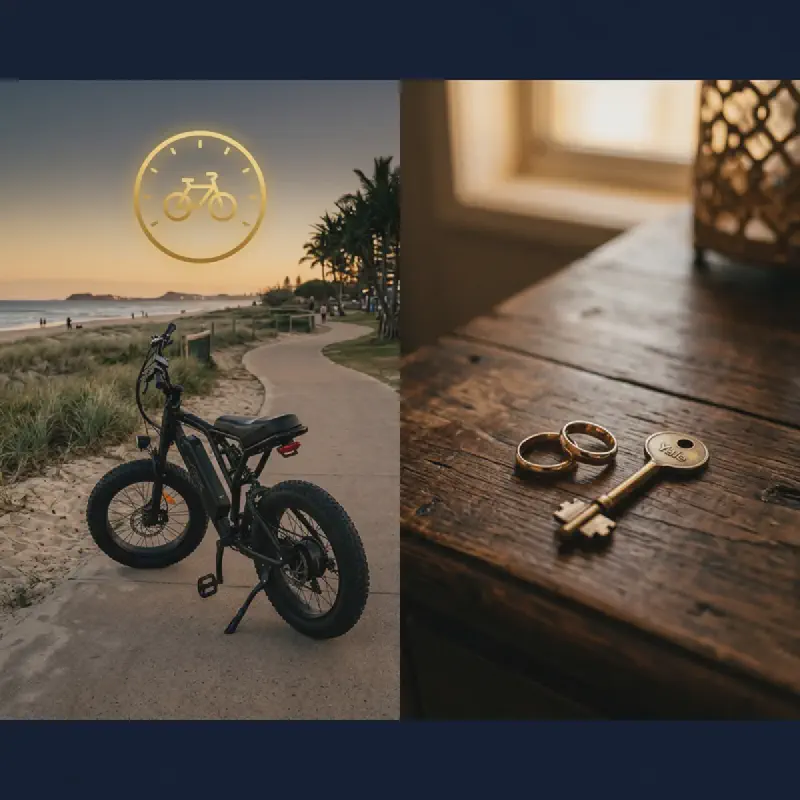
Queensland is rolling out a staged reform of e-bike laws, starting with strict speed limits and breath testing on 1 July 2026, followed by mandatory licensing requirements on 31 August 2026. Episode 19 of Legal Matters unpacks exactly what these changes mean for riders on the Gold Coast, including the penalties for riding an illegally modified ‘motorbike’ disguised as an e-bike.
The episode also launches a new multi-week Family Law series, starting with the fundamentals: how the Family Law Act 1975 applies to married and de facto couples alike, how a de facto relationship is legally defined, and the strict time limits for claiming a property settlement after separation.
Four listeners call in live with questions ranging from footpath bicycle bells to protecting an inheritance from a separated son’s future spouse, along with a lighter regulatory aside on Gold Coast apartment bird-keeping limits .
Key Topics
- E-bike compliance today — the current 250W motor cap and 25km/h motor-assist limit that separates a legal e-bike from an illegal motorbike.
- 1 July 2026 changes — new 12km/h footpath and shared-path speed limits, random breath testing at the standard 0.05 limit, mandatory EN 15194 compliance plates, and impoundment/destruction of non-compliant devices. See E-Bike Laws Queensland 2026 .
- 31 August 2026 licensing rule — riders over 16 need at least a learner’s permit; riders under 16 must be accompanied by an adult on the road.
- Family Law fundamentals — the Family Law Act 1975 (Cth) covers divorce, property settlement, parenting orders, child support and spousal maintenance across married and de facto relationships alike.
- De facto relationships — the two-year threshold and the evidentiary factors courts weigh when deciding whether one existed. See De Facto Relationships in Queensland .
Listener FAQ Highlighted In This Episode
- Does a bike need a working bell to be road legal? Yes — a bell is part of the roadworthiness requirements under Queensland’s road rules, and riders passing pedestrians without one (or without using it) can be committing an infringement.
- Can an 80-year-old without a driver’s licence ride an e-bike? Not on the road or footpath without at least a learner’s permit from 31 August 2026, and likely an annual GP fitness-to-drive letter, regardless of age or reason for surrendering a previous licence.
- Can I get a refund if a theme park ride excludes me for a medical condition I wasn’t told about beforehand? Possibly, under the Australian Consumer Law if the missing information would have changed your purchase decision.
- How long do I have to challenge a will as a beneficiary? Six years from the date of death to claim against an executor for improper distribution — see Wills and Estates .
- Can my son’s estranged wife claim part of an inheritance my husband and I leave him? If he is still legally married (not divorced) when he inherits, those assets could be included in a future property settlement — see De Facto Relationships in Queensland .
Listen to the full discussion above.
Key Takeaways
- Check your e-bike’s compliance plate now. Non-compliant devices can be impounded and destroyed after 1 July 2026.
- Get a learner’s permit if you plan to keep riding after 31 August 2026, even if you’ve surrendered a driver’s licence due to age.
- De facto relationships trigger property rights after roughly two years, regardless of whether the couple shares one roof.
- Act within six years of a death if you suspect an estate has been distributed incorrectly — time limits run out faster than most people expect.
- Divorce sooner rather than later if protecting family assets from a spouse’s future property settlement claim is a priority.
- Read theme park terms and conditions before you buy — undisclosed exclusions may entitle you to a refund under the Australian Consumer Law.
Next week: the Family Law series continues with parenting orders, child arrangements, and the mechanics of a property settlement split.
Annotated Transcript
Announcer: 4CRB now presents Legal Matters, proudly brought to you by Bell and Senior Lawyers. Call them today for all your legal needs on 07 5532 8777. This program provides general legal information only. It’s not personal legal advice. Everyone’s situation is different, so please seek independent advice for your own circumstances.
[Colin]: Well, it’s a very good morning to Andrew Bell from Bell and Senior Lawyers. Morning.
[Andrew]: Morning Colin, lovely day. Great to be back.
[Colin]: It is. It’s nice to see the sunshine after a week of threatening rain but uh, yes, the sunshine is back and we’ve got cooler temperatures, so winter’s well and truly here. We were speaking off air and every time we talk off air you come up with a fun fact that walks through the door during the week. I love this one, do you want to tell the listeners about it?
[Andrew]: Yes, well all sorts of people have all sorts of legal problems and one problem we had this week related to what birds you can have in your apartment on the Gold Coast. Not an area of law that I was familiar with before we looked it up and read the regulations. But if you’re in an apartment, if you’ve had to move from a house and you’re under 300 square meters, there’s very different rules about how many animals you can keep for all sorts of different sorts of animals. So for example, you can’t have a peacock unless you’ve got 4,000 square meters.
[Colin]: Oh, that’s okay. Fair enough. Potentially a good thing.
[Andrew]: But you can have, and they define it by the size of the bird — so I’m a little bit confused if the bird grows up if it goes through multiple categories — but you can have four little budgerigar sized birds, you can have two cockatiel sized birds, and one cockatoo sized bird.
📎 See also: Bird Keeping Laws in Gold Coast Apartments
Segment — E-Bike Laws: What’s Legal Right Now
Topic: Current e-bike motor and speed limits Legislation: Transport Operations (Road Use Management—Road Rules) Regulation 2009 (Qld); Australian Standard EN 15194
[Colin]: Well look, fun fact. That’s a good start. Well, our topic of the day is fairly contemporary. We’ve got e-bike laws pending to fall very, very shortly and we thought we’d just tackle the minutia, let’s say, or the detail. So why don’t we start there. What makes an e-bike legal in Queensland right now?
[Andrew]: Okay, so for those who aren’t familiar — but I’m sure they’ve probably seen them driving along the coast, the big fat-wheeled e-bikes, but also they can look like a normal push bike as well — the differentiator is they’ve got a battery and they’ve got a motor in them, and that’s what makes something an e-bike. And the rules are getting toughened significantly coming up, but at the moment you can have a motor that goes up to a continuous power of 250 watts regardless of the size of the rider, and it can only give you motor assistance up to 25 kilometers an hour. And if it does more than that, then it’s classed as a motorbike.
[Colin]: Wow. Okay, so that is today. And I did neglect to mention this is a talkback program. This is your opportunity to get some free legal advice right here this morning. So we’d love to hear from you, it is your show: 07 5520 8888 is the number. Please don’t leave your call to the end of the show, we’d love to hear from you. Alright, okay, and if it doesn’t meet these criteria of size of motor and speed that it’s capable of, what happens?
[Andrew]: Well essentially it turns into a motorbike. There are a few other subtleties. You can only have a throttle that takes you up to 6 kilometers an hour, it’s got to have pedals so you can ride it. You can go faster than 25, but the motor can’t be working then. But if that’s the case there could be fines over a thousand dollars if it’s seen as an illegal motorbike. You could potentially lose your car licence.1 If you’re in an accident, you could be in trouble for driving uninsured. It would be a really bad day for you getting done on an illegal motorbike, Colin.
📎 See also: E-Bike Laws Queensland 2026
Segment — What Changes on 1 July 2026
Topic: Footpath speed limits, breath testing, compliance plates Legislation: Transport Operations (Road Use Management) Act 1995 (Qld); Australian Standard EN 151942
[Colin]: So that’s now, today, isn’t it? We’ve got some changes coming up on 1 July. So can I still go fast on a legal e-bike?
[Andrew]: Yes you can, but the motor must cut out at 25 kilometers an hour. So if you’re going down a really big hill and you’re going faster than that… however you still have to follow the speed limit. So if you do go above 60 and you’re overtaking cars down the hill in a 60 zone, then you can be done for speeding, but the bike isn’t supposed to be able to. So where we had issues with these e-bikes and why they’ve come in is a lot of people have either imported them saying they’re only going to use them off road — which is legal use — or they’ve got really powerful motors in them and they’re software limited to 250 watts, but the kids have worked out how to change the software so now you’ll see them overtake you when you’re on a suburban street.
[Colin]: That’s right. And that’s the, we’ve all seen the vision on the television of bikes driving up the middle of the road and people doing wheelies. The concerns have been in the past that I can’t identify them if they hit my car, people have been hit while walking down the street and again either gravely injured because they can get up to high speeds and they’re very weighty in themselves.
[Andrew]: Absolutely. Even a normal push bike, I know some people have been in some serious incidents with them, can cause all sorts of damage to passengers, but these bikes are 20 plus kilos and traveling at 60 kilometers an hour. So yeah, there’s a lot of danger involved.
[Colin]: Alright, we’re moving now to what happens on July 1. Take us through it.
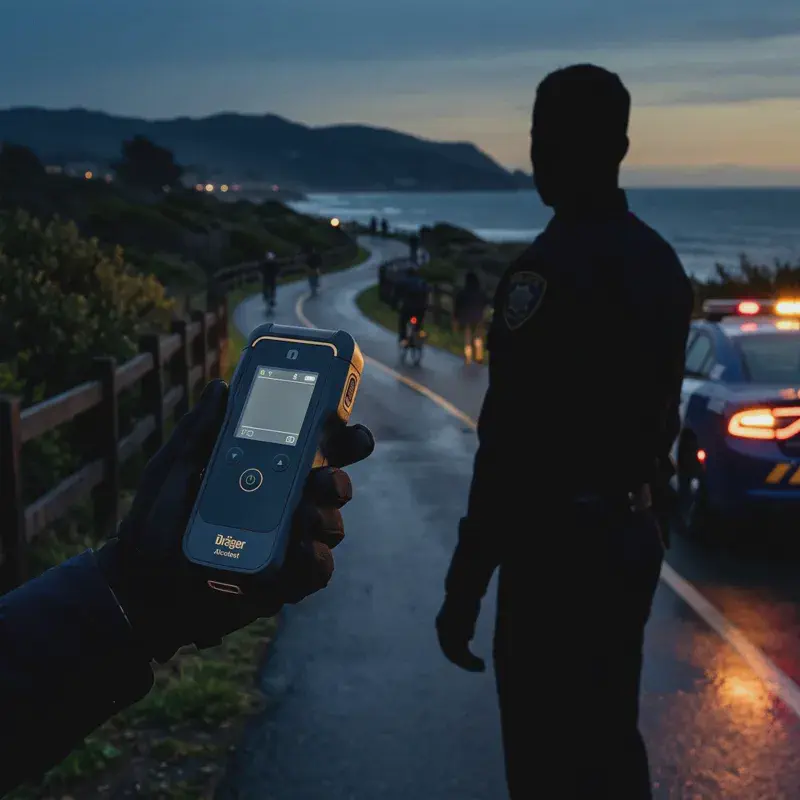
[Andrew]: Okay, so the government’s recognized this is a problem and they’re putting in the rules around particularly when you can drive these bikes on the road and on the footpath. If you’re on private property, they don’t necessarily apply. But for example, the first thing they’re doing is putting in speed limits on footpaths and shared paths to 12 kilometers an hour. You can get done for speeding if you’re above that with an e-bike or an e-scooter. After that, they’re formally putting in a process of random breath testing. They can pull over any e-bike rider and test them for alcohol and it’s the same 0.05 limit as there is for driving. They’re also putting in significant fines from $518 to $6,900 if it goes to court.3
[Colin]: Okay, so this is going to be quite significant. The breath testing is going to catch a lot of people off guard I would imagine.
[Andrew]: Yes I would. And they have been marketed towards people who don’t have a licence, or I know some people are claiming that they can ride them home from the pub and enjoy a few. Well, that won’t be the case from July the 1st.
[Colin]: Alright, so if you’re underage, let’s say you’re 14 or 15 and you, I won’t say get caught drink driving your bike, but let’s say doing the wrong thing, who gets the fine?
[Andrew]: Well, I’m actually not sure about the drink driving question, but they are bringing in rules around compliance. So in the past, it’s been rules around what can be sold on the road, now the police have been empowered that they can actually check your device on the side of the road. They can put in motor testing and I’ve seen them do that, but they’re also putting in rules that you’ve got to have a compliance plate that says that this particular vehicle meets this particular Australian standard EN 15194 for those googling at home. And if it doesn’t meet those criteria then the parents can be fined for the vehicle. They can also have the vehicle taken off them, impounded and destroyed. So your $2,000 e-bike could be crushed and then you could be out for a $500 fine for your kid if they’re driving the wrong sort of thing on the road.
📎 See also: E-Bike Laws Queensland 2026
Segment — Licensing Rules from 31 August 2026
Topic: Learner’s permit requirement and under-16 supervision rule Legislation: Transport Operations (Road Use Management) Act 1995 (Qld)
[Colin]: Well look, it’s nice to see that there’s some common sense coming into it. I understand that there will be a few people who are a little upset about the changes, but I do know especially our demographic have been very concerned about what’s been going on with respect to these devices, kids driving up and down the road like they own it, wheelies… we’re very worried about running them over. So I think that these changes are going to be welcomed.
[Andrew]: I think so. I mean, I get very worried when I’ve had them dart in front of me overtaking me at the traffic lights about hitting someone. They can avoid you, but if they’re in your lane you can’t necessarily avoid them. And the other big change that’s coming in is licensing requirements. So from the 31st of August, if you’re under 16 you can only drive an e-bike on the road if you’re accompanied by an adult. And if you’re an adult you can only drive an e-bike on the road or the footpath if you have at least a learner’s permit. So if you’ve lost your licence or don’t have a licence, you can’t drive an e-bike if you’re above 16.
[Colin]: Okay, so it very much looks like we’re starting to put rules in place like cars and motorbikes, if you’re under 16 you must have a learner’s permit.
[Andrew]: Well, over 16 you must have a learner’s and otherwise you have to be accompanied by an adult.
[Colin]: Hang on a minute, I do have a 14 year old who’d be more than happy to start driving right now! Always very keen to grow up, aren’t they? Alright, it is halfway through the program. We’ve got 15 minutes to go. It is your turn now. We’d love to hear from you. 07 5520 8888 is the number to call for some free legal advice this morning. Don’t leave it to the end of the program.
Announcer: Wills, probate, powers of attorney or property matters are legal issues that can feel overwhelming. Don’t put off dealing with them. Call our trusted sponsors Bell and Senior Lawyers. They explain everything in plain English and guide you through every step of the way. For caring, experienced advice, phone 07 5532 8777 or head to bellsenior.com.au today. Bell and Senior Lawyers, making legal matters simple.
📎 See also: E-Bike Laws Queensland 2026
Segment — Introducing Family Law: The Basics
Topic: Why Family Law matters even in stable relationships Legislation: Family Law Act 1975 (Cth)4
[Colin]: Alright, we’re back and we’re with Legal Matters and we’re with Andrew Bell from Bell and Senior Lawyers. This is your opportunity to get some free legal advice this morning, 07 5520 8888 is the number. We have been talking e-bikes and the new rules that are coming in with those. We’re going to downshift, we’re going to move into another area of law now, Family Law. Doesn’t mean that your questions need to be related to either of these two topics. We’re just running through the changes and the updates as to how these areas of law work, you can pose your question on any area of law you like. 07 5520 8888. Alright, let’s move into the fundamentals or the foundations. Family Law, Andrew, why should someone in a happy, stable relationship care about any of this?
[Andrew]: Well yeah, and this is why I thought we would do a series on this. We did AI and computing the last couple of weeks, we’re going to do Family Law for the next couple of weeks. Just because you’re in a relationship doesn’t mean that this isn’t going to become an issue later on. A lot of people with the worst outcomes at the end are people who aren’t sure how the rules apply or if they even apply to them at all. I mean it’s a fact that many relationships end, people make financial decisions without understanding the consequences of those. People can live together for years not realising that they’ve created legal rights and obligations, and if you understand the basics you can at least understand how to protect yourself better.
[Colin]: Yeah, that’s great. What actually is Family Law in Australia?
[Andrew]: So Family Law is a federal law. Most of the time here we discuss state-based legislation, however this is federal law. So there’s a Family Law Act 1975 that applies in every state and territory. It now applies to de facto relationships as well as married relationships, same sex relationships, and heterosexual relationships. And it covers how we deal with children, how we deal with property after a relationship ends.
[Colin]: Okay, and what does it cover?
[Andrew]: So the big areas is divorce — so how are you officially no longer married. Property settlements after a relationship ends — what happens with the property. And parenting orders — so where do the children live, how are they paid for, and then also child support and spousal maintenance come into that as well.
📎 See also: De Facto Relationships in Queensland
Segment — What Is a De Facto Relationship?
Topic: The definition and two-year threshold Legislation: Family Law Act 1975 (Cth) s 4AA4
[Colin]: This is an interesting one because it usually comes down to definitions. It’s very easy to say ‘hey I’m married’ because you had a ceremony, but de facto, what is it, how do we define that, and is that a state based thing, is it across the country, does the same rule apply?
[Andrew]: Well it was state based things and it was inconsistent and it was recognized in some states and then it wasn’t, but now it’s federal and it’s consistent across the whole country. So the rules look at how long have two people lived together, whether there was a shared residence, the nature of their finances… because a de facto relationship is defined — a genuine committed relationship is what a de facto relationship is. If they go for more than two years, then once that ends there could be property rights for both parties who are in that relationship. So sometimes it’s an evidentiary issue in these family law matters about picking out was there actually a de facto relationship. And there’s lots of law around that. It’s reasonably easy if people are living in a romantic relationship together under the one roof for many years, but even if you’re not under the one roof a de facto relationship could be there, and that could mean superannuation splits, it could mean spousal maintenance, it could mean a whole lot of things for that property settlement.
[Colin]: Okay, well we’ll be moving through this over today and the next couple of weeks. We’ve got our first caller.
📎 See also: De Facto Relationships in Queensland
Caller 1 — John | E-Bike Bell Compliance
Legislation: Transport Operations (Road Use Management—Road Rules) Regulation 2009 (Qld)1
[Colin]: It is a very good morning to John. John, ask your question of Andrew.
[John]: Uh, good day Andrew. Just a quick question. You’ve been discussing e-bikes. The biggest thing I have is I don’t mind bikes on the footpath, but most bikes have a bell. Why don’t they get people to ring the bell as they come past? I reckon that should be a rule.
[Andrew]: Um, I believe it is a rule and I think it’s not a roadworthy bike if it doesn’t have a bell and they can get pinged for that. And I believe it’s actually part of the road rules.
[John]: Yeah, it’s safety and respect.
[Andrew]: I agree. Should both be there and the bell should be used heavily, but I think they are actually committing an infringement if they’re unsafe passing or not using a bell properly.
[Colin]: You’re right. You’re right John. I have actually experienced it where they just whiz by you. There’s no dinging of bells and no courtesy whatsoever.
[John]: Right. I won’t disturb you anymore. I just thought I heard you said driving, I thought, hang on, I’m gonna say something about these bells.
[Andrew]: I even know some people with some very fast racing bicycles and yes, they’ve had to strap on a bell onto the front of it even though there’s not a place for it just to make sure that it’s actually road legal.
📎 See also: E-Bike Laws Queensland 2026
Segment — Does Family Law Only Apply to Married Couples?
Topic: The three relationship categories and child support Legislation: Family Law Act 1975 (Cth); administered via Services Australia4
[Colin]: If you’d like to ask a question just like John did we’d love to hear from you. We’ve moved into family law now and we were just talking about the definition of de facto. We’re going to move in and say to the next question, does family law only apply to married couples?
[Andrew]: No. So it applies to any married relationship, de facto relationship, or if there is a child, even if there wasn’t a legal de facto relationship, then it covers all of those instances. There are three definitions.
[Colin]: Right, three definitions. Okay. Alright. And what isn’t family law?
[Andrew]: I guess if there’s a parenting matter or a relationship matter, that’s what’s covered by family law. Domestic violence is covered by a completely separate regime, which does relate to people in relationships and we might counter that in a week at the end of this series and that’s Queensland legislation. So domestic violence rules are different everywhere, but if we’re looking at property settlements and parenting orders which is the main areas of family law, yeah it’s married and de facto and relationships where children are involved.
[Colin]: Alright. Child support, it’s always a big one. How does that work?
[Andrew]: Okay, well child support is administered by what used to be called the Child Support Agency which is now part of Services Australia. You can’t contract out of child support. So you can’t come up with your own agreement — well, you can come up with your own agreement, but if either parent wants to enforce child support they can go to Services Australia and have it arranged. And child support is where a formula will be assessed on where children are living, the relative incomes and assets of both parental parties, and then they will make a determination of what needs to be paid and those are legally binding requirements.
📎 See also: De Facto Relationships in Queensland
Caller 2 — Brian | Senior Rider Licensing
Legislation: Transport Operations (Road Use Management) Act 1995 (Qld)3
[Colin]: We’re going to move now to Brian. Brian, ask your question of Andrew.
[Brian]: Yes, my name is Brian. Um, I turned 80 last year and I was going to get a gopher but I haven’t done that because they’re just a bit slow from where I live to the shops. So I wanted to think about getting an e-bike. Because I handed my licence in, I don’t have one, can I still get an e-bike?
[Andrew]: Well you could buy one, but you can’t ride it on the road or the footpath without at least a learner’s permit Brian, after the 31st of August. So you’ll have to get yourself to Transport and Main Roads and then I believe you’ll also need an annual letter from your GP saying that you’re fit to drive.
[Brian]: Okay, yeah, right. Yeah okay, I just wanted to know that because I was going to get a gopher and I don’t need any of that.
[Andrew]: No. Great question though, I hadn’t actually thought of that one myself.
[Brian]: Because the gopher’s too slow. It’s about two to three kilometers from our nearest shop and if I want to go and get a loaf of bread or something like that.
[Andrew]: Oh, an e-bike’s very very convenient for that sort of thing and you can park it straight out the front and put a chain on it. So it sounds like a good idea, but as I said, from the 31st of August you’re going to need a licence to be able to do that.
📎 See also: E-Bike Laws Queensland 2026
Caller 3 — Jeff | Theme Park Refund Rights
Legislation: Australian Consumer Law, Competition and Consumer Act 2010 (Cth) Sch 25
[Colin]: Alright, we’re moving now on to Jeff. Jeff, ask your question of Andrew.
[Jeff]: Yes uh, I really enjoy your show and I’ve got a question regarding when you’re buying a ticket like to a theme park and if you don’t follow the instructions, is there any consequence? Like I went to a water slide park and every slide had a thing that you with my condition wouldn’t be allowed to ride the slide. So wondering whether they should have given that information before I bought the ticket or if I ignore their sign and say well my risk management says I should be able to ride it, is there any consequences there?
[Andrew]: Okay, well normally they’d be doing these things for insurance purposes. If there’s medical or other conditions and they’re worried about people using the equipment in a way that might cause them damage, they may be found liable and they may stop you from using it. Typically there’d be terms and conditions at these parks and I’m sure you could ask them for it beforehand. Also, if you’re not aware of something that would have changed your decision, Australian Consumer Law may kick in. If you bought it, turned up, couldn’t use it, you may be eligible for a refund on the basis that you wouldn’t have purchased it had you known the other information at the time of purchase.
[Jeff]: Right. So if I just ignore their sign and nothing happens, there’s no real consequences but if I did something…
[Andrew]: Well if they don’t kick you off the ride and you’re not injured, then no one would ever know. If you are injured or they do kick you off the ride, they may kick you off the ride because they’re very worried about you injuring yourself and they’re fully within their rights to ask you to leave their premises if they think you’re being dangerous to yourself or someone else.
[Jeff]: I just think that all the conditions seem to be excessive but I suppose they’re probably saying doing insurance.
[Andrew]: It’s all about safety. After Dreamworld they went very risk averse at all of the theme parks.
📎 See also: Bell & Senior Lawyers Consumer Law Resources
Caller 4 — Amy | Six-Year Executor Claim
Legislation: Succession Act 1981 (Qld)6

[Colin]: It is now a very good morning to Amy. Amy, you’re there, ask your question of Andrew.
[Amy]: Yes, it’s about my husband’s will. He died in 2020. He was an ex-policeman, he was in the force for nearly 30 years. My ex-son-in-law had his will… I know I should have got the money out of Maurice’s super.
[Andrew]: Okay so super is outside of the will generally, and that would be on the terms of whatever death benefit he had named. Have you seen a copy of the will Amy?
[Amy]: Yeah I have. I’ve even got a copy of the will.
[Andrew]: So are you concerned that it hasn’t been given out properly or what is your concern?
[Amy]: It hasn’t been given out properly I know.
[Andrew]: Okay well you have six years from the date of death to be able to claim against the executor if it hasn’t been done properly. We’re getting very close to six years. So I would…
[Amy]: I know, well yeah, it’ll be six years in August.
[Andrew]: Okay, well I would urgently suggest that you actually seek paid legal advice to have a look at the will if you’re looking at any concerns about it not being distributed properly or you’ll limit your time to be able to do anything about it.
[Amy]: Yeah I know that it’s not done properly. I was the beneficiary. But if I did not have sound mind, I’m in my 80s, and I have got sound mind, I found out that the will was given, if I didn’t have sound mind my two grandsons, who are his sons, would get the money, so to speak. He has never given me anything from the court or whatever. I’ve tried to get in touch with him and all I got was an answer but no phone number and no address.
[Andrew]: Okay well your time is rapidly running out on this matter. I strongly recommend you can get any of the probate information from the Supreme Court. You do have six years from the date of death to be able to challenge if it hasn’t been distributed properly, and I think a professional’s going to have to look at the actual terms of the will and what’s been distributed because that executor would be personally liable if they haven’t followed the rules properly.
[Amy]: Um, could I get the police just to charge him?
[Andrew]: No. No. They’ll say it’s a civil matter.
[Amy]: Okay, because I thought that would have been easier with poor me for my age and that, you know.
[Andrew]: Yeah, even if you take it to community legal on a Thursday night at Robina and they can have a look at the will there. But unfortunately without the specifics I can’t really give you more advice on that Amy.
📎 See also: Wills and Estates
Caller 5 — Trish | Protecting Inheritance After Separation
Legislation: Family Law Act 1975 (Cth)4; Domestic and Family Violence Protection Act 2012 (Qld)7
[Colin]: We’re going to move now to Trish. Trish ask your question of Andrew.
[Trish]: Yes, yes, thank you. Just a quick one. My son left his wife beginning of 2024. Owing to his wife being involved with drugs, alcohol and gambling, left him pretty much with nothing. Came to live with me for 12 months but he sort of moved out and now renting with other family. My question is that he is actually afraid to file for a divorce based on the company that she keeps. My question is if my husband or I pass away is there any time frame within which she could possibly claim a portion of inheritance?
[Andrew]: So they’re separated but not divorced. They weren’t in a de facto relationship. So they’ve got 12 months to do a property settlement after the divorce. And it’s whatever was in the possession of the two parties at that date where the percentage split is decided by the courts or agreed by them. So if he were to inherit a million dollars and they’re married, she may be able to claim a significant portion of that. So I would advise that he gets divorced even if he needs to notify the police, and if anything bad happens apply for a domestic violence order. But a divorce would be what I would recommend if he’s worried about protecting his assets long term.
[Trish]: Oh it’s not really his assets, he hasn’t got anything neither has she, but it’s more about my husband’s and my assets if we pass away because he’s a beneficiary.
[Andrew]: Well if they’re legally his, then they can be divided up in a property settlement. So a property settlement will be 12 months from the date of divorce. If they’ve already been separated for 12 months he could apply for a divorce imminently and then that would start the clock ticking for when she could come up with a property settlement claim. Outside of that 12 months she’d have to go to the court and have extenuating circumstances. But I’d advise he gets divorced sooner rather than later.
[Trish]: Thank you very much.
[Colin]: Well thank you Trish. We’ve got another caller on the line but we’re going to have to run off to our local news bulletin and we’ve run out of time this morning. If you were hoping to get some free legal advice, Andrew joins us again next week at 9am on a Tuesday. Please don’t leave it too late to make those calls and we’d love to hear from you. Andrew great show, great information.
[Andrew]: It was great and great participation by the audience. Thank you for calling in.
Announcer: You’ve been listening to Legal Matters proudly brought to you by our trusted sponsor Bell and Senior Lawyers. Call them today for all your legal needs on 07 5532 8777. A copy of this and past programs and all relevant resources will be available for you to replay or download on bellsenior.com.au and 4crb.com.
📎 See also: De Facto Relationships in Queensland
Related Episodes
- Episode 18: AI Law in Australia — legal privilege, AI copyright and automated decisions
- Episode 4: Blended Families — wills and family structures relevant to separation and inheritance
- Episode 3: Wills and Estates — probate, executor duties and challenging a will
- Episode 7: QCAT and Disputes — resolving consumer disputes including refunds and deposits
- Episode 11: Debt Collection and EPOA — recovering money from non-performing suppliers
Episode Resources
- Listen to this episode and all prior episodes: 4crb.com
- Download the transcript and show notes: bellsenior.com.au
- Call Bell & Senior Lawyers: 07 5532 8777
- Have your e-bike checked for EN 15194 compliance before 1 July 2026
- Considering separation or worried about protecting family assets? Contact our Family Law team
Footnotes
-
Transport Operations (Road Use Management—Road Rules) Regulation 2009 (Qld) (footpath and shared path speed limits, bicycle equipment requirements including mandatory bell). ↩︎ ↩︎
-
Australian Standard EN 15194 (Electrically Power Assisted Cycles — Safety Requirements). ↩︎
-
Transport Operations (Road Use Management) Act 1995 (Qld) (random breath testing, compliance plate and impoundment powers for personal mobility devices, effective 1 July 2026 and 31 August 2026). ↩︎ ↩︎
-
Family Law Act 1975 (Cth) s 4AA (definition of a de facto relationship); Pt VIII (property settlement); Pt VII (parenting orders); s 44 (time limits for property settlement applications). ↩︎ ↩︎ ↩︎ ↩︎
-
Competition and Consumer Act 2010 (Cth) Sch 2 (Australian Consumer Law — consumer guarantees and refund rights). ↩︎
-
Succession Act 1981 (Qld) (executor duties and limitation periods for claims against a deceased estate). ↩︎
-
Domestic and Family Violence Protection Act 2012 (Qld) (protection orders, distinct from the Family Law Act property and parenting regime). ↩︎