
Can I sue for defamation over a negative Google or Facebook review?
Reviews & Online Content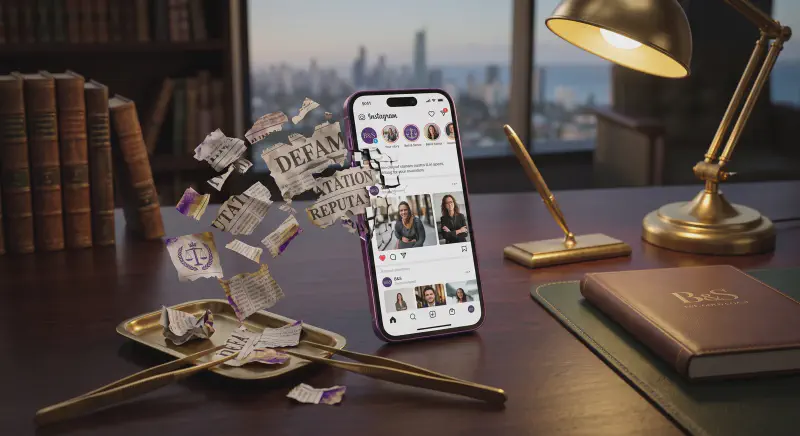
Negative online reviews are a daily reality for Gold Coast businesses. Most are honest feedback that, even if unfair, does not cross the legal line into defamation. But some reviews are false, malicious, or authored by competitors rather than genuine customers. Knowing the difference matters.
When Is a Review Defamatory?
A review is potentially defamatory when it:
- Contains false statements of fact — not just a harsh opinion
- Identifies your business or you personally — which is almost always the case on a business review platform
- Has caused or is likely to cause serious harm to your business reputation
The Critical Distinction: Opinion vs. Fact
| Review Content | Legal Status |
|---|---|
| “The food was cold and service was rude.” | ❌ Opinion, not defamatory |
| “I waited 45 minutes for my meal and was overcharged $30.” | ❌ Factual account of experience, not defamatory if true |
| “They deliberately overcharge every customer.” | ✅ Potentially defamatory, alleges systemic dishonest conduct |
| “This business is a scam / fraud.” | ✅ Potentially defamatory, serious false characterisation |
| “I’ve never visited but heard bad things.” | ✅ Potentially defamatory, fabricated review |
“The client could say the tradie didn’t turn up on time, gave me a quote for $400 and charged $1,000, and the railing fell off, that would be a bad review, but it would be an honest one. But if they say ’this person is a fraudster’ — that’s where it could become defamation.” — Andrew Bell, Legal Matters, 4CRB, 17 March 2026
What About Fake Reviews?
A review left by someone who was never actually a customer — including a competitor, a disgruntled former employee, or someone acting on another’s behalf, may be defamatory if it makes false statements of fact. The reviewer’s identity may not immediately be apparent, but:
- Google and Facebook can be required under court order to disclose the identity of anonymous reviewers in appropriate circumstances.
- Reviews posted from accounts with no local history or review patterns are increasingly flagged and removed by platforms.
Getting a Review Removed, Your Options
Option 1: Platform Reporting
Google, Facebook, and Yelp all have processes for reporting reviews that violate their policies (including fake or defamatory reviews). This is free and sometimes effective, particularly where the content clearly violates platform terms.
Option 2: Legal Demands Letter (Concerns Notice)
A formal concerns notice from a defamation lawyer sent to the reviewer (once identified) often results in removal and a retraction, without any court proceedings. Many reviewers posting false content do not want to litigate a defamation claim.
Option 3: Court Proceedings
If a reviewer refuses to remove false content, a court can:
- Grant an injunction requiring removal
- Order damages for harm caused
- Order a correction or apology
Does the Platform (Google, Facebook) Have Liability?
Under Australian law, platforms that host defamatory content can themselves be publishers of that content once they are notified and fail to remove it. The High Court’s decision in Fairfax Media Publications Pty Ltd v Voller (2021)1 confirmed that page administrators (including businesses and media organisations running Facebook pages) can be liable as publishers of comments left on their pages.
This means: if someone posts defamatory content on your business’s own Facebook page, you should moderate and remove it promptly.
Time Limits
Defamation claims must generally be commenced within 1 year of publication.2 For online content that remains live, time runs from the date the publication was first made, not from when you discovered it.
If you are aware of a defamatory review, do not delay getting legal advice.
Related Topics
Got a Damaging Review That’s Costing You Business?
Bell & Senior Lawyers advises Gold Coast businesses and professionals on defamatory online content. We can assess whether a review crosses the legal line, and advise on the fastest route to getting it removed.
📞 (07) 5532 8777 | 🌐 bellsenior.com.au | Contact us
Need Specific Legal Advice?
The answers above are general. For advice tailored to your specific situation, contact our Southport solicitors today.
Enquiry Sent
Thank you. Our team will contact you shortly.
-
Fairfax Media Publications Pty Ltd v Voller [2021] HCA 27 — the High Court held that media companies and page administrators are “publishers” of third-party comments on their Facebook pages. ↩︎
-
Limitation of Actions Act 1974 (Qld) s 10AA, one-year limitation period for defamation, with a discretionary extension to 3 years in limited circumstances. ↩︎