
Legal Matters Ep 21: De Facto vs Married Rights, BFAs & Auction Disclosure

Is a two-year de facto relationship really treated the same as a marriage when the property gets divided? Andrew Bell from Bell & Senior Lawyers says yes, and walks through why binding financial agreements, contribution assessments, and the court’s four-step process apply almost identically either way.
Key Topics
- De facto vs married property rights — confirming the two frameworks have been near-identical since 2009, aside from differing time limits to apply. See De Facto Relationships in Queensland .
- Binding financial agreements (BFAs) — what makes a “prenup” enforceable, and the five grounds a court can use to set one aside. See What Makes a Binding Financial Agreement Enforceable? .
- The four-step property division process — disclosure, contributions, future needs, and the final just-and-equitable check.
- New AUSTRAC rules for property sales (effective 1 July 2026) — identity and source-of-funds verification now required for sellers, agents, and every auction bidder. See New AUSTRAC Anti-Money Laundering Rules for Real Estate .
- Form 2 property disclosure — why skipping it can let a buyer walk away from a signed contract.
Listener FAQ Highlighted In This Episode
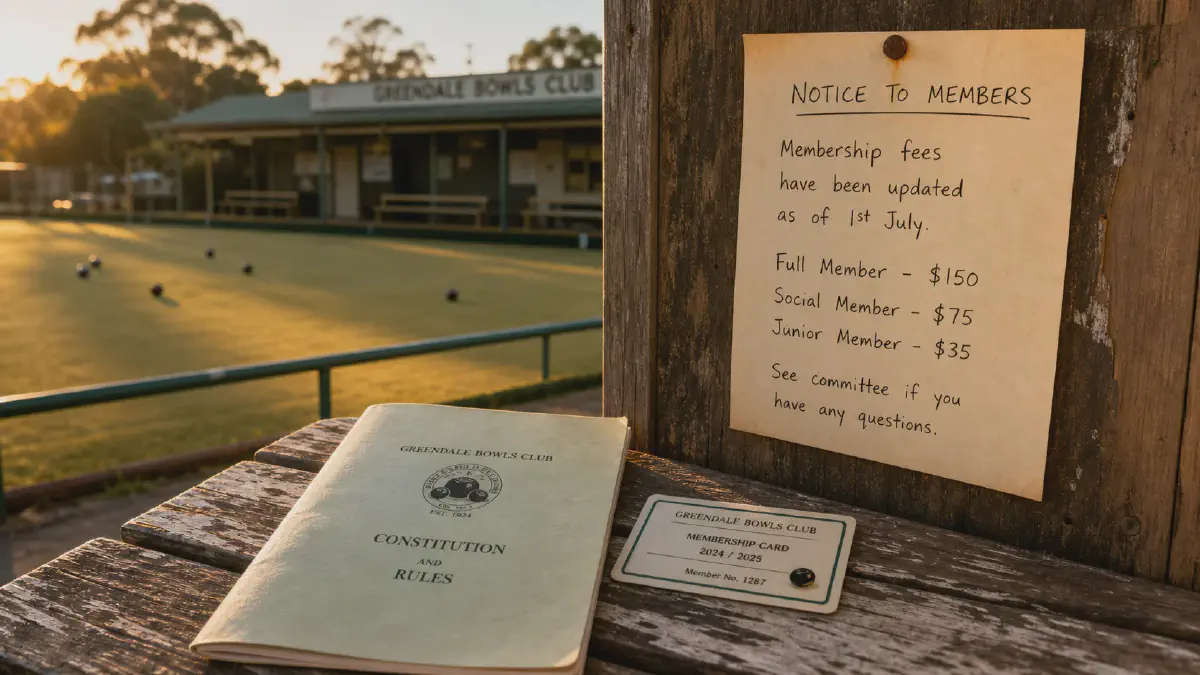
- Can a club raise fees partway through a membership year? Generally yes, if a properly constituted committee approved it — members can request the constitution and meeting minutes to check it was done correctly. See Can a Club Increase Membership Fees Mid-Year? .
- What’s the cheapest way to protect a song before sending it to a publisher? Copyright vests automatically on creation in Australia, but sealing signed, dated lyrics in a letter posted to yourself creates useful evidence if authorship is ever disputed. See How to Protect a Song’s Copyright Before Sending It to a Publisher .
- Do I really need a Form 2 and AUSTRAC checks to auction my home? Yes — skipping the Form 2 disclosure lets a buyer cancel after the fact, and from 1 July 2026 every bidder must verify identity and source of funds before bidding. See New AUSTRAC Rules for Real Estate .
- Can my late daughter’s de facto partner have me removed from the house I live in? Possibly, if they inherit the property outright, though a life estate or similar interest could be argued in response — this scenario needs individual legal advice.
- Can I get out of an agent’s marketing-loan clause that blocks me from renting my unsold house? A term stopping you from earning any income to repay the loan may be an unfair contract term worth challenging with the agent or Fair Trading. See Can a Real Estate Agent Block Me From Renting My Unsold Property? .
- What’s the right process if a family member needs care but has no power of attorney? You apply to QCAT for guardianship, supported by medical evidence. See How to Apply for QCAT Guardianship in Queensland .
Listen to the full discussion above.
Key Takeaways
- De facto and married property division are almost identical since 2009 — the main difference is the application time limit, not the process.
- A binding financial agreement only holds up with full disclosure and independent legal advice on both sides.
- Property division follows four clear steps: identify the pool, assess contributions, weigh future needs, then check fairness.
- New AUSTRAC rules effective 1 July 2026 affect every party in a property sale, including auction bidders, not just the seller.
- Skipping the Form 2 disclosure is risky — a buyer can pull out of a signed contract if it’s missing or wrong.
- Not-for-profit clubs can usually change fees mid-year if their constitution allows it and the decision was properly made.
- A de facto partner has standing to claim on a deceased partner’s estate, which can affect family members still living in a shared home.
Next week: the Family Law series continues with real-world property settlement scenarios.
Annotated Transcript
Announcer: 4CRB now presents Legal Matters, proudly brought to you by Bell and Senior Lawyers. Call them today for all your legal needs on 07 5532 8777. This program provides general legal information only. It’s not personal legal advice. Everyone’s situation is different, so please seek independent advice for your own circumstances.
[Colin]: Welcome to the studio, welcome to the microphone Andrew Bell from Bell and Senior Lawyers.
[Andrew]: Thanks for having me back, Colin.
[Colin]: We will be continuing our conversation on family law that we started last week, but this is your program — your opportunity to get a little bit of free legal advice live on air. 07 5520 8888 is the number.
[Andrew]: We had a great week last week. We covered what separation is — even living under one roof, you’re no longer living as a couple, and that works for married and de facto couples. After 12 months of separation you can get divorced, and after that you can do your property separation, though if you’re getting divorced you can actually do it before that. Anytime after you’re separated you can apply for a property separation, and you’ve got two years if you’re de facto. We also covered property pools — everything the couple owns in their own name or jointly.
Caller 1 — Ross | Club Membership Fee Increase
Legislation: Association/club constitution and governance rules (general law of unincorporated associations)
[Colin]: Very good morning to Ross. Ross, ask your question of Andrew.
[Ross]: A group of us joined a local bowls club in January. Full membership was $140, with an extra fee only if playing in competitions. A couple of weeks ago a new president was elected and decided everyone now has to pay an extra $5 per game, on top of membership.
[Andrew]: Was there an AGM where that president was elected?
[Ross]: I’m not quite sure. He just introduced himself as the new president and said they’re introducing these fees.
[Andrew]: Normally clubs operate on a financial year with an AGM electing the management committee, who have the power to set fees for the next year, usually tabled at a committee meeting. There will be a club constitution setting out those powers, and as a member you’re entitled to a copy of it and the minutes of any relevant meetings. If they’ve done it properly, I don’t think there’s much you can do to challenge it — but I’d ask the secretary what grounds they’re relying on to introduce the fee.
[Ross]: Even though it’s halfway through the calendar year, and we joined in January?
[Andrew]: I’d definitely be asking the basis for increasing fees mid-year, because there may be an extraordinary reason, but they probably do have the power to do it.
[Colin]: The basic preface, Ross, is that the board manages the club on behalf of the membership. You have the right to see the constitution and examine decisions, but they are managing it on behalf.
[Andrew]: Yeah, it’s not like a traditional contract.
📎 See also: Can a Club Increase Membership Fees Mid-Year?
Caller 1 (continued) — Ross | Protecting Song Copyright
Legislation: Copyright Act 1968 (Cth) — copyright vests automatically on creation

[Ross]: I’ve written a song — what’s the most economical or safest way to send it to a publisher or singer and still protect my rights if they record it?
[Andrew]: In Australia copyright automatically vests at the moment of creation. If you’re the author, you already own the copyright and don’t need to register it.
[Colin]: We get this question often. The cheapest way to protect your rights and avoid an argument over who wrote it is to print out the lyrics, sign and date them, seal them in a letter, and post it to yourself. Don’t open it — keep it in a safe. If there’s ever a dispute, you produce the sealed letter to a solicitor as evidence.
[Andrew]: Absolutely, great advice.
📎 See also: How to Protect a Song’s Copyright Before Sending It to a Publisher
Segment — Are the Rules the Same for Married and De Facto Couples?
Topic: De facto vs married property division Legislation: Family Law Act 1975 (Cth) — de facto provisions added 2009
[Colin]: Are the rules the same for married and de facto couples?
[Andrew]: In the past, each state had different rules about de facto relationships. But since 2009, the property division framework is largely identical for both — there are some different sections under the Act, and different timelines: two years after separation for de facto couples to separate property. Practically, all of the same law applies whether you end a de facto or married relationship. A de facto relationship is a committed domestic relationship for at least two years.
[Colin]: So one relationship has documentation showing you’re married, and the other is more a statement that you’ve been together as partners. Do people ever argue about whether it existed at all?
[Andrew]: Absolutely — it’s very common. People might argue the relationship ended earlier than claimed, or that they never intended to be in a relationship at all. Separate houses don’t rule out a de facto relationship, and children can be relevant too. One party wanting a bigger share may allege a de facto relationship existed while the other denies it, so the court weighs witness statements, bank statements, and other evidence. It’s much clearer with marriage because of the certificate.
[Colin]: BFAs — binding financial agreements, most people call these prenups. What are they and when do they hold up?
[Andrew]: A binding financial agreement is a contract between two parties setting out how property will be divided if a relationship ends. It can be made before, during, or after a relationship. To be binding, both sides need independent legal advice and an independent lawyer’s certificate confirming it was explained to them and they weren’t under duress, plus full and frank financial disclosure of each side’s financial position. If disclosure was inadequate — say, undisclosed wealth or property — the agreement can be challenged afterwards. Most of the time a BFA will stand; they’re actually pretty good law in Australia. Courts will set one aside for fraud or non-disclosure of assets, duress, unconscionable conduct (where someone was tricked), or where circumstances changed so significantly that enforcing it would be unjust — commonly, children arriving after signing that weren’t contemplated in the agreement.
[Colin]: Sounds quite different to what we see on television.
[Andrew]: It is — we’ve got no-fault divorce now, so you don’t need to allege wrongdoing, just work out what property exists and how it gets divided.
📎 See also: What Makes a Binding Financial Agreement Enforceable?
Caller 2 — Rod | Auction Disclosure & AUSTRAC Rules
Legislation: Anti-Money Laundering and Counter-Terrorism Financing Act 2006 (Cth) — AUSTRAC obligations extended to real estate agents, accountants and lawyers effective 1 July 2026 (“Tranche 2” reforms); Form 2 property disclosure requirements (effective August 2025)

[Colin]: Very good morning to Rod. Rod, ask your question of Andrew.
[Rod]: I met with a real estate agent about auctioning our home, and they said I need a Form 2, bankruptcy checks, money laundering checks, building and pest — I said I don’t want to do all that, buyer beware, they can do their own homework. What are the consequences if I don’t?
[Andrew]: Anti-money laundering laws came in last week applying to real estate agents, accountants, and lawyers. They can be fined if they don’t verify the source of funds and who they’re dealing with, so you’ll need to verify your identity and possibly provide bank information — if you don’t, they may not take you on, because they could be held liable by AUSTRAC. The Form 2 is a disclosure that came in in August last year, given to prospective buyers detailing what’s happening with the property. If you don’t have one, or it’s incorrect, buyers can cancel the purchase — so you could hold the auction, sell the property, then lose the sale and still owe the agent’s commission because you lacked a Form 2. I’d advise doing the Form 2. Building and pest before auction isn’t strictly mandatory as far as I’m aware, but it’s usual practice so buyers are fully informed and can’t later claim they wouldn’t have bid had they known. As of this week, every auction bidder also needs to confirm identity and source of funds before the auctioneer lets them bid.
[Rod]: So the old days of a buyer doing their own building and pest in good faith no longer exist?
[Andrew]: Building and pest you could probably still handle that way if you make the property available for inspection before the auction — though I’m not 100% certain. But the Form 2 I’d definitely recommend, and you won’t get away from the AUSTRAC anti-money-laundering checks.
📎 See also: New AUSTRAC Anti-Money Laundering Rules for Real Estate | Property, Form 2 & Strata
Caller 3 — Mary | De Facto Partner’s Claim on a Shared Home
Legislation: Succession Act 1981 (Qld) Pt 4 (Family Provision) — de facto partner standing
[Colin]: Very good morning to Mary. Mary, ask your question of Andrew.
[Mary]: My 95-year-old friend’s wife died 15 years ago, and his daughter — who he’d moved in with — died recently, in a car accident. She had a de facto partner. What happens to the property? Did the de facto partner get any hold over it?
[Andrew]: How long were they in the de facto relationship?
[Mary]: More than two years, I believe.
[Andrew]: If there was a will, it would be distributed according to the will unless someone challenged it. People who could challenge on the basis they needed support are children, parents, de facto or married partners, and anyone financially dependent on the deceased. If the de facto partner needed financial support and wasn’t adequately cared for under the will, they’d have grounds to challenge it.
[Mary]: Even though her father is 95 and dependent on her?
(after clarifying the family relationships)
[Andrew]: So your 95-year-old friend is living in the house with his daughter, who has died, and she had a de facto partner. The de facto partner can claim on the daughter’s estate and may receive some or all of it. If they become the valid owner of the property, they may be able to ask your friend to leave — though depending on how it was purchased, he may be able to argue he has a life estate and challenge that. This is a complicated scenario, and I’d suggest they get independent advice.
📎 See also: Wills and Estates
Segment — The Four-Step Property Division Process
Topic: How courts actually divide property Legislation: Family Law Act 1975 (Cth) s 79, s 90SM
[Colin]: Walk us through what the court actually does when it divides property.
[Andrew]: First, they identify the property pool — each party discloses every asset, liability, bank statement, and property statement, with penalties for non-compliance. Family court proceedings are private, and it’s an offence to publish what’s gone on, but full financial disclosure is required. Second, the court looks at contributions — financial assets brought into or created during the relationship, non-financial contributions like building a house, and who took on most of the parenting or caring duties — then works out a split reflecting those contributions. Third, they look at future needs: education, earning capacity, age, and health issues, to ensure no one is left destitute while the other lives comfortably. Finally, they check whether the outcome is just and equitable — fair to both parties. Courts won’t make an order unless the split is clear and they’re satisfied it’s not unjust.
[Colin]: Seems fairly clear, though I’m sure it gets muddied once you’re in the middle of it.
[Andrew]: We’ll go through some scenarios next week, Colin.
📎 See also: Understanding the Family Law Property Pool | Property Settlement Process
Caller 4 — Amanda | Unfair Marketing-Loan Clause
Legislation: Australian Consumer Law (Cth) Sch 2 — unfair contract terms provisions

[Colin]: Good morning to Amanda. Amanda, ask your question of Andrew.
[Amanda]: I’m selling a property in South Australia. The agent had me sign a pay-later loan for $5,000 in marketing costs, payable at settlement — but the property may not sell, and I can’t afford to pay it myself. The contract also says I can’t rent the property until the loan is repaid.
[Andrew]: That’s a strange arrangement — often marketing costs are simply deferred to settlement. If you’ve got an exclusive agency, they may restrict renting while advertising is underway, but blocking you from renting once it’s no longer for sale, with no other way to repay them, doesn’t sound right. There’s been discussion in recent years about unconscionable and unfair contract terms, which can bar enforcement of unfair clauses. I’d first tell them in writing that you intend to take the property off the market and rent it to repay the loan, and see their response. If they refuse, ask why, and consider Fair Trading, the ACCC, or a lawyer.
[Amanda]: They also have security over my property until the debt is repaid.
[Andrew]: That would be correct — if it’s not repaid, they could eventually sell your property to redeem it, which ironically is what you wanted in the first place.
[Amanda]: If I end the exclusive period early, the amount is due within 14 days.
[Andrew]: Yes, ending the exclusive agency early triggers early repayment, so I wouldn’t recommend ending it early. But once the exclusive period naturally expires without a sale, it seems very unfair for them to block your only way of repaying them.
📎 See also: Can a Real Estate Agent Block Me From Renting My Unsold Property?
Caller 5 — Joan | Guardianship Without Power of Attorney
Legislation: Guardianship and Administration Act 2000 (Qld) ; QCAT guardianship applications

[Colin]: Good morning to Joan. Joan, ask your question of Andrew.
[Joan]: My young brother needs to go into care. He doesn’t have a power of attorney, and I’m his next of kin. Can I answer things on his behalf?
[Andrew]: You could answer things, but you couldn’t enter legal agreements on his behalf without a power of attorney or guardianship order. Does he have capacity to sign a power of attorney himself?
[Joan]: No, I don’t think he would.
[Andrew]: Then the proper process is to apply to QCAT to be his guardian, with a copy of his medical records, and explain that he needs someone to make these decisions for him. A fee waiver may be available, and the QCAT website has guidance on applying.
[Joan]: Even though he’s been in hospital for a month without us knowing?
[Andrew]: You can ask things, but without a power of attorney or guardianship order it carries no legal force — the hospital can say yes or no, and if you disagree with their decisions, there’s nothing you can do about it unless you hold that authority.
📎 See also: How to Apply for QCAT Guardianship in Queensland | QCAT and Disputes
[Colin]: A great little program, some great information, Andrew. Thank you for your company again this morning.
[Andrew]: Thank you, Colin. It’s great to have the audience participation — I’m really enjoying the varied questions.
Announcer: You’ve been listening to Legal Matters, proudly brought to you by our trusted sponsor Bell and Senior Lawyers. Call them today for all your legal needs on 07 5532 8777. A copy of this and past programs and all relevant resources will be available for you to replay or download on bellsenior.com.au and 4crb.com.
Related Episodes
- Episode 20: Property Settlement, Contributions & Will Disputes — the property pool, contributions, and family provision standing
- Episode 19: New E-Bike Laws & Family Law Basics — the launch of this Family Law series
- Episode 9: Property, Form 2 & Strata — property disclosure obligations in Queensland
- Episode 3: Wills and Estates — probate, executor duties and challenging a will
- Episode 7: QCAT and Disputes — resolving minor civil disputes and guardianship applications
Episode Resources
- Listen to this episode and all prior episodes: 4crb.com
- Download the transcript and show notes: bellsenior.com.au
- Call Bell & Senior Lawyers: 07 5532 8777
- Selling a property and unsure about Form 2 or AUSTRAC obligations? Contact our Property team
- Need a binding financial agreement or advice on a family law property split? Contact our Family Law team